
The Best Way to Wrap Gifts Without the Waste
Reach for a reusable fabric wrap first, and save mono-material recycled kraft paper with plain twine for the times a single-use option is genuinely unavoidable. Skip anything foil, glittered, or laminated, along with plastic tape. Perishable gifts need their own approach entirely, which we’ll get to below, but for everything else, this is the hierarchy that actually holds up.
TL;DR:
- Reusable fabric wraps are the most sustainable option, as they can be laundered and reused dozens of times, offsetting their initial cost.
- Plain recycled kraft paper with natural twine is suitable for single-use wrapping when environmental conditions are ideal, but avoid laminated, foil-coated, or glittered papers.
- Certified eco-friendly materials include FSC paper, BPI or TUV OK compostable films, and recycled content labels, while laminated and plastic-coated papers should be avoided.
- For perishable food gifts, use food-safe, home-compostable liners and moisture barriers to maintain freshness and ensure recyclability.
- Reusable wrapping options generally cost less over time and create a more thoughtful, personal gift presentation that encourages recipient reuse.
Table of Contents
- Eco-Friendly Gift Packaging Ideas That Actually Work
- Which Wrapping Materials Are Actually Recyclable?
- How Do You Wrap Fresh Fruit or Food Gifts Sustainably?
- What Certifications Prove a Material Is Actually Eco-Friendly?
- Where Can You Buy Sustainable Wrapping Supplies?
- How Tai Kang Healthy Fruits Applies These Principles
- Is Eco-Friendly Packaging More Expensive Than Conventional Wrap?
- Does Eco-Friendly Wrapping Change How a Gift Feels to Receive?
- Building the Habit of Reusing What You Wrap
- A Lower-Waste Way to Send Fruit as a Gift
- Sources
Eco-Friendly Gift Packaging Ideas That Actually Work
Most “sustainable wrapping” lists throw a dozen options at you with no sense of priority. Here’s the order that matters, starting with what to reach for most often and ending with the decorative extras.
-
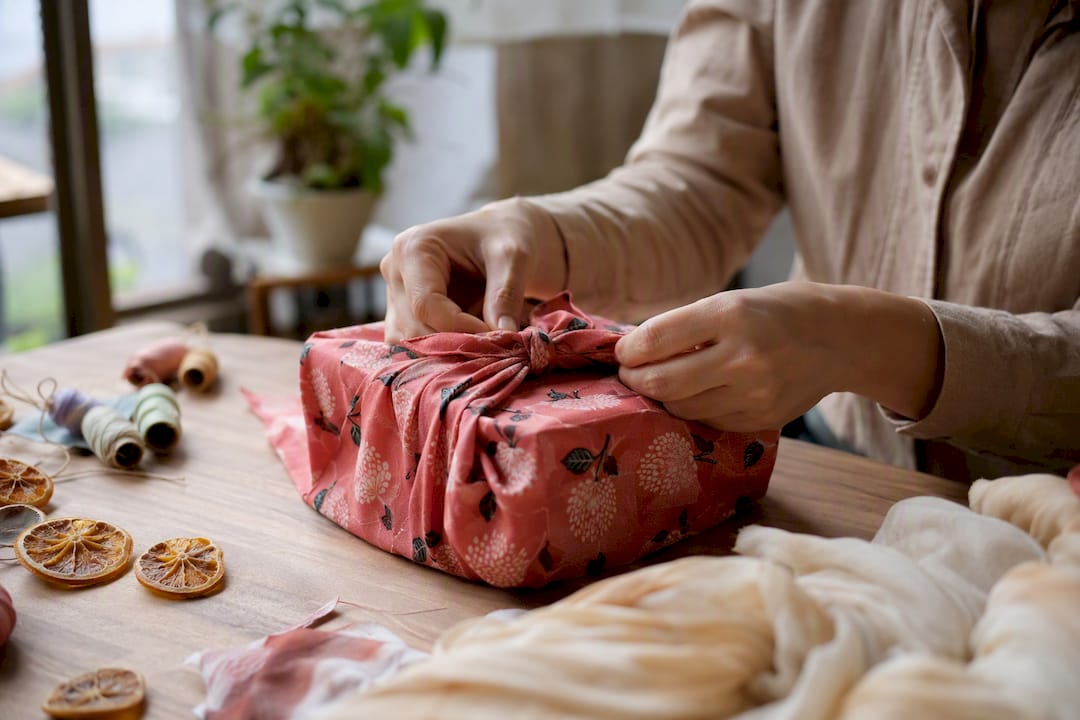
Fabric wraps (furoshiki-style). This Japanese folding technique uses a single square of cloth, tied and tucked around a gift with no scissors, tape, or paper at all. A cotton scarf, an old pillowcase, or a length of linen all work. The basic fold takes about 90 seconds: center the gift diagonally on the fabric, bring two opposite corners up and knot them, then tie the remaining two corners over the top. Reusable fabric wraps can be laundered and reused dozens of times, which makes the upfront cost of a nicer fabric square pay for itself fast. Store a stack folded flat in a drawer so they’re ready for the next birthday.
-
Reusable gift bags and sturdy boxes. A well-made fabric bag with a drawstring, or a rigid box with a lid, often becomes part of the gift instead of trash the moment it’s opened. Durable reusable wrap products show up again and again at the next holiday because recipients tend to hang onto something that looks nice enough to reuse. Choose a size slightly larger than most gifts you buy so one bag covers multiple occasions.
-
Recycled kraft paper with natural twine. When you truly need single-use paper, plain kraft paper in a mono-material format recycles cleanly and looks better than most people expect. Add texture with a stamp, a hand-drawn note, or a few loops of jute twine instead of a plastic bow. The whole look reads as intentional rather than cheap.
-
Repurposed boxes, jars, and tins. A shoebox wrapped in leftover kraft paper, a glass jar that once held jam, an old tea tin. Wipe them clean, remove old labels with warm water and a little oil, and they’re ready for a second life. This is the fastest, cheapest option if you’re wrapping something tonight.
-
Seed paper. This plantable paper embeds real seeds in the pulp, so the wrapping can go into a pot after the gift is opened. It’s a nice touch for a birthday or a baby shower, but keep expectations realistic. How well it grows depends on soil conditions, planting timing, and the seed quality itself, so treat seed paper as a nice bonus, not a small forest guaranteed.
-
Glass jars and multifunctional containers. A mason jar filled with homemade granola or bath salts skips wrapping altogether. The container is the packaging and part of the gift.
-
Natural decorative touches. Skip the plastic ribbon and reach for a sprig of rosemary or eucalyptus, a dried orange slice, or a beeswax wrap tied with twine. All of these compost or reuse easily, and they smell better than a synthetic bow ever will. Presentation details like these do a lot of visual work for very little material.
Which Wrapping Materials Are Actually Recyclable?
Not every paper labeled “eco” behaves the same way once it leaves your hands. Plain kraft and other mono-material recycled papers sail through standard paper recycling streams because they contain no mixed layers to strip out first. Look for an FSC label if you want assurance the pulp came from a responsibly managed forest, and be skeptical of “recycled content” claims that don’t state a percentage.
Fabric fibers like cotton and linen last the longest of any option here. A cotton furoshiki wrap can survive years of laundering if you skip the dryer and let it air dry instead, and upcycled textiles (an old scarf, a worn shirt cut into a square) cost nothing extra.
Seed paper works exactly as described above: fun, but not a guaranteed ecological win. Compostable coatings and films occupy trickier territory. They’re genuinely useful for moisture-sensitive gifts, but “compostable” only means something if it’s certified. A film that needs an industrial composting facility most households can’t access isn’t doing what a home-compostable one does, and eco-design research on packaging points to mono-material, adhesive-free construction as the feature that most reliably improves recyclability across the board, more than any single material choice.
The materials to avoid are consistent across every credible source on this topic: laminated or foil-coated paper, glitter-finished paper, and plastic packing tape. All three contaminate paper recycling streams or simply can’t be processed at all. Use paper tape or a bit of twine instead, and you remove the single biggest culprit in “recyclable” gift wrap that actually isn’t.
How Do You Wrap Fresh Fruit or Food Gifts Sustainably?
Perishable gifts add a variable the paper-and-ribbon crowd never has to think about: moisture, bruising, and spoilage. A few rules make the difference between a beautiful eco-friendly box and a soggy mess by the time it arrives.
- Use food-safe liners and corrugated trays, never decorative paper that hasn’t been rated for direct food contact.
- Check that any moisture barrier is certified home-compostable and microplastic-free. Hydrophobic coatings and compostable fiber trays built specifically for berries and delicate produce solve this without introducing plastic.
- For same-day delivery, light insulation and a snug fit inside the box are usually enough. Multi-hour transit needs a proper insulated liner to protect against temperature swings.
- Pair a compostable inner tray with a recyclable outer box. Coated corrugated cardboard can replace plastic film for produce while keeping shelf life intact, and that combination recycles and composts cleanly at the end.
What Certifications Prove a Material Is Actually Eco-Friendly?
“Eco-friendly” printed on a roll of wrapping paper means nothing on its own. A few real certifications do the verification for you:
- FSC (Forest Stewardship Council): confirms the paper or wood pulp came from a responsibly managed forest.
- BPI or TUV OK Compost: confirms a product is certified compostable, and specifically whether it’s industrial or home-compostable, which are not the same thing.
- USDA BioPreferred: flags a bio-based content percentage for certain products.
- Recycled-content percentage: a specific number (“30% post-consumer recycled”) is a real claim; “made with recycled materials” with no number is not.
Red flags to watch for: vague language with no percentage or certification body attached, a “compostable” claim with no BPI/OK Compost logo anywhere, and confusing or missing disposal instructions. Checking for these certifications directly rather than trusting a label’s own wording is the single fastest way to avoid greenwashing.
Where Can You Buy Sustainable Wrapping Supplies?
If you already own fabric scraps, jars, or boxes, repurposing them costs nothing and keeps material out of the waste stream immediately. Buying new makes more sense when you want a specific look for a recurring occasion, like holiday gifting every year.
Craft stores carry kraft paper and twine cheaply. Zero-waste shops and dedicated packaging suppliers stock certified compostable films, seed paper, and recycled kraft in bulk. Suppliers offering recycled kraft, seed paper, and compostable films are worth comparing on certification details, not just price.
For repurposed materials, clean jars and tins with warm water and a splash of vinegar to lift old labels, and let fabric air dry fully before folding it away. For food gifts specifically, stick to food-safe liners and avoid porous materials like unfinished wood or secondhand fabric that could carry residue or contaminants.
How Tai Kang Healthy Fruits Applies These Principles
Packaging a fresh fruit gift is a different challenge than wrapping a book, and it’s one Taikanghealthyfruits deals with on every order.
- Every fruit undergoes careful inspection before it’s packed.
- Storage stays temperature-controlled from sourcing through delivery.
- Customers rate the experience 4.85 stars across 46 reviews.
- A rewards program supports customers who order again.
In practice, that means insulated inserts for temperature-sensitive fruit, corrugated trays that cushion without excess plastic, and food-safe liners in direct contact with produce.
Pro Tip: Skip a second layer of printed wrapping paper on a gift box that already looks finished. A simple message card says more than extra packaging ever will, and it’s one less thing headed for the recycling bin.
Is Eco-Friendly Packaging More Expensive Than Conventional Wrap?
Sticker price and true cost aren’t the same thing here. A roll of foil-laminated wrapping paper often costs less per square foot than kraft paper, and single-use plastic bows are cheap in bulk. But fabric wraps, reusable bags, and sturdy repurposed boxes get used more than once, sometimes dozens of times, which changes the math entirely.
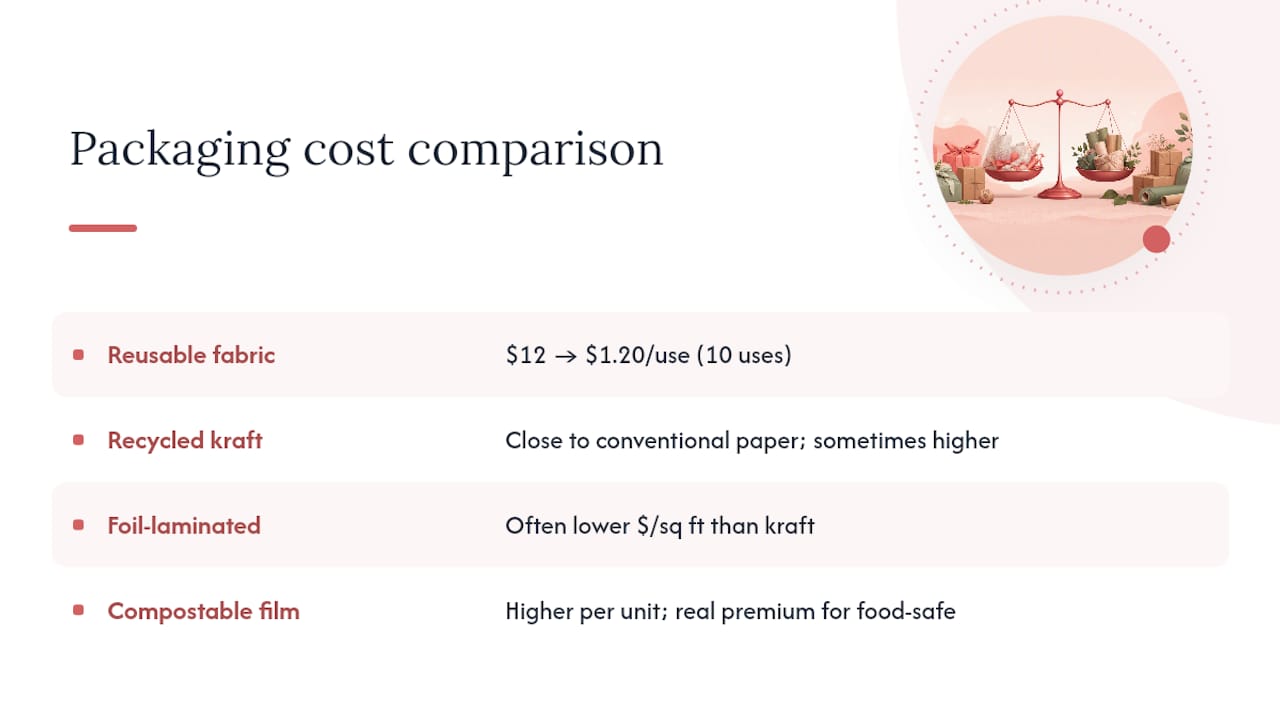
Run the numbers over a year of gift-giving instead of a single event. A $12 furoshiki-style cloth used for ten gifts costs about $1.20 per use, cheaper than most rolls of specialty wrapping paper by the third or fourth reuse. Recycled kraft paper runs close to conventional paper in price, sometimes slightly higher, but you save on ribbon and bows by using twine and natural trim instead.
Where costs climb is certified compostable film and fiber trays designed for produce. These specialty materials cost more per unit than plastic film because the certification and testing behind them isn’t free. For a business shipping perishable gifts regularly, that premium is the price of protecting freshness without leaving plastic behind, and it’s usually a smaller share of total packaging cost than people assume once insulation and box costs are factored in too.
The honest takeaway: reusable options save money over time, single-use eco-friendly paper costs about the same as conventional paper, and certified compostable films for food are the one category where you’ll pay a real premium.
Does Eco-Friendly Wrapping Change How a Gift Feels to Receive?
A gift wrapped in a soft fabric square that the recipient can keep and reuse reads differently than one buried under glittery paper destined for the trash within minutes. Reusable wraps and bags that become part of the gift tend to get a second look and a second use, which is a kind of compliment paper wrapping never earns.
There’s also a simplicity to eco-friendly presentation that reads as more thoughtful, not less. A kraft-paper box tied with twine and a sprig of rosemary looks intentional in a way that mismatched plastic ribbon rarely does. Recipients notice restraint. They also notice care, and a hand-written tag or a short message card signals more attention than a mass-produced bow ever could.
None of this means eco-friendly automatically equals better looking. A sloppy fabric wrap looks sloppy no matter how sustainable the fabric is. The presentation still depends on you taking the extra 90 seconds to fold it properly, choose a color that suits the occasion, and add one small natural touch instead of three synthetic ones. Done well, though, sustainable wrapping tends to feel more personal, which is exactly the impression most gift givers are going for anyway.
Building the Habit of Reusing What You Wrap
The materials matter less than whether you actually keep and reuse them. Set aside a bin for fabric wraps, ribbon, and gift bags you receive, so the next birthday doesn’t start from zero. Better yet, start a wrap swap with a few friends. Trade wraps after each occasion, and the whole group builds a rotating supply that never touches a landfill.
— Tai
A Lower-Waste Way to Send Fruit as a Gift
Skipping the wrapping aisle entirely is its own kind of eco-friendly packaging, and that’s essentially what a ready-made fruit gift box gives you. Taikanghealthyfruits builds its boxes around minimal wrap, recyclable outer materials, and a simple message card instead of extra printed inserts, so there’s no separate wrapping step for you to manage at all.
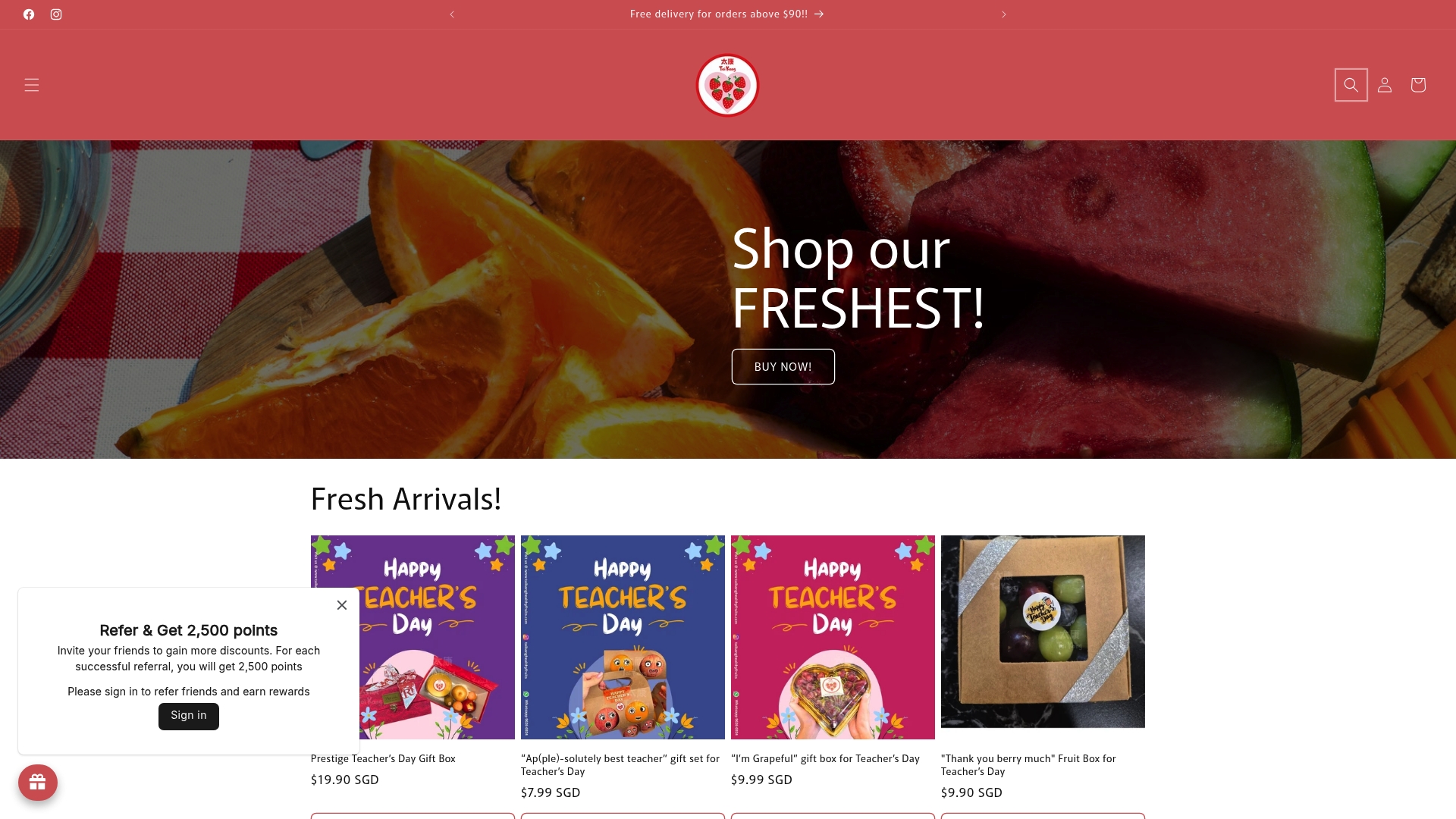
Every order goes through inspection and temperature-controlled storage before it leaves, so the fruit inside arrives in the same condition it left in, whether it’s headed across town or across Singapore. If you want to see how that packaging looks in practice, the Prestige Teacher’s Day Gift Box is a good example of a fully packaged, presentation-ready option. Browse the full fruit gift selection and place an order whenever the next occasion calls for it.
Sources
- Eco-Friendly Design for Sustainable Gift Packaging (Applied Sciences)
- Shikiwrap — sustainable fabric wrap products
- Sustainable Pack — individual packaging for fruit and vegetables
- THIMM — sustainable fruit and vegetable packaging
Recommended
- How to Impress Clients with a Gift: The 2026 Strategy for Corporate Gi – Tai Kang Healthy Fruits
- Corporate Gift Box: The 2026 Guide to Premium Wellness Gifting – Tai Kang Healthy Fruits
- Fruit Gift Box Buying Guide 2026: How to Choose the Perfect Health-Foc – Tai Kang Healthy Fruits
- Last Minute Gift Delivery Singapore: The 2026 Guide to Premium Gifting – Tai Kang Healthy Fruits