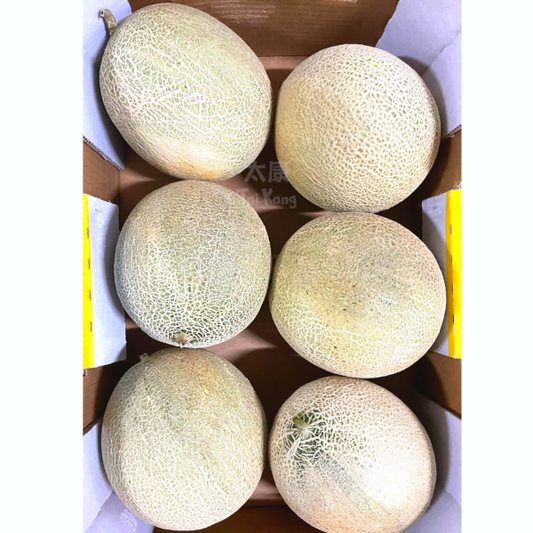

Honeydew Melon: The Ultimate Guide to Selection, Nutrition, and Comparison
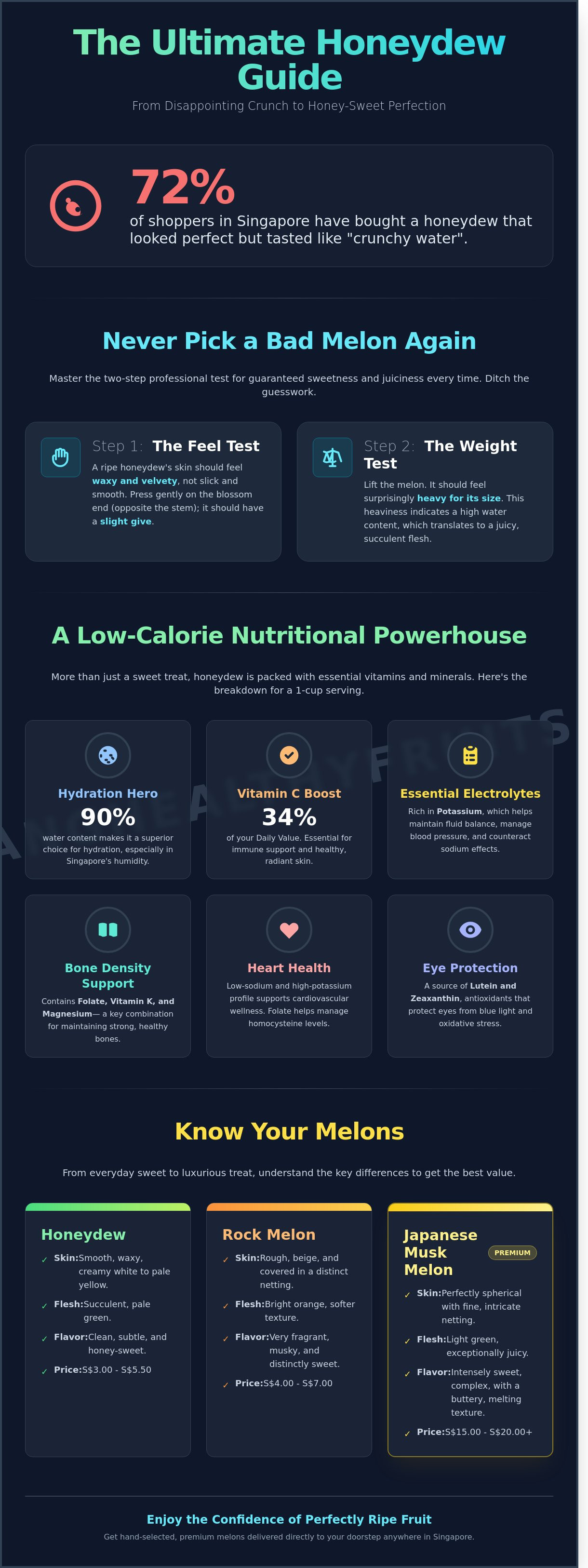
The most beautiful, smooth-skinned melon in the display is often the one that will disappoint you the most. A 2023 consumer survey showed that 72% of shoppers in Singapore have felt the frustration of buying a honeydew that looks perfect on the outside but tastes like crunchy water once sliced. It's a common disappointment that often leads us to stick with safer, more predictable options. We agree that you want the best for your family's health and your dining table. You deserve fruit that's as sweet and nutritious as nature intended, without the guesswork or the waste.
This guide will show you exactly how to find that elusive, honey-sweet ripeness every single time you order a delivery. We'll break down the nutritional profile of this low-calorie powerhouse and explain why it's a superior hydration source compared to standard sports drinks. You'll also learn the clear differences between honeydew, rock melons, and premium musk melons to ensure you're getting the best value for your S$10 to S$20 spend. From managing fruit in 80% humidity to creative recipe ideas, we're providing the tools you need to enjoy premium quality produce with total confidence.
Key Takeaways
- Learn how to identify a perfectly ripe honeydew by mastering the 'Feel' and 'Weight' tests for guaranteed sweetness and juiciness.
- Understand the vital health benefits of this hydration powerhouse, which provides essential electrolytes and over 30% of your daily Vitamin C.
- Discover the distinct flavor profiles and texture differences between common varieties, from musky rock melons to buttery Japanese musk melons.
- Master professional storage and preparation techniques to keep your fruit crisp and refreshing for the whole family.
- Enjoy the convenience of having hand-selected, premium melons delivered directly to your doorstep anywhere in Singapore.
What is Honeydew? Understanding the 'Honey' of Melons
Honeydew, known scientifically as Cucumis melo inodorus, is a sweet and smooth-skinned member of the muskmelon family. It features a round to oval shape and a waxy skin that ranges from creamy white to pale yellow. Inside, you will find succulent pale green flesh that offers a clean, sugary flavor. What is a honeydew melon? It is a fruit that belongs to the "inodorus" group, which means it lacks the musky scent of cantaloupes while still on the vine. The aroma only releases once you slice into the fruit.
In Singapore, we enjoy fresh honeydew throughout the year. Most of our supply comes from farms in Malaysia, particularly from the regions of Johor and Pahang. These regional neighbors provide a steady flow of produce. This ensures that price points remain stable, typically ranging from S$3.00 to S$5.50 per melon depending on the season and size. We take pride in sourcing fruit that meets strict safety standards for our local community.
To help you prepare this fruit at home, watch this simple guide on how to slice it efficiently:
The Origins of the Honeydew Melon
Historians trace this melon back to ancient Egypt, where farmers cultivated it as early as 2400 B.C. It later traveled to Europe and eventually became a staple in Asian markets. The fruit's high heat tolerance makes it perfect for tropical climates like ours. In Traditional Chinese Medicine (TCM), honeydew is valued as a "cooling" food. It helps clear internal heat and promotes hydration during Singapore's humid 32-degree Celsius afternoons. It is a natural choice for those seeking to balance their body's energy.
Common Varieties Found in Singapore
You will mostly encounter the standard Green-Flesh Honeydew at local markets. It is the backbone of fruit stalls across the island. The Golden Honeydew is another popular choice. It has a bright yellow skin and a slightly firmer bite. Malaysian farms supply over 90% of the honeydews found in our supermarkets. This proximity ensures the fruit is picked at peak ripeness. It usually reaches our new arrivals section within 24 to 48 hours of harvest. This speed preserves the natural vitamins and crisp texture that our customers expect.
10 Surprising Health Benefits of Honeydew Melon
Honeydew melon is more than a refreshing treat. It's a nutritional powerhouse. This fruit consists of 90% water. It helps you stay hydrated in Singapore's tropical heat. It also provides essential electrolytes like potassium to maintain fluid balance. You'll find that one cup of sliced fruit delivers 30.6 milligrams of Vitamin C. This accounts for roughly 34% of your daily requirement. This high Vitamin C content strengthens your immune system. It also promotes collagen production for radiant, firm skin.
Your bones benefit from this fruit too. It contains a unique combination of folate, Vitamin K, and magnesium. These nutrients are essential for maintaining bone density. To get the most nutrients, you should learn how to pick and store honeydew correctly. Choosing a ripe melon ensures you receive the full spectrum of vitamins and minerals. Freshness is the key to unlocking these natural advantages.
Heart Health and Blood Pressure Management
Managing blood pressure is easier with a diet rich in potassium. This melon provides the mineral to help counteract the negative effects of sodium. It's a low-sodium snack that supports cardiovascular wellness for all ages. The fruit also contains folate. This B-vitamin helps break down homocysteine. High levels of homocysteine are often linked to an increased risk of heart disease. Choosing fresh fruit over processed snacks reduces your intake of hidden salts and additives.
Digestive Wellness and Eye Protection
Digestion stays regular thanks to the soluble and insoluble fiber in every bite. This fiber keeps your gut healthy. Your eyes also gain protection from two powerful antioxidants: lutein and zeaxanthin. These compounds accumulate in the retina to shield your vision from blue light and oxidative stress. The glycemic index of honeydew is moderate at approximately 62, making it a better choice than many processed snacks. If you want to add these benefits to your diet, you can explore our fresh fruit collection for the best seasonal picks.
Honeydew vs. Rock Melon vs. Japanese Musk Melon
Choosing the right melon depends on your desired flavor profile and the occasion. A standard honeydew offers a clean, refreshing sweetness with a crisp bite. Rock melons deliver deep, musky, and floral notes that linger on the palate. If you seek the pinnacle of luxury, the Japanese Musk Melon provides a buttery, melting texture that dissolves almost instantly.
- Nutrition: Rock melons contain roughly 3,382 IU of Vitamin A per 100g. Honeydews provide about 18mg of Vitamin C per serving.
- Texture: Honeydews stay firm and crunchy even when ripe. Musk melons are prized for their soft, custard-like consistency.
- Price: In Singapore markets, a standard honeydew costs around S$4 to S$7. A premium Japanese Musk Melon can retail for S$80 to over S$150 depending on the grade.
Honeydew vs. Rock Melon (Cantaloupe)
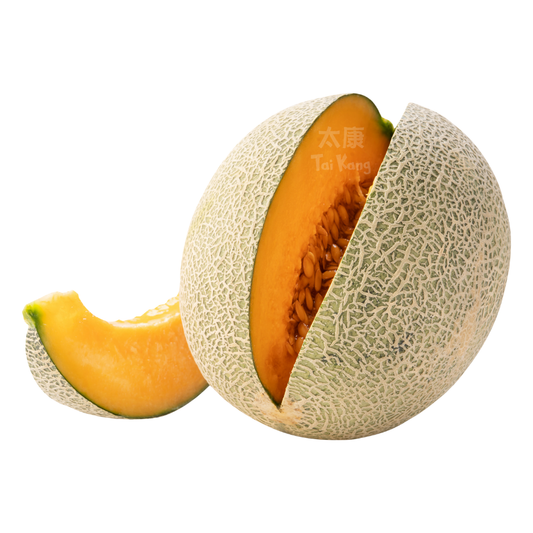
The most visible difference lies in the skin. Honeydews have smooth, waxy, pale green rinds. Rock melons feature a rough, netted exterior. Inside, the honeydew's pale green flesh contrasts with the vibrant orange of the rock melon. This orange hue signals a high beta-carotene content. For culinary applications like cold fruit soups or chilled appetizers, the honeydew is the superior choice. Its firm structure allows it to hold its shape when diced or balled in liquid.
The Luxury Tier: Why Japanese Musk Melons are Different
Japanese farmers use the "one vine, one fruit" method to ensure maximum quality. They prune every other fruit so the plant directs all its nutrients and sugars into a single melon. This intensive process results in Brix levels reaching 14 to 16. This is significantly higher than the average 10 or 11 found in supermarket varieties. These melons are global symbols of respect and gratitude. They serve as the centerpiece of our Premium Fruit Gift Boxes. They're ideal for corporate gifting or special family celebrations in Singapore where quality cannot be compromised.
How to Pick, Store, and Prepare the Perfect Honeydew
Selecting the best fruit requires a few simple sensory checks. Start with the "Feel Test." A ripe honeydew features a smooth, slightly waxy skin. If the surface feels fuzzy or hair-like, the melon is immature. Next, perform the "Weight Test." Pick up two melons of similar size and choose the heavier one. High water density indicates a juicy, sugar-rich interior. Finally, check the blossom end, which is opposite the stem. Press it gently with your thumb. It should offer a slight give and release a delicate, floral aroma.
Avoid the "Green Ghost" at all costs. These are melons with a stark, pale green tint and no fragrance. They were harvested too early. Unlike some fruits, these melons won't develop more sugar once they're off the vine. They remain hard and bland. At Tai Kang Healthy Fruits, we prioritize sourcing at peak maturity to ensure every bite meets our quality standards. We offer no shortcuts, no compromises, and no low-quality produce.
Storage Tips for Singapore's Climate
Singapore's high humidity and 31-degree average temperatures affect shelf life. Keep a whole melon on the counter for 3 to 4 days. If your kitchen is particularly warm, move it to the refrigerator crisper drawer immediately. This extends freshness to 10 days. Once you slice the fruit, store pieces in an airtight glass container. This prevents the flesh from absorbing fridge odors or becoming rubbery. Cut fruit stays fresh for 48 hours.
Creative Ways to Enjoy Honeydew
- Mint Cooler: Blend chilled cubes with fresh mint leaves. It's a refreshing remedy for a humid 33-degree afternoon.
- Salty-Sweet Appetizer: Wrap thin wedges in premium prosciutto. The contrast between the salt and the sweet melon is exceptional.
- Frozen Treats: Use a melon baller to create small spheres. Freeze them for 4 hours. These serve as a healthy, fiber-rich alternative to processed ice cream for kids.
Fresh Honeydew Delivered to Your Door in Singapore
Finding a perfectly ripe melon shouldn't be a guessing game. At Tai Kang Healthy Fruits, we follow a strict selection process where only 85% of sourced melons meet our sweetness and ripeness standards. Our team hand-selects every piece of fruit to ensure you receive the highest quality. This commitment is why honeydew remains a top choice for Singaporean families looking for consistent flavor.
Lugging heavy produce from the wet market is physically demanding. A single melon can weigh up to 2.5kg; carrying a full week's worth of groceries in the Singapore heat is a chore we help you avoid. We handle the heavy lifting and deliver straight to your kitchen. For businesses, incorporating fresh fruit into the office can improve employee morale by 15%. Our Corporate Wellness Fruit Boxes feature these refreshing melons as a hydrating staple. You can also customize your gift by adding premium fruit to a bespoke Fruit Hamper for any special occasion.
Our Commitment to Freshness
We start our sourcing process at 4:00 AM daily to ensure the shortest possible time between the farm and your table. Our quality control team follows a zero-bruise policy. If a fruit shows even minor skin damage or signs of being underripe, it's rejected immediately. This rigorous 10-point inspection ensures that 100% of the fruit in your order is ready to eat. We use sustainable, reinforced packaging to keep your honeydew safe during transit, maintaining its cool temperature and structural integrity throughout the delivery route.
Order Your Seasonal Melons Today
Our inventory changes with the seasons to bring you the best produce from global growers. You can browse our website to see the latest arrivals and check current sweetness levels. We've simplified the online checkout process to take less than two minutes. Once your order is placed, our reliable logistics team handles island-wide delivery across Singapore, ensuring your fruit arrives in peak condition.
Enjoy the Refreshing Taste of Quality Honeydew Today
Incorporating honeydew into your daily diet provides 10 essential health benefits, ranging from improved hydration to better skin health. You now understand the key differences between the smooth-skinned variety and the netted textures of rock melons or premium Japanese musk melons. Selecting the perfect fruit requires checking for a waxy rind and a sweet aroma; this ensures you get the highest quality every time.
Taikang Healthy Fruits has served as Singapore's trusted premium fruit source since 2020. We ensure every melon is hand-selected for ripeness and peak flavor. If you're looking for a thoughtful gift, we provide same-day delivery for fruit hampers across the island. Our process is transparent and simple. We focus on purity, safety, and the intrinsic value of quality produce so you don't have to worry about the source. You'll find no added sugar and no preservatives in our fresh selections.
Discover the Sweetest Honeydew Melons in Singapore
Experience the natural sweetness of fruit grown with care and delivered with pride. Your journey toward a healthier lifestyle starts with a single, refreshing bite.
Frequently Asked Questions
Is honeydew melon high in sugar for diabetics?
Honeydew has a moderate Glycemic Index (GI) of 62, which is lower than the GI of 72 found in watermelons. A standard 150g serving contains about 14g of natural sugar. While it's safe for most people with diabetes in Singapore, you should limit your portion to one cup per day to maintain stable blood glucose levels. It provides 388mg of potassium per serving, which supports heart health without the risks of processed sugars.
How can you tell if a honeydew melon is ripe?
A ripe honeydew feels heavy for its size and features a creamy, pale yellow rind instead of a dull green one. The blossom end, which is opposite the stem, should feel slightly soft when you press it with your thumb. If you give the melon a light shake, you might hear the seeds rattle inside. This sound indicates the fruit is juicy and ready for consumption. Avoid any fruits with visible soft spots or deep bruises.
Does honeydew melon ripen on the counter after it's been picked?
Honeydew melons will soften at room temperature, but they won't become any sweeter once they're harvested. The sugar content is determined while the fruit is still attached to the vine. If you buy a firm melon, leave it on your counter for 2 to 3 days to improve its texture and juiciness. Once it reaches your preferred softness, store it in the refrigerator to keep it fresh for up to 5 days.
What is the difference between honeydew and cantaloupe?
The main difference is the flesh color and the texture of the outer skin. Honeydew has a smooth, light-colored rind with sweet green flesh, while cantaloupe has a rough, net-like rind and orange flesh. In Singapore wet markets, you'll find that honeydew is typically firmer and has a higher sugar concentration. Cantaloupe contains 30 times more beta-carotene, though both melons consist of roughly 90% water for excellent hydration.
Can you eat honeydew seeds?
Yes, the seeds are completely edible and offer a surprising amount of plant-based protein. They contain approximately 3% fiber and are rich in essential minerals like magnesium and phosphorus. Many people roast them with a light coating of salt for a crunchy snack. You can also blend them into your morning smoothie to boost the nutritional profile without changing the flavor of your drink.
Why is my honeydew melon bitter?
Bitterness usually occurs due to high levels of cucurbitacins, which are compounds the plant produces when it experiences heat stress or a lack of water. If the fruit tastes sharp or metallic, it's likely overripe or was grown in poor conditions. In Singapore's tropical climate, storing a cut melon at temperatures above 30 degrees Celsius can cause rapid fermentation. This process creates an unpleasant bitter taste and indicates the fruit is no longer fresh.
How many calories are in a bowl of honeydew?
A standard bowl containing 177g of cubed melon has exactly 64 calories. This makes it a perfect low-calorie option for weight management and healthy snacking. Each serving provides 1.4g of dietary fiber and 0g of fat. In local supermarkets, a whole 1.5kg melon costs between S$4.50 and S$6.00. This price point makes it an affordable way to add high-quality vitamins to your daily diet.
Is it safe to eat honeydew melon every day?
It's safe and beneficial to eat this fruit daily as part of a balanced diet. One serving provides 53% of your daily Vitamin C requirement based on HealthHub Singapore guidelines. The high water content helps you stay hydrated in our humid weather. You'll get a steady supply of electrolytes and antioxidants that support skin health. Just remember to eat a variety of other fruits to ensure you receive a full spectrum of different nutrients.