
How to Keep Strawberries Fresh Longer: The Ultimate 2026 Storage Guide
Why does a punnet of premium berries often turn to mush before you even have a chance to enjoy them? In Singapore’s humid climate, your fruit is fighting a constant battle against moisture and spoilage. It's frustrating to find mold on the bottom layer of a punnet you just bought. You want to provide your family with wholesome, high-quality snacks without the stress of wasting money on premium produce. We believe that enjoying the natural sweetness of fresh fruit should be simple and reliable.
This guide reveals the science-backed secrets on how to keep strawberries fresh longer so they stay firm for up to a week. You'll learn a repeatable storage routine that aligns with the latest Safety Assurance for Food Establishments (SAFE) framework introduced in January 2026. We'll explain how to manage moisture and microbes through a three-stage process of selection, cleaning, and temperature control. This knowledge gives you the confidence to stock up on your favorite Korean strawberries and enjoy their peak flavor every single time.
Key Takeaways
- Understand why strawberries stop ripening after harvest and how to identify early signs of grey mould to prevent spoilage from spreading.
- Master the science-backed vinegar wash technique to neutralize mould spores and use glass jars to maintain the perfect humidity balance.
- Discover how to keep strawberries fresh longer by using paper towel liners to absorb excess moisture in your refrigerator's crisper drawer.
- Learn specialized handling techniques for high-sugar Korean strawberries to preserve their delicate texture and intense natural sweetness.
- Protect your fruit's integrity by maintaining a consistent cold chain from the moment your premium delivery arrives at your door.
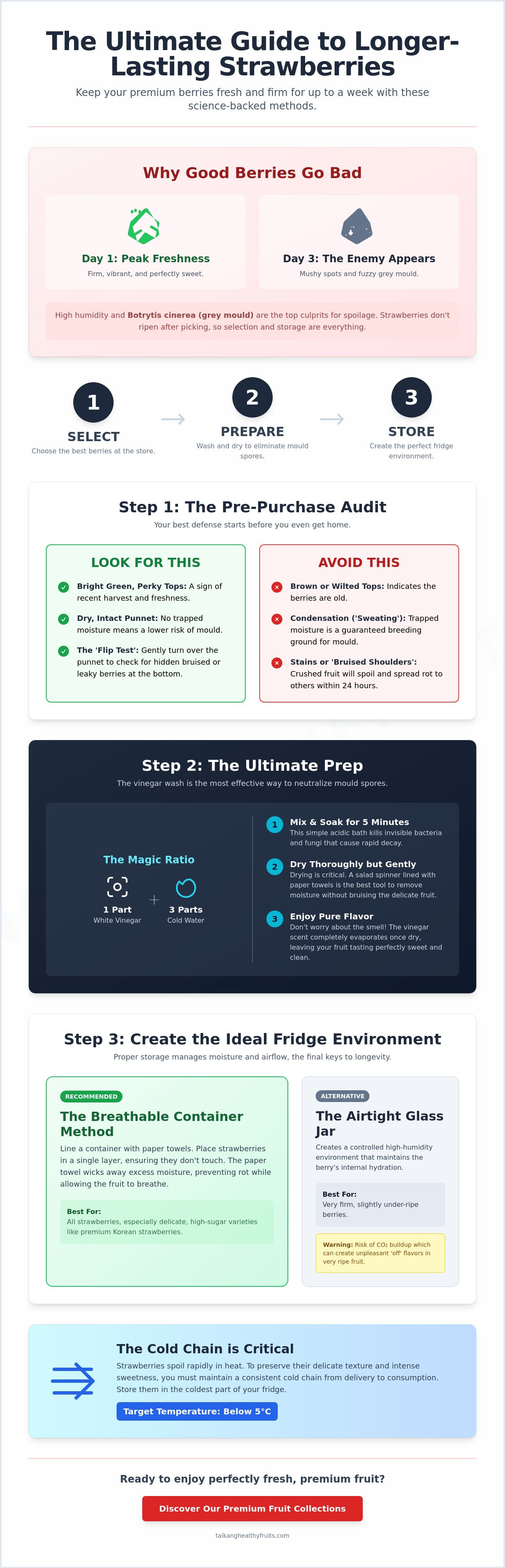
Why Strawberries Spoil Quickly (And How Selection Prevents It)
Longevity begins at the point of purchase. Many consumers don't realize that strawberries are non-climacteric fruits. This means they stop ripening the moment they are harvested. If you buy a punnet that looks pale or under-ripe, it will never develop that deep, honey-like sweetness associated with premium Korean strawberries. Understanding the botanical characteristics of strawberries helps you identify why they are so prone to rapid decay compared to other fruits.
The primary culprit behind a ruined batch is often Botrytis cinerea, commonly known as grey mould. This fungus thrives in moist environments and spreads through direct contact. One single fuzzy berry can compromise an entire container within hours. Because strawberries have extremely thin, porous skin, they absorb moisture from the air. This weakens their structure and invites rot. In a country that imports over 90% of its food supply, maintaining the integrity of these delicate imports is essential for reducing waste.
To better understand this concept, watch this helpful video:
The Science of Strawberry Spoilage
Unlike USA Envy apples or Thai honey mangoes, strawberries don't rely on ethylene gas to ripen on your counter. Instead, they are highly sensitive to temperature fluctuations that cause them to 'sweat.' Their respiration rate refers to the speed at which the fruit consumes oxygen and releases carbon dioxide; a high respiration rate means the fruit uses up its energy reserves and spoils faster. In Singapore's tropical heat, this process happens rapidly unless the cold chain is maintained below 5°C, as recommended by the Singapore Food Agency (SFA).
Selection Secrets for Maximum Shelf Life
Learning how to keep strawberries fresh longer starts with a rigorous visual audit before you buy. You should always look for bright green, perky calyxes. If the leafy tops are brown or dry, the berries were likely harvested a long time ago. Avoid any punnets showing signs of condensation or 'sweating' inside the plastic. This trapped moisture is a guaranteed breeding ground for mould spores.
Perform the 'flip test' by carefully turning the punnet over to inspect the bottom layer. Look for 'bruised shoulders' or juice-stained packaging. These indicate crushed fruit that will spoil within 24 hours. Choosing a dry, intact punnet of premium berries is the most effective way to ensure they stay firm and sweet for a full week in your home fridge.
The Best Methods for Extending Strawberry Shelf Life
The original plastic punnet is a trap for moisture. It's designed for logistics and transport, not for long-term storage in your kitchen. If you want to know how to keep strawberries fresh longer, you must move them into a managed environment immediately. Leaving berries in their arrival container allows grey mould to spread through contact and trapped humidity. Professional kitchens often use thermotherapy to combat this. This involves a brief hot water bath at 52 degrees Celsius for 30 seconds. This quick heat shock stuns spoilage enzymes without cooking the fruit, significantly extending its usable life.
The Vinegar Soak: Step-by-Step
The vinegar soak is the most effective way to neutralize mould spores. Use a ratio of 1 part white vinegar to 3 parts cold water. Submerge the berries for five minutes. This acidic environment kills bacteria and fungi that cause rapid decay. Drying is the most critical phase of this process. A salad spinner lined with paper towels is the best tool for this job. It removes moisture from the porous skin without causing bruises. Don't worry about the scent; the vinegar smell evaporates completely once the berries are dry. Your fruit will taste pure, sweet, and clean.
Airtight Glass Jars vs. Ventilated Containers
Glass jars are excellent for firm, slightly under-ripe berries. They create a controlled micro-environment that maintains the fruit's internal hydration. However, airtight storage carries risks. Carbon dioxide can build up and create 'off' flavours in very ripe fruit. For the delicate, high-sugar Korean strawberries found in our premium collections, a breathable environment is often better. Use a shallow container lined with a fresh paper towel. This absorbs ambient moisture while allowing the berries to breathe.
Consistency is the hallmark of quality. When you start with a fresh arrival of premium fruit, these storage methods become even more powerful. These techniques ensure that every berry remains as vibrant as the day it was picked. By managing the environment, you protect your investment and ensure a wholesome snacking experience for your family.
Practical Step-by-Step Storage for Singapore’s Climate
Singapore's tropical climate presents a unique challenge for fresh produce. With high heat and humidity levels, even the most resilient fruit can deteriorate quickly. Because Singapore imports over 90% of its food supply, your berries have already traveled a long distance before reaching your kitchen. Maintaining the cold chain is the most critical factor in how to keep strawberries fresh longer. You must move your berries from the delivery bag to the refrigerator immediately. Even thirty minutes on a warm kitchen counter can trigger the respiration process that leads to mushy fruit.
Temperature stability is just as important as the temperature itself. Avoid storing your Korean strawberries in the refrigerator door. The door is the warmest part of the appliance and experiences constant temperature swings every time you open it. While many people use the crisper drawer, it often traps too much moisture for delicate berries. The middle shelf of your fridge provides the most consistent environment. This area stays within the ideal range of 2°C to 4°C, which is necessary to slow down natural decay without freezing the fruit.
If you prefer to skip the vinegar soak, you must follow the 'wash-as-you-eat' rule. Moisture is the primary catalyst for mould growth. Only rinse the amount of fruit you intend to consume immediately. Washing the entire punnet and then storing it introduces water into the small pores of the skin. This almost guarantees a layer of mould will form within 48 hours. For the best experience, browse our premium fruit shop and choose berries that are delivered in peak condition, then follow these steps to maintain their integrity.
Managing Moisture in High Humidity
In a high-humidity environment, paper towels are your best defense. They act as a 'humidity buffer' by absorbing ambient moisture before it can settle on the fruit. You should never hull your strawberries before storing them. Keeping the green calyx attached prevents water from entering the fruit's core and causing internal rot. This simple habit preserves the structural integrity of the berry and keeps the flesh firm and sweet.
The 5-Step Daily Freshness Routine
- 1. Inspect upon arrival: Open the punnet immediately and remove any soft, bruised, or damaged berries to prevent spores from spreading.
- 2. Prepare the container: Line a wide, shallow glass or plastic container with a clean, dry paper towel to catch excess moisture.
- 3. Single layer arrangement: Place the berries in a single layer. This prevents the weight of the top berries from bruising the ones underneath.
- 4. Ventilation: Keep the lid slightly ajar or use a container with built-in vents to allow carbon dioxide to escape.
- 5. Optimal placement: Store the container in the main body of the fridge where the temperature is most stable.
Maximising the Life of Premium Korean Strawberries
Korean strawberries like the Maehyang and Seolhyang varieties are highly prized for their intense sweetness and floral fragrance. These premium fruits are significantly more delicate than standard varieties found in most supermarkets. Their superior taste comes from high brix levels. This refers to the natural sugar content within the fruit. While high sugar makes them a favorite for health-conscious dessert alternatives, it also means they have a faster respiration rate. This biological process leads to quicker spoilage if they aren't handled with extreme care.
Understanding how to keep strawberries fresh longer is especially important for these high-value imports. Because they have thinner skins and a softer mouthfeel, they don't tolerate pressure well. Any slight bruise becomes a gateway for bacteria. Our commitment to purity means we don't use artificial preservatives to extend shelf life. We rely on speed, temperature control, and careful handling to ensure you receive the best possible produce.
Special Care for High-Sugar Varieties
The single-layer rule is non-negotiable for premium Korean varieties. You should never stack these berries in a deep bowl or container. The weight of the top fruit will crush the bottom layer, causing the berries to bleed sugar and invite mould. For the best sensory experience, these berries should be consumed within three days of delivery. This ensures you enjoy the firm texture and vibrant flavor before the high sugar content begins to break down the fruit's structure. You can explore our latest arrivals of Korean Strawberries to see what is currently in season.
The Tai Kang Freshness Commitment
Our hand-picked philosophy is at the heart of everything we do. We inspect each batch to ensure that only the most robust and healthy fruit is selected for our premium gift boxes. This manual process allows us to identify and remove any berries with bruised shoulders that might compromise the rest of the punnet. By removing these risks early, we provide you with a product that stays fresh for longer in your home.
We manage a strict cold chain for all deliveries across Singapore. Our logistics team ensures that the fruit remains at a consistent temperature from our facility to your doorstep. This prevents the condensation that often occurs during tropical transport. You can learn more about our seasonal fruit selection and how we source the finest produce from our international partners. Following these storage steps ensures that every bite of your Korean strawberries is as wholesome and sweet as intended.
Enjoy Vibrant Freshness in Every Bite
You now have the practical tools to master strawberry storage in any environment. By understanding the science of moisture control and the importance of a stable cold chain, you can prevent premature spoilage and stop wasting premium fruit. Successful storage begins with mindful selection and ends with a managed environment in your refrigerator. These simple, repeatable routines are the most effective way to learn how to keep strawberries fresh longer while preserving their natural sweetness and firm texture. You don't have to settle for mushy berries ever again.
We take pride in sourcing the finest premium Korean and Japanese varieties for our community. Each punnet is hand-selected for peak ripeness and delivered via our temperature-controlled national network to ensure it reaches you in perfect condition. Our commitment to quality ensures that every berry is wholesome, safe, and delicious. Shop the Freshest Seasonal Strawberries for National Delivery today and experience the difference that professional care makes. Your family deserves the purest fruit available, and with these storage secrets, you can enjoy premium berries with complete confidence.
Frequently Asked Questions
Should I wash strawberries as soon as I get them home?
You should only wash strawberries immediately before you plan to eat them. Introducing moisture too early accelerates the decay process and invites mould growth. If you aren't using a specific vinegar soak to kill spores, it's best to keep the berries completely dry in their container. This simple habit is a key part of how to keep strawberries fresh longer. The green leafy tops should also stay attached to prevent water from soaking into the core.
Does the vinegar soak make strawberries taste like vinegar?
A vinegar soak does not leave a lingering taste if you follow the correct ratio and drying process. Using one part white vinegar to three parts cold water effectively kills mould spores without affecting the fruit's flavour. Once you rinse the berries and dry them thoroughly with a salad spinner or paper towels, the acidic scent evaporates. You are left with the pure, natural sweetness of the fruit without any unwanted aftertaste.
How long do strawberries actually last in the fridge?
Strawberries typically stay fresh for five to seven days when you use the professional storage methods outlined in this guide. Without proper care, most berries begin to soften or grow mould within 48 hours. Premium Korean varieties are more delicate and are best enjoyed within three days for optimal texture. Consistently maintaining a temperature between 2°C and 4°C in the main body of your fridge is the best way to maximize their shelf life.
Can I save a strawberry that has a small spot of mould?
You should discard any strawberry that shows even a tiny speck of grey mould. Mould is a fungus with deep roots that can penetrate the soft flesh of the fruit before it becomes visible on the surface. Eating contaminated fruit poses health risks and the flavour is often compromised. You must also remove the affected berry from the punnet immediately. This prevents the spores from spreading to neighboring fruit and ruining your entire batch.
Why do my strawberries get mushy even when they aren't mouldy?
Mushy texture is usually caused by a high respiration rate or frequent temperature fluctuations. When strawberries are exposed to warm air, they release carbon dioxide and moisture, which softens their cell walls. This often happens if they are stored in the fridge door where the temperature is unstable. Bruising from being stacked too deep also causes the juice to leak. This creates a soft, unappealing texture even if no visible mould is present.
Is it better to store strawberries in plastic or glass?
Glass jars are superior for maintaining a stable micro-environment for firm berries. They protect the fruit from the drying effects of the fridge's fan while keeping internal humidity levels steady. If your berries are very ripe or high in sugar, a shallow, ventilated container is a better choice. This setup allows for airflow and prevents the buildup of gases that can lead to off-flavors. Learning how to keep strawberries fresh longer involves choosing the right vessel for the fruit's specific ripeness.