
How to Store Grapes: The Ultimate Guide to Keeping Them Crisp for Weeks
What if the simple act of washing your fruit is actually the fastest way to turn a S$45 bunch of premium Shine Muscats into a mushy mess? It's a common frustration for fruit lovers in Singapore who value quality but struggle with our humid climate. We all want that refreshing, icy crunch every time we reach into the fridge for a healthy snack. It's disappointing when your investment in quality produce ends up in the food waste bin within 72 hours. This guide reveals the professional secrets for how to store grapes so they remain firm and sweet for up to 14 days.
You'll learn exactly why the "wash-first" habit is ruining your fruit and how to handle delicate luxury varieties with professional care. We'll show you how to master refrigerator humidity settings and choose the right containers to preserve every bit of flavor and texture. You can stop worrying about soft skins and start enjoying the consistent quality you expect from premium produce.
Key Takeaways
- Protect your grapes by keeping them dry and preserving the natural "bloom" coating until the moment you are ready to enjoy them.
- Master how to store grapes in your refrigerator by using original ventilated packaging and the high-humidity crisper drawer for maximum crunch.
- Learn the specialized techniques for handling luxury Shine Muscat and Kyoho varieties to maintain their vibrant green stems and firm texture.
- Discover how to transform older grapes into healthy frozen snacks or refreshing sorbet-like treats to ensure zero waste in your Singapore kitchen.
- Understand why lasting freshness begins with quality sourcing and a shorter farm-to-fridge timeline for premium produce.
The Golden Rule of Grape Storage: Moisture is the Enemy
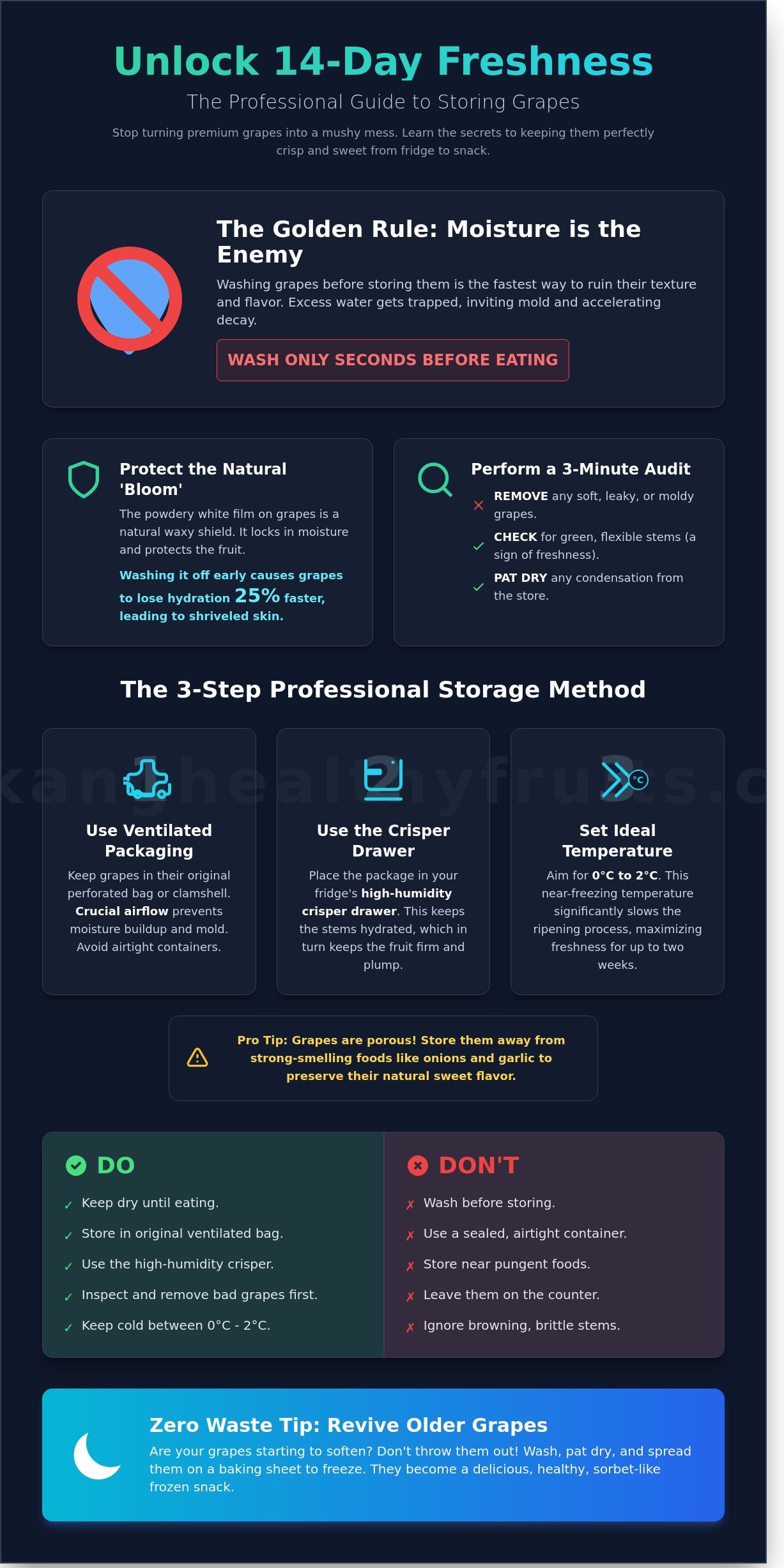
Managing the shelf life of premium fruit starts the moment you bring your punnet home. In Singapore, where humidity levels often exceed 80 percent, moisture management is the single most important factor for freshness. You should never wash your grapes until the second you are ready to consume them. Introducing water to the bunch prematurely triggers a chemical reaction that softens the skin and invites fungal growth.When you learn how to store grapes correctly, you protect your investment in quality nutrition. Cold storage is the standard for maintaining crispness, but any residual droplets from a kitchen tap will negate the benefits of refrigeration. Water gets trapped in the tight crevices where the stem meets the berry. This creates a breeding ground for bacteria and mold.
To better understand this concept, watch this helpful video:
Understanding how to store grapes effectively requires a shift in how we view the cleaning process. Most Table grapes are highly sensitive to external moisture. If you wash them before storage, you essentially bypass their natural defenses. The excess water causes the fruit to absorb liquid through the stem end, which dilutes the natural sugars and leads to a bland, watery flavor profile within 48 hours.
What is the 'Bloom' on Grapes?
The powdery white film on the surface of your grapes is called the bloom. This is a natural, waxy coating produced by the fruit itself to act as a moisture barrier. It's a sign of freshness and high quality. Premium varieties imported into Singapore often show a thick bloom because they have been handled with care. Washing the fruit days before consumption strips away this protective layer. Without the bloom, the fruit loses its internal hydration 25 percent faster. This leads to shriveled skins and a loss of that signature crunch.
Identifying Spoilage Early
A single decaying grape can ruin an entire S$15 punnet within two days. You must perform a quick audit of the bunch before placing it in the fridge. Look for grapes that are leaking juice or have visible brown spots near the stem. Mold spores travel through physical contact and shared air space. If you find a soft grape, remove it immediately to save the rest.
Healthy grapes should feel firm to the touch and remain securely attached to green, flexible stems. Brittle, brown stems indicate the fruit is past its peak and needs to be consumed within 24 hours. Check for a vinegar-like smell, which suggests that fermentation has already begun. By removing these outliers, you prevent the spread of decay and ensure the remaining berries stay crisp for up to two weeks in a controlled environment.
Initial inspection is a simple, three minute task that pays dividends in taste and value. We recommend spreading the grapes out on a clean, dry paper towel for a moment to ensure no moisture from the supermarket's misting system remains. Once they are dry and sorted, they are ready for the refrigerator.
The Best Way to Store Grapes in the Fridge
Learning how to store grapes correctly ensures they remain crisp and juicy for up to 14 days. Most people make the mistake of washing them immediately after returning from the market. Instead, you should keep them dry and cold. Start by keeping your grapes in their original ventilated packaging. These plastic bags or clamshell containers are designed with specific holes to allow air to circulate. Without this constant airflow, moisture builds up and leads to rapid mold growth.
Next, place the grapes in the high-humidity crisper drawer of your refrigerator. This specific zone helps maintain stem hydration, which prevents the fruit from shriveling or becoming soft. You should also keep grapes away from strong-smelling foods. Grapes are porous and act like sponges for surrounding scents. They easily absorb odors from onions, garlic, or leeks stored in the same compartment. If you want to enjoy the natural sweetness of your fruit, separation is key.
Finally, check your refrigerator settings to maintain a consistent temperature between 0°C and 2°C. While many home fridges in Singapore are set closer to 4°C, the lower range is ideal for longevity. Research from the preserve grapes guide by Utah State University Extension confirms that keeping fruit at these near-freezing temperatures significantly slows down the natural ripening process. For the best results, you can browse our new arrivals to find the freshest, firmest fruit available today.
Why Airflow Matters More Than You Think
Airtight containers are a common storage trap that many households fall into. These sealed environments capture ethylene gas and moisture, which accelerates decay. In Singapore, where the average outdoor humidity often exceeds 80 percent, condensation forms quickly when you open and close your fridge. This "sweating" effect can ruin a 500-gram bunch of grapes in less than 48 hours. If your original packaging seems too damp, place a clean paper towel at the bottom of the bag. The towel absorbs excess condensation while still allowing the fruit to breathe. This simple step prevents the skin from breaking down prematurely.
Optimizing Your Fridge Placement
Placement within the fridge is just as vital as the container itself. You should avoid pushing your grapes to the very back of the shelf. Temperatures there can frequently drop below 0°C, causing the water inside the grape to freeze and expand. This destroys the delicate cell structure, resulting in a mushy and unappealing texture once the fruit thaws. The crisper drawer is the safest spot because it protects the fruit from the direct blast of the cooling fan. Don't crowd the drawer with too many other heavy vegetables. Leave enough space so cold air can circulate around each bunch. This ensures a consistent temperature across every single grape in your batch. Knowing how to store grapes in this manner can extend their shelf life by 30 percent compared to basic shelf storage.
Storing Premium Varieties: Shine Muscat and Kyoho Grapes
Luxury grapes represent a significant investment in quality and flavor. In Singapore, a single bunch of premium fruit can cost between S$25 and S$85 depending on the season and grade. You need to know how to store grapes of this caliber to maintain their crisp texture and high sugar content. Unlike standard table grapes, varieties like Shine Muscat and Kyoho are often harvested at peak ripeness. This means they have a shorter window of perfection. You must treat them with the same care as a delicate floral arrangement to get the best value for your money.
Maintaining the "greenness" of the vine is your first priority. A vibrant green stem acts as a visual indicator of the fruit's hydration levels. If the stem turns brittle or brown, the grapes will lose their characteristic snap. According to the Utah State University Extension, grapes should be kept at high humidity levels, ideally between 90% and 95%, to prevent the stems from drying out. In a typical Singaporean household refrigerator, the vegetable crisper drawer is the best place to achieve these conditions. This environment limits airflow, which keeps the moisture inside the fruit where it belongs.
Presentation is also vital for these luxury items. If you plan to serve them on a platter or give them as a gift, keep them in their original packaging until the last possible moment. This prevents unnecessary contact with oils from your skin. These oils can rub off the natural "bloom," which is the white, waxy coating that protects the fruit from moisture loss and decay. A bunch with a pristine bloom looks fresher and stays firmer for longer. If you must move them, hold the bunch by the main thick stem rather than the individual berries.
Handling Shine Muscat Grapes
Shine Muscats are famous for their thin, edible skins and seedless, jelly-like flesh. Their skin is slightly thicker than a standard green grape, which helps them resist shriveling. However, they are sensitive to temperature fluctuations. You should keep them at a stable temperature of 1 to 2 degrees Celsius. Always leave them in their protective foam "socks" or plastic cradles. These cradles prevent the weight of the bunch from crushing the bottom berries. When you understand how to store grapes like these, they can maintain their floral aroma for up to 14 days in a dedicated refrigerator drawer. Avoid washing them before storage. Moisture trapped between the tightly packed berries can lead to mold in as little as 48 hours.
Kyoho Grapes: Managing Soft-Skin Varieties
When you purchase Japanese Kyoho Grapes, you're buying a variety known for its intense juice content and slip-skin texture. These grapes are far more delicate than Shine Muscats. Their high water content makes them prone to bruising under their own weight. To prevent this, store Kyoho bunches in a single layer. Don't stack other items on top of them in the fridge. Because of their high sugar levels, they ferment quickly if left at room temperature in Singapore's 30 degree humidity. These grapes are best consumed within 3 to 5 days of purchase. This ensures you experience the full wine-like depth of flavor before the skins begin to soften and lose their structural integrity.
Creative Storage: Freezing and Reviving Grapes
Freezing grapes is a practical solution for Singapore's tropical climate. Average kitchen temperatures often exceed 30 degrees Celsius, which accelerates fruit decay. Freezing extends the shelf life of your fruit while creating a healthy alternative to processed desserts. This technique is a key part of learning how to store grapes to minimize food waste in your household. By utilizing the freezer, you transform a perishable item into a long-term pantry staple that remains nutritious for months.
The Perfect Frozen Grape Snack
Most storage methods require keeping fruit dry until the moment of consumption. Freezing is the only exception to this rule. You must wash the grapes thoroughly in cold water first to remove any surface dust or residues. Dry them completely using a clean kitchen towel or paper towel. Excess moisture creates large ice crystals that ruin the delicate texture of the fruit. Arrange the individual grapes in a single layer on a flat baking tray. This prevents them from clumping into a solid mass during the initial phase. Place the tray in the freezer for at least 120 minutes until they're firm. Once frozen, transfer them to an airtight container or a heavy duty freezer bag. These frozen treats maintain their quality for up to 12 months.
Frozen grapes act as excellent natural ice cubes for white wine or summer tea. They won't dilute your drink as they melt; they keep the liquid at a crisp 4 degrees Celsius while adding a subtle aesthetic appeal. This makes them a sophisticated addition to our Premium Fruit Gift Boxes when shared during outdoor gatherings. The internal texture becomes creamy, much like a natural sorbet, providing a refreshing snack that contains zero added sugars or artificial flavorings. It's a favorite for health-conscious parents looking for wholesome treats.
Refreshing Your Grapes
Grapes lose moisture over time through their porous skins. A 15% loss in water content causes the skin to wrinkle and the internal flesh to soften. You can often reverse this dehydration with a simple 10 minute ice water bath. Submerge the softened grapes in a bowl filled with cold water and several ice cubes. The fruit absorbs a small amount of water through the skin via osmosis. This process restores turgidity and snap to about 90% of slightly shriveled fruit. Knowing how to store grapes effectively includes recognizing when they need this quick revival versus when they are past their prime.
You must distinguish between simple dehydration and actual spoilage. Check the stems and the attachment points carefully. If you see grey mold, feel slimy textures, or smell a fermented vinegar odor, the fruit is no longer safe. Do not attempt to revive grapes with these symptoms. If the grapes are safe but too soft for fresh eating, use them for cooking applications. Roasting grapes at 200 degrees Celsius for 15 minutes concentrates their natural sugars. They become a savory topping for cheese platters or morning yogurt. You can also simmer them into a quick homemade jam with a splash of lemon juice. This ensures you get the full value from every purchase without wasting quality produce.
Freshness Starts with Quality: Sourcing Your Grapes
You can master every trick regarding how to store grapes, but your success depends 90% on the condition of the fruit when you buy it. Grapes don't ripen after they're picked. This means the clock starts ticking the moment they leave the vine. In Singapore, much of the produce sits in shipping containers for weeks. By the time it reaches a standard grocery shelf, the stems are often brown and the berries have lost their internal pressure. Tai Kang Healthy Fruits changes this dynamic by prioritizing a shorter "farm-to-fridge" timeline. We focus on air-flown produce that arrives in Singapore within 48 to 72 hours of harvest. This speed preserves the natural "bloom," which is the waxy white coating that protects grapes from moisture loss and decay.
Choosing air-flown fruit is a practical investment for Singaporean households. While sea-freighted grapes might cost less initially, they often spoil within three days of purchase. Our air-flown varieties maintain their structural integrity for much longer. When you start with a bunch that's firm, hydrated, and securely attached to green, flexible stems, you're setting yourself up for two weeks of snacking instead of 48 hours of disappointment. High-quality sourcing isn't just about taste; it's about reducing food waste in your home.
The Tai Kang Quality Standard
We take quality control seriously to ensure your fruit arrives in peak condition. Every fruit hamper we curate undergoes a rigorous hand-selection process. Our team inspects each bunch for uniform size, skin tension, and stem health. We don't just ship fruit; we manage a strict cold chain. This means your grapes stay between 0 and 4 degrees Celsius from the moment they land at Changi Airport until they reach your door. This temperature consistency prevents the "sweating" effect that leads to rapid mold growth. Our Shine Muscats and strawberries are recognized as the gold standard in Singapore because we refuse to break this cold chain for the sake of cheaper logistics.
- Inspect immediately: Remove any bruised or soft berries from the bunch as soon as they arrive.
- Keep them dry: Moisture is the primary cause of mold, so never wash your grapes before putting them in the fridge.
- Use original packaging: The ventilated bags or clamshells provided are designed to balance airflow and humidity.
- Choose the back of the fridge: Store your grapes in the crisper drawer, away from onions or garlic that might transfer odors.
- Maintain the stems: Keep grapes attached to the vine until you're ready to eat them to prevent the "brush" from drying out.
Ready for a Refresh?
The most important rule for how to store grapes is the "No-Wash" policy. Only rinse your fruit under cold water immediately before consumption. This simple habit prevents the fruit from becoming mushy in the refrigerator. If you've struggled with fruit that turns soft overnight, it's time to upgrade your source. Experience the difference that professional hand-selection and air-flown logistics make for your family's health. We provide the quality, and you provide the proper storage environment. Quality fruit combined with correct storage practices ensures two weeks of crisp freshness.
Enjoy Farm-Fresh Crispness Every Day
Mastering how to store grapes ensures your fruit stays firm and flavorful for up to 14 days. It's vital to follow the 0% moisture rule; only wash your bunches right before you eat them. Keep your premium Shine Muscat or Kyoho grapes in their original ventilated packaging within the crisper drawer to maintain optimal humidity. Since 2020, Tai Kang Healthy Fruits has been trusted by health-conscious families to deliver the finest seasonal harvests. We hand-select every bunch to ensure you receive only the highest quality produce. You'll experience the difference of expertly curated fruit with our reliable service. We provide same-day delivery across Singapore for all orders placed before 11:00 AM. Our team inspects every 500g punnet for ripeness and skin integrity before it leaves our facility. This commitment to quality means your grapes arrive ready for the fridge. Click below to browse our current seasonal selection and taste the premium difference yourself.
Shop the Freshest Premium Grapes for Delivery in Singapore
We're excited to help you bring the sweetest, most nutritious fruit into your home today.
Frequently Asked Questions
How long do grapes actually last in the refrigerator?
Grapes stay fresh for 14 to 21 days when stored in the refrigerator at a temperature between 0°C and 2°C. To maximize this lifespan, place them in the high-humidity crisper drawer immediately after purchase. Keep them away from the back of the fridge where temperatures can drop below freezing, as this damages the cell structure of the fruit.
Can I store grapes on the kitchen counter?
You shouldn't store grapes on the kitchen counter for more than 2 to 4 hours. In Singapore's average ambient temperature of 31°C, grapes lose their crispness and begin to ferment rapidly. Professional storage requires a cool, stable environment to maintain the natural sugars and firm texture that define quality produce.
Should I remove grapes from the stem before storing them?
Keep your grapes attached to the main stem until you're ready to eat them. Removing the stem creates an open wound at the top of the fruit, which accelerates moisture loss and invites bacteria. This simple practice is a key part of how to store grapes effectively to ensure they remain juicy and firm for every serving.
Why do my grapes get moldy so quickly in Singapore?
Grapes mold quickly in Singapore because the average relative humidity often exceeds 80%. This moisture encourages the growth of Botrytis cinerea, a common grey mold. To prevent this, never wash your grapes before putting them in the fridge; only rinse the portion you plan to consume immediately to keep the rest dry.
Is it safe to eat grapes with the white waxy coating on them?
The white waxy coating, known as bloom, is completely safe to eat and actually indicates freshness. This natural substance protects the fruit from moisture loss and decay while on the vine. It's a sign that the grapes haven't been over-handled, preserving their natural integrity from the farm to your home in Singapore.
What is the best container for storing grapes if I don't have the original bag?
The best container is a vented plastic bowl or a perforated bag that allows for 360-degree airflow. Proper ventilation prevents the buildup of ethylene gas and moisture, which are the primary causes of spoilage. If you're wondering how to store grapes without the original packaging, a clean colander placed inside a larger bowl also works well.
Can I store grapes next to apples or bananas?
You shouldn't store grapes next to ethylene-producing fruits like apples or bananas. These fruits release high levels of gas that can cause grapes to soften and drop from the stem 30% faster than normal. Keep your grapes in a separate section of the crisper drawer to maintain their peak flavor and crunch.
How do I know if a grape has gone bad?
You can tell a grape has gone bad if it feels mushy, shows brown discoloration, or emits a sharp vinegar-like odor. Check the area where the grape meets the stem, as 90% of decay starts at this attachment point. If you see fuzzy grey mold on even one grape, discard the affected fruit immediately to save the rest of the bunch.