
How to Tell if a Melon is Perfectly Ripe: The Expert Guide to Peak Sweetness
That hollow "thump" you've been listening for might actually be leading you toward a bland, overripe disappointment. It's incredibly frustrating to invest in premium fruit only to find it's flavorless once you slice it open at home. You aren't alone in this confusion. Many shoppers struggle to distinguish between a melon that's ready to eat and one that needs more time on the vine.
We believe you deserve the best nature has to offer. This guide teaches you exactly how to tell if a melon is perfectly ripe by focusing on scent and texture rather than outdated myths. You'll gain the confidence to select the finest produce, from standard varieties to luxury Japanese Musk Melons. We'll cover specific sensory cues, proper storage techniques, and the signs of peak sweetness so every bite is consistently juicy and safe for your family. Mastering these simple checks ensures you never waste money on sub-par fruit again.
Key Takeaways
- Look for fruit that feels heavy for its size to ensure high sugar content and maximum juiciness.
- Discover how to tell if a melon is perfectly ripe by applying gentle pressure to the blossom end rather than relying on the misleading thump test.
- Identify the specific signs of luxury ripeness in Japanese Musk Melons, including the density of the surface netting and the state of the T-stem.
- Learn the 24-hour rule for refrigeration to maintain the perfect balance of flavor and texture in a humid climate.
- Recognize the difference between sugar spots and field spots to guarantee you choose the sweetest fruit every time.
The Universal Indicators: How to Tell if Any Melon is Ripe
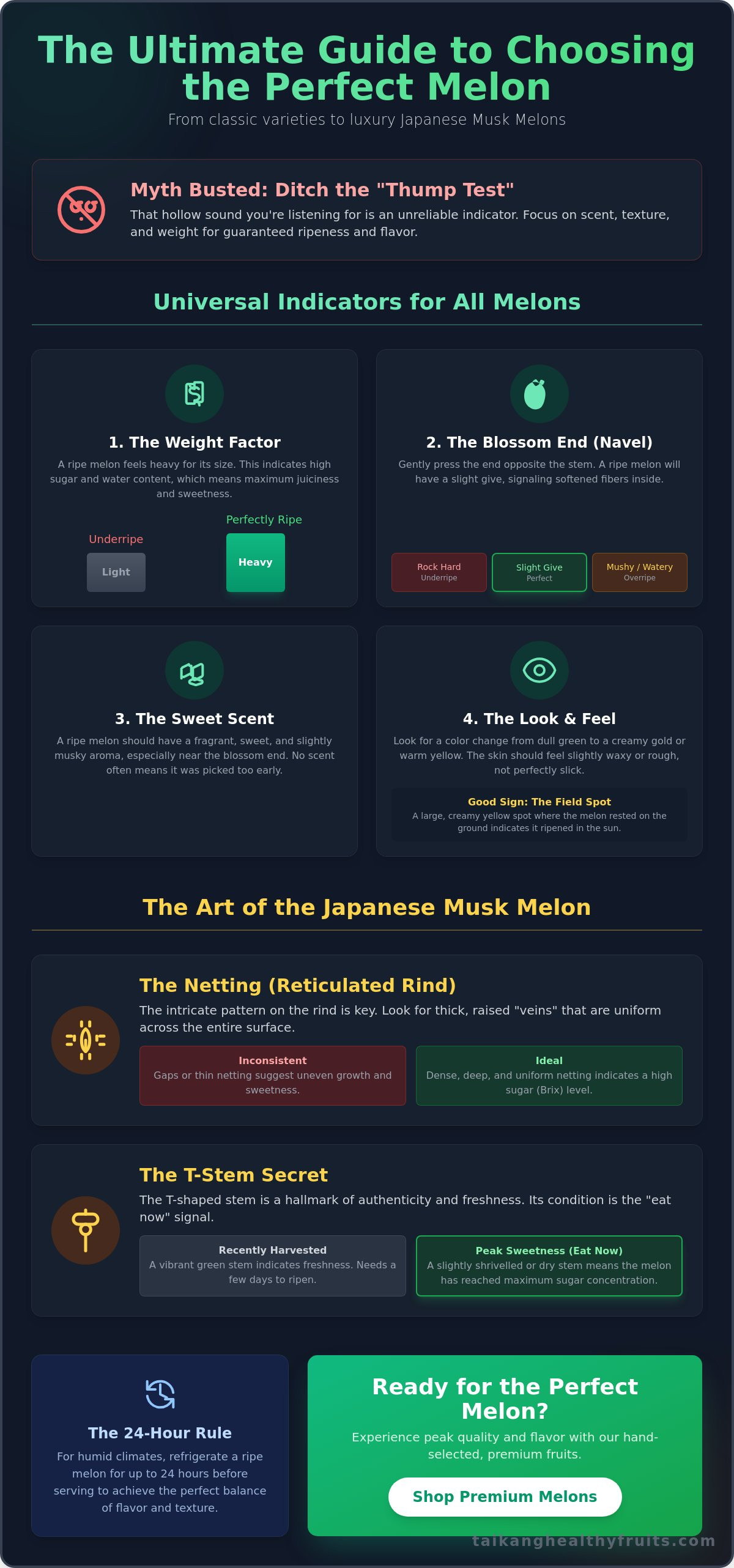
Understanding the biological signs of maturation is the first step in learning how to tell if a melon is perfectly ripe. While there are many different types of melons available, most follow a similar ripening pattern. You should look for a change in skin color from a dull green to a creamy gold or warm yellow. The skin texture should feel slightly waxy or rough rather than slick. The scent should be fragrant and sweet; a lack of aroma usually means the fruit was picked too early.
To better understand these physical cues, watch this helpful guide on identifying ripeness:
The Weight and Density Factor
Pick up several melons and compare them. The heaviest fruit for its size is almost always the sweetest. This happens because sugar and water content increase as the fruit reaches its peak on the vine. A light melon often feels airy or dry inside. Relative density is the key to a succulent interior. When you browse our premium fruit selection, you'll notice that high-quality produce feels substantial and solid in your hand. This weight is a natural promise of quality. There are no shortcuts to this development. There are no artificial ways to mimic this density.
Decoding the Blossom End (The Navel)
The blossom end is the small circle located directly opposite the stem. This is where the fruit is most sensitive to pressure. Give this area a gentle press with your thumb. A perfectly ripe melon will have a slight give, signaling that the fibers inside have softened appropriately. It shouldn't feel like a rock. It shouldn't feel like a sponge. If it's rock hard, it's underripe. However, you must avoid any fruit that feels watery or mushy in this spot. Mushiness is a sign of internal fermentation and over-ripeness. A firm but slightly yielding blossom end ensures you're enjoying the fruit at its absolute peak of safety and flavor.
The Art of the Japanese Musk Melon: Identifying Luxury Ripeness
Japanese Musk Melons represent the pinnacle of horticultural craft. They require a specialized eye to evaluate. While general rules apply, these luxury fruits offer unique visual cues that reveal their internal quality. Learning how to tell if a melon is perfectly ripe becomes an art form when dealing with these premium varieties. You aren't just looking for fruit; you're looking for a masterpiece of flavor and sweetness.
Reading the Reticulated Rind
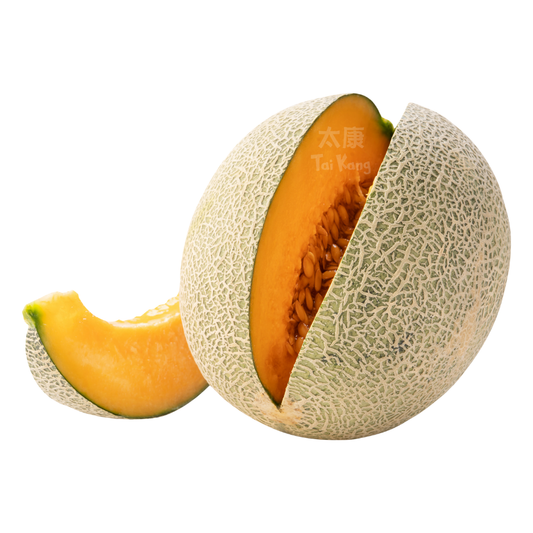
The intricate pattern on the rind is called netting. This is actually scar tissue that forms as the fruit grows rapidly in a controlled environment. You should look for thick, raised "veins" that are uniform across the entire surface. Dense, deep netting often indicates a higher Brix level, which is a direct measurement of sugar content. Gaps in this pattern can suggest inconsistent sweetness or growth. For those interested in Advanced Ripening Techniques, understanding the rind is essential. A well-defined texture is a sign of a healthy, high-quality melon.
The T-Stem Secret
Luxury melons arrive with a characteristic T-shaped stem. This stem is a hallmark of authenticity and freshness. It's not just for decoration. A vibrant green stem indicates the fruit was recently harvested. However, experienced connoisseurs often look for a slight wilting. A shrivelled or dry stem is the "eat now" signal for maximum sweetness. It suggests the fruit has reached its peak sugar concentration and is ready for the table. You can explore our hand-selected Japanese Musk Melons to experience this peak quality firsthand.
The fragrance of a premium Japanese melon is unmistakable. It emits a deep, musky perfume that fills the room. This scent should be present even before the fruit is cut. It's a reassuring sign of purity and natural origin. These melons are grown with pride and care to ensure they are safe for your family. There are no shortcuts in this process. There are no additives used to mimic this natural aroma. When the scent is strong and the stem is dry, you have found the perfect moment to enjoy your fruit. This level of quality ensures every slice is a rewarding experience for health-conscious consumers.
Advanced Ripening: Beyond the Traditional Thump Test
Many enthusiasts rely on sound to judge quality. However, the traditional thump test is often misleading for varieties like the Japanese Musk Melon or honeydews. If you want to know how to tell if a melon is perfectly ripe, you must look beyond the acoustic profile. Acoustic checks are notoriously subjective. They often lead to false positives that result in bland fruit. Reliable ripeness is found through visual and tactile evidence rather than sound alone.
The Myth of the Thump
While watermelons might "ring" when they are ready, muskmelons and honeydews do not behave the same way. A hollow sound in a cantaloupe might actually mean it is drying out rather than reaching peak sweetness. You should rely on the "sniff and squeeze" method instead. This involves checking the blossom end for a slight give and smelling for that characteristic musky aroma. We ensure our perfectly ripe fruits for corporate wellness boxes are evaluated using these reliable sensory cues rather than guesswork.
Identifying the Field Spot
The field spot is the patch where the melon rested on the ground. It is a vital indicator of how much sun the fruit received before harvest. You should look for a creamy yellow or even a deep orange patch. This color shows the fruit matured naturally in the sun. If the spot is white or green, the fruit was likely picked too early. It will lack the depth of flavor you expect from premium produce. A deep, warm color in this area is a sign of long-term sun-ripening and concentrated sugars.
Understanding ethylene gas is also crucial for home storage. Some melons continue to soften and develop aroma after they are harvested because of natural ethylene production. This is why a melon might smell better after sitting on your counter for a day. However, most melons do not significantly increase their sugar content once they leave the vine. You must choose a fruit that was harvested at the right time. Our commitment to transparency means we only offer fruit that meets strict quality standards. We don't use artificial ripening agents. We don't compromise on the natural integrity of our goods. This ensures you receive the intrinsic value of high-quality, pure produce every time. To provide your team with the best nature has to offer, you can order our premium corporate wellness fruit boxes here.
Maximising Flavour: Storage and Serving in Singapore's Climate
Singapore's tropical environment presents a unique challenge for fruit lovers. High heat and humidity can cause premium produce to over-ripen quickly if left unattended. You must manage the environment to preserve the integrity of your fruit. Understanding the specific timing for refrigeration is just as important as knowing how to tell if a melon is perfectly ripe in the first place. Proper care ensures you enjoy the natural sweetness and purity of every slice.
The Ripening Timeline
Most luxury fruits are delivered in a "firm-ripe" state. This ensures the delicate flesh isn't bruised during transit from Japan or Australia. If the stem is still green and firm, leave the melon on your counter for one to three days. You should monitor it daily. Once the blossom end has a slight give, the melon has reached its peak. At this stage, it is ready for the refrigerator or immediate serving. You can learn more about seasonal fruits in Singapore to better understand harvest cycles and peak freshness dates.
Serving Like a Connoisseur
We recommend the 24-hour rule for tropical climates. Once the fruit emits its full aroma, you have approximately 24 hours to move it to a cooler environment before the humidity begins to compromise the rind. This prevents the rapid spoilage often seen in humid regions. Serving temperature also impacts your tasting experience. A melon that is too cold will mask the subtle musky notes and complex sugars. For the best results, chill the fruit for only two or three hours before you plan to eat it. Avoid storing it in the fridge for weeks. Long-term refrigeration can lead to a loss of texture and a dulling of the natural aroma.
When you are ready to slice, remove the seeds carefully. This helps you preserve the precious juice concentrated in the center cavity. There is no need for additives or sweeteners when the fruit is handled with this level of respect. Providing the best nature has to offer is our passion. We take pride in the natural origin of our Japanese Musk Melons and Australian Honey Murcott Mandarins. If you want to share this experience with others, you can send a perfectly ripe fruit hamper today. These curated collections are ideal for health-conscious recipients who appreciate high-quality goods. You can trust that every melon you receive has been treated with care from the vine to your door.
Savor the Peak of Natural Sweetness
Selecting the right fruit shouldn't be a guessing game. By focusing on scent, weight, and the blossom end, you now know exactly how to tell if a melon is perfectly ripe. These sensory checks are far more reliable than the traditional thump test. You can confidently identify everything from standard varieties to luxury Japanese Musk Melons. This ensures every slice is as juicy and flavorful as nature intended.
We take the guesswork out of your shopping experience. Our team has been trusted by health-conscious families since 2020 to provide the highest quality produce. Every fruit is hand-selected by experts for peak ripeness. We offer direct-to-door national delivery in Singapore to ensure freshness. We don't use artificial ripening agents. We don't compromise on product integrity. You can shop our hand-selected, perfectly ripe seasonal fruits to experience the intrinsic value of premium goods today. Enjoy the confidence of knowing your next melon will be your best one yet.
Frequently Asked Questions
Can a melon ripen further after it has been picked?
Melons will soften and develop a stronger aroma after they are harvested, but their sugar content does not increase once they leave the vine. This is because the fruit no longer has a source of starch to convert into sugar. While the texture becomes more yielding over a few days on your counter, the sweetness stays the same. It's vital to choose fruit that was harvested at the correct maturity for the best flavor.
Why does my melon smell sweet but taste bland?
A sweet scent indicates that the fruit is releasing aromatic compounds as it softens, but it doesn't always mean the sugar levels are high. This often occurs when fruit is picked too early or grown in poor soil conditions. It's a common challenge when learning how to tell if a melon is perfectly ripe. You should always check the weight and the color of the field spot to ensure the sugars are as developed as the aroma.
What is the difference between a honeydew and a rock melon in terms of ripeness?
Honeydews should have a waxy, creamy white or yellow rind, while rock melons are judged by the raised, tan netting on their skin. A ripe honeydew feels slightly tacky to the touch and lacks any green tint. Rock melons emit a much stronger musky scent from the blossom end than honeydews do. Both varieties should feel heavy for their size, which indicates they are full of juice and ready for the table.
How long can I keep a ripe melon in the refrigerator?
You can generally keep a whole, ripe melon in the refrigerator for three to five days. Once you slice the fruit, you should consume it within two to three days to ensure the best taste and food safety. Always store cut pieces in an airtight container. This prevents the flesh from absorbing other odors in your fridge. Prolonged refrigeration can lead to a rubbery texture and a loss of the fruit's natural sweetness.
Is it safe to eat a melon that has a very soft or mushy spot?
No, a very soft or mushy spot usually indicates that the fruit has begun to ferment or decay. These areas can harbor bacteria or mold that may spread through the flesh. You should always inspect the rind for firm integrity and a consistent texture. If a spot feels significantly softer than the rest of the fruit, it's safer to discard it. Protecting your family's health is always the priority when selecting fresh produce.
How do I know if a Japanese Musk Melon is worth the premium price?
A Japanese Musk Melon is worth the investment when it displays dense, uniform netting and a deeply concentrated musky fragrance. These luxury fruits are grown with extreme care, often with only one melon per vine to concentrate all the nutrients. This process ensures a Brix level and buttery texture that standard melons simply cannot match. Understanding how to tell if a melon is perfectly ripe allows you to appreciate the intrinsic value of this high-quality, pure produce.