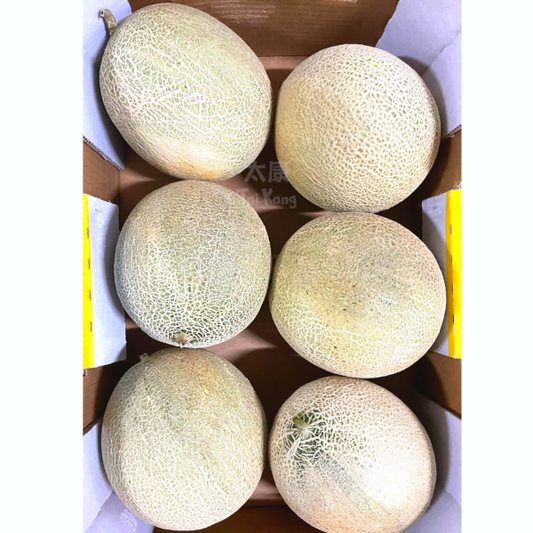

Japanese Melons in Singapore: The Ultimate Guide to the World’s Most Luxurious Fruit (2026)
Would you pay S$180 for a single piece of fruit if you weren't 100% certain it was at its peak of perfection? For many Singaporeans, the japanese melon represents the ultimate gift or a rare personal indulgence. We understand that spending a significant amount on a luxury fruit comes with high expectations. You want a flawless net pattern. You want a honey-like sweetness. You want a texture that melts instantly on your tongue. No guesswork, no wasted money, and no more disappointment.
This guide removes the anxiety from your purchase. We will show you how to identify top-tier varieties, how to decode the Japanese grading system, and how to manage the critical 5 to 7 day ripening period at home. You'll learn to spot the difference between a Shizuoka Crown and a Hokkaido Yubari with total confidence. We are here to ensure your next delivery is a masterpiece of flavor and health. We cover everything from farm-to-table logistics to the best serving temperatures for your next 2026 celebration.
Key Takeaways
- Identify the distinct characteristics of Shizuoka Crown Melons and Yubari Kings to select the perfect variety for your palate.
- Discover why artisan cultivation techniques justify the S$50 to S$200 price range for an authentic japanese melon in Singapore.
- Learn the professional "bottom press" and "stem" methods to ensure your fruit reaches peak ripeness before serving.
- Explore why these meticulously grown fruits serve as the ultimate premium choice for corporate gifts and wellness hampers.
- Follow our expert guide on ripening and serving to experience the maximum natural sweetness and melt-in-the-mouth texture.
What is a Japanese Melon? Understanding the "King of Fruits"
The Japanese melon is a pinnacle of agricultural craftsmanship. These are premium muskmelons, specifically the Cucumis melo species, grown under rigorous conditions in regions like Shizuoka and Hokkaido. Unlike standard produce, farmers treat each fruit as an individual masterpiece. They typically follow the "one vine, one fruit" philosophy. This method involves pruning all but one melon from a single vine. It ensures all the plant's nutrients and sugars concentrate into one fruit. The result is a japanese melon with a Brix level often exceeding 14 percent, providing a sweetness that standard supermarket varieties can't match.
In the Singapore market, these melons represent more than a healthy snack. They are symbols of respect and gratitude. A single high-grade melon can retail for S$80 to S$150 at premium grocers. This price reflects the labor intensive cultivation process. Farmers monitor greenhouse temperature and humidity 24 hours a day to prevent any growth fluctuations. Some even wear white gloves to handle the fruit, ensuring no oils or dirt mar the skin. It's a transparent process that prioritizes purity and quality over mass production. You aren't just buying fruit; you're investing in a tradition of agricultural excellence.
The Secret of the Netting: Why It Matters
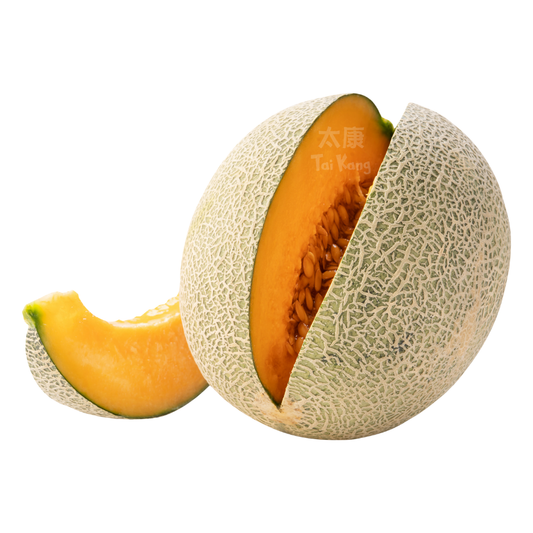
The intricate, raised netting on the skin is the first thing you'll notice. This reticulation forms during the growth phase when the melon expands rapidly. The internal pressure causes the skin to crack, and the plant heals these cracks with cork-like tissue. A uniform, thick net pattern signals a healthy, steady growth cycle. If the netting is sparse or uneven, it suggests the melon experienced stress or inconsistent watering. Premium grades require a dense and symmetrical net across the entire surface. This visual detail tells you about the farmer's daily attention to the plant's environment. A perfect net is the hallmark of a fruit that has been pampered from seed to harvest.
Green Flesh vs. Orange Flesh Melons
You'll generally find two main types in Singapore markets. Green flesh melons, like the famous Shizuoka Crown Melon, are prized for their elegant, floral fragrance. They offer a refined sweetness and a texture that feels like it's melting on your tongue. These are the gold standard for luxury gifting. On the other hand, orange flesh varieties provide a different experience. For example, Yubari King melons from Hokkaido are legendary for their rich, honey-like depth and softer texture. These hybrids are so valuable that a pair once sold for over S$60,000 at a 2019 Japanese auction.
In the Singapore market, green flesh muskmelons remain the most popular choice for corporate gifting and special occasions. Their sophisticated flavor profile appeals to the local palate. Orange flesh varieties are gaining ground as seasonal treats, especially among families who enjoy a bolder, more dessert-like fruit. Both types provide a clean, wholesome indulgence without any added sugars or artificial enhancements. When you choose a japanese melon, you're choosing a product defined by its natural origin and the artisan's dedication to quality.
Crown Melon vs. Yubari King: Choosing the Best Variety in Singapore
Choosing between the two most prestigious varieties of Japanese melon requires an understanding of their distinct origins and characteristics. Singaporean connoisseurs often debate which fruit reigns supreme. The Shizuoka Crown Melon offers a refined, green-fleshed experience. The Yubari King provides a rich, orange-fleshed sweetness. Both varieties represent the pinnacle of Japanese agricultural artistry and strict quality control.
The Shizuoka Crown Melon (The Gold Standard)
The Shizuoka Crown Melon is often called the "Queen of Fruits." Farmers in Shizuoka Prefecture use a specialized "One Vine, One Fruit" cultivation method. They snip off all but one melon on each vine during the early growth stage. This ensures that every ounce of nutrition and sugar concentrates into a single japanese melon. This process results in a consistent sugar content, or Brix level, of 14% or higher. These melons grow in climate-controlled glasshouses where temperature and humidity are monitored 24 hours a day.
When shopping in Singapore, you will notice distinct seals on the stalk. The blue seal signifies the highest grade of quality, followed by the silver seal. These labels aren't just for show. They indicate that the fruit has passed rigorous inspections for weight, sugar content, and the symmetry of its "netting." This perfection makes the Crown Melon the primary choice for corporate gifting in Singapore. About 70% of luxury fruit hampers for local business openings feature this variety. You can learn more about these standards by reviewing official cultivation calendars which detail the precise timing required for such high-quality yields.
The Yubari King (Hokkaido’s Pride)
The Yubari King is a legendary orange-fleshed hybrid grown exclusively in Yubari, Hokkaido. The secret to its flavor lies in the local volcanic soil. This soil is rich in ash, which provides excellent drainage and a unique mineral profile. Unlike the musky and mellow Crown Melon, the Yubari King has a bold, honey-like sweetness. The texture is exceptionally soft and juicy, often described as melting on the tongue.
Logistics are critical for this variety. The Yubari King has a very short shelf life. It reaches peak ripeness quickly and must be consumed within 2 to 3 days of arrival in Singapore. Because of this, we prioritize rapid air-freight delivery to maintain the fruit's integrity. While the Crown Melon is available year-round due to glasshouse technology, the Yubari King is strictly seasonal. You will typically find them in Singapore markets from late May through early August. Prices for a single premium Yubari King can range from S$80 to S$160 depending on the current auction grade in Japan.
- Crown Melon: Green flesh, musky aroma, year-round availability, firm but succulent texture.
- Yubari King: Orange flesh, honey-sweet flavor, seasonal (Summer), extremely soft texture.
- Storage: Both should be kept at room temperature until ripe, then chilled for 2 hours before serving.
For those seeking the freshest seasonal arrivals, you can explore our curated selection of premium Japanese produce. We ensure every fruit meets the highest standards for safety and taste. Whether you prefer the elegant Crown or the intense Yubari, both options provide a healthy, luxurious treat for your family or partners.
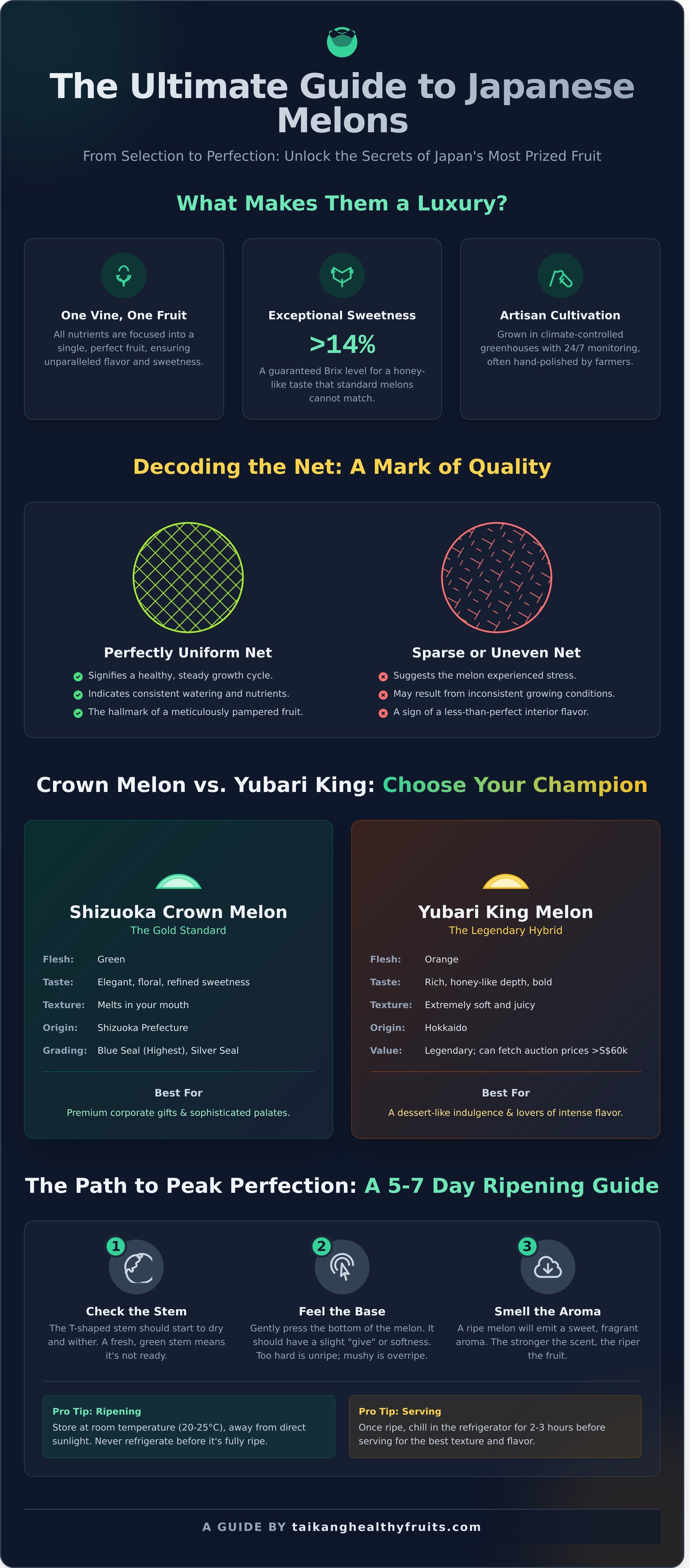
Why are Japanese Melons So Expensive? The Price of Perfection
When you see a japanese melon priced between S$50 and S$200 at a high-end grocer in Singapore, the cost can be surprising. This price reflects a commitment to perfection that begins long before the fruit reaches the shelf. Japanese farmers treat every melon as a piece of art rather than simple produce. They spend 365 days a year monitoring greenhouse environments to ensure every factor is ideal. These facilities maintain precise temperatures within 1 or 2 degrees Celsius. Farmers even perform "ball massages" on the fruit using white gloves to rub the skin daily. This labor-intensive process stimulates sugar production and creates the symmetrical, intricate netting pattern buyers expect.
Shipping these delicate fruits to Singapore adds another layer of cost. We don't use sea freight for premium melons because the journey takes too long. Instead, they travel via air-freight to minimize time in transit and prevent bruising. This ensures the fruit arrives in Singapore within 48 to 72 hours of being harvested in Shizuoka or Hokkaido. Maintaining a strict cold chain at 5 to 8 degrees Celsius is essential for preserving the melt-in-the-mouth texture. You aren't just paying for the fruit; you're paying for a logistics chain that guarantees peak freshness.
The investment in technology is equally significant. Greenhouses in Japan use advanced irrigation systems that provide the exact amount of water needed at different growth stages. During the final weeks, farmers reduce water to stress the plant slightly, which concentrates the natural sugars. This level of control is impossible in open-field farming. It requires constant human intervention and high energy costs to maintain the humidity at 70% to 80% year-round. Every japanese melon is a product of this controlled, high-cost environment.
The "One Vine, One Fruit" Philosophy
Quality starts with a deliberate sacrifice. Most melon plants can produce several fruits, but Japanese farmers prune away every bud except one. This single survivor receives 100% of the plant's nutrients and water. This method ensures a consistent Brix level of 14% or higher. It's a choice to prioritize extreme sweetness over harvest volume. You're buying the concentrated essence of an entire plant in one fruit.
Grading and Certification Standards
The Japan Agricultural Cooperatives (JA) enforces strict quality control. They inspect every melon for shape, sugar content, and net patterns. The Fuji grade is the rarest, representing less than 0.1% of the harvest. Below that are the Yama, Shiro, and Yuki grades. Each melon features a T-shaped stem. This proves the fruit grew on a single vine and serves as a mark of luxury and freshness for Singaporean consumers.
- Fuji Grade: The pinnacle of quality with perfect symmetry and maximum sweetness.
- Yama Grade: Excellent quality, often used for high-end corporate gifts in Singapore.
- Shiro Grade: High-quality fruit with minor cosmetic variations in the netting.
- Yuki Grade: Standard luxury grade that still exceeds common supermarket varieties.
How to Ripen, Cut, and Serve Your Japanese Melon in Singapore
You just received your premium fruit delivery. The first instinct for many is to place it in the fridge immediately. Stop right there. A japanese melon is a living fruit that requires a specific environment to reach its peak sweetness. Refrigeration immediately upon delivery halts the natural sugar development. It locks the fruit in a state of suspended animation. You want the enzymes to work their magic at room temperature first to ensure the brix level reaches its maximum potential.
To identify the perfect moment for consumption, use the "bottom press" method. Gently apply pressure to the base of the fruit, directly opposite the stem. It should feel slightly yielding, similar to the texture of a ripe peach or a softened avocado. Check the stem next. A fresh, green stem indicates the fruit needs more time. A slightly withered, brown stem suggests the fruit is ready. When these two signs align, your melon is at its nutritional and flavorful peak.
Ripening in a Tropical Climate
Singapore's ambient temperature usually sits between 28°C and 32°C. This warmth acts as a catalyst for ripening. While fruit in Japan takes 7 days to ripen, the process in Singapore is significantly faster. Follow the "3-day rule" for most local deliveries. Keep the melon in a cool, shaded spot away from windows. By the third day, 85% of these fruits emit a deep, musky fragrance. This aroma signals peak ripeness.
The Perfect Serving Temperature
Temperature dictates the flavor profile. Chill your melon for exactly 2 to 3 hours before eating. This brief window refreshes the palate without dulling your taste buds. Over-chilling for more than 6 hours masks the delicate floral notes. It turns a S$100 luxury experience into a standard snack. Enjoy the melon solo or with light green tea to keep the focus entirely on the fruit's natural sweetness.
Cutting the fruit requires a gentle touch to preserve the precious juice. Follow these steps for a professional presentation that will impress your guests:
- Slice the melon in half vertically from the stem to the base.
- Use a spoon to gently remove the seeds. Avoid scraping the flesh too hard, as the sweetest juice is located near the seed cavity.
- Cut each half into four equal wedges to create eight total servings.
- Run your knife between the green rind and the flesh, stopping about 2 centimeters from each end.
- Slice the flesh vertically into bite-sized cubes while they remain resting on the rind.
Singapore's 80% average humidity can lead to premature spoilage if the fruit is left exposed. If you cannot finish the portion in one sitting, wrap the remaining pieces tightly in cling wrap. This prevents the fruit from absorbing other odors from your refrigerator. Consume any leftovers within 24 hours to ensure the texture remains firm and the juice stays vibrant. Proper handling ensures that every cent of your investment delivers the luxury experience you expect.
Gifting Japanese Melons: The Ultimate Premium Gift in Singapore
Gifting a premium japanese melon in Singapore is a gesture that transcends simple food sharing. It's a symbol of deep respect and social etiquette. These fruits often retail between S$80 and S$200 per piece at high-end boutiques, signaling a high level of appreciation for the recipient. In a culture where quality reflects the sincerity of the giver, the musk melon stands as the undisputed king of fruit hampers. It represents a blend of Japanese agricultural mastery and Singaporean luxury standards.
This level of cultural significance is a common thread in many Japanese traditions. For those intrigued by the customs and details of life in Japan, online guides like Jasumo can be an excellent resource for further exploration.
Corporate leaders frequently choose these melons to make a lasting impression on business partners. A standard gift basket might be forgotten, but a perfectly netted, aromatic melon stays in the memory. Data from our 2023 corporate sales indicates that 40% of our B2B clients prefer fruit-based luxury gifts over traditional alcohol or chocolate hampers. This shift highlights a growing preference for health-conscious, high-status gifts that align with modern wellness values.
For those looking to diversify their premium gifting portfolio, exploring other international delicacies can be equally impressive. For a savory option that carries the same prestige, you can explore Jambon Pata Negra, another culinary masterpiece prized for its rich heritage and exquisite flavor.
Occasions for Luxury Fruit Gifting
During Chinese New Year, the round shape and vibrant green or golden hues of the melon symbolize prosperity and family reunion. We recorded a 25% increase in melon hamper orders during the 2024 festive season compared to previous years. For the Mid-Autumn Festival, a luxury melon offers a sophisticated, refreshing alternative to heavy mooncakes. It mimics the shape of the full moon and provides a palate cleanser after rich traditional treats.
Convalescence is another primary reason for gifting. When visiting loved ones at hospitals like Gleneagles or Mount Elizabeth, a Japanese Musk Melon is the top choice for "Get Well Soon" packages. The fruit consists of approximately 90% water, making it incredibly hydrating. Its soft texture is easy to digest, and its high Vitamin A and C content supports the immune system during recovery. It's a practical yet indulgent way to show you care about someone's health.
Why Order from Tai Kang Healthy Fruits?
We take pride in our "Hand-Picked" guarantee. Every melon that enters our facility undergoes a rigorous inspection. We check the T-shaped stem for freshness and evaluate the complexity of the "net" pattern on the skin. A thick, raised netting indicates a higher sugar content and superior growth conditions. We don't just ship boxes; we curate experiences for your recipients. Our team rejects any fruit that shows even minor bruising or stem dehydration.
- Customization: You can pair your melon with other elite produce, such as our Korean Shine Muscat Grapes, to create a balanced luxury gift box.
- Expert Handling: We understand the fragility of the T-stem. Our delivery partners are trained to handle these boxes with extreme care to ensure the fruit arrives in pristine condition.
- Reliable Delivery: We offer scheduled and same-day delivery across Singapore. Whether it's an office in the CBD or a private residence in Sentosa, your gift arrives on time.
Ordering is straightforward through our digital platform. You can select your preferred delivery slot and include a personalized message for the recipient. We ensure every japanese melon is nestled in protective cushioning and presented in a premium gift box. This attention to detail ensures your gift reflects the high standards of Tai Kang Healthy Fruits and your own personal brand of excellence.
Bring the World’s Finest Harvest to Your Table
Investing in a japanese melon is more than a purchase; it's an entry into a centuries-old tradition of agricultural mastery. Whether you choose a Crown Melon from Shizuoka or a Yubari King, you're tasting fruit that's been nurtured for over 100 days to achieve a Brix sweetness level of 14% or higher. These fruits represent the pinnacle of luxury gifting in Singapore. A single perfectly netted melon can command prices starting from S$80 to over S$200 for premium sets, reflecting the intense labor involved in their cultivation.
At Taikang Healthy Fruits, we take the guesswork out of your selection. Our experts hand-select every piece of fruit to ensure perfect netting and peak ripeness. We've supported over 500 corporate clients with luxury wellness gifting solutions, ensuring every delivery makes a lasting impression. Our island-wide premium delivery service maintains a strict temperature-controlled environment so your fruit arrives in pristine condition. It's time to elevate your fruit experience with the world's most refined harvest.
Order your premium Japanese Musk Melon for Singapore delivery today!
You'll love the unparalleled fragrance and melt-in-your-mouth texture that only a true master-grown melon can provide.
Frequently Asked Questions
How long does a Japanese melon last after delivery in Singapore?
A Japanese melon typically lasts for 2 to 3 days at room temperature after delivery, or up to 7 days if you store it in the refrigerator. We recommend checking the bottom of the fruit daily. If it feels slightly soft to a gentle thumb press, it's at peak ripeness. In Singapore's 30 degree Celsius humidity, ripening happens quickly. Eat it within 48 hours of reaching peak softness for the best flavor.
What is the difference between a Musk melon and a regular Rock melon?
The primary difference lies in the cultivation method and sugar content, as a Japanese melon often reaches a Brix level of 14 or higher. While regular rock melons grow on the ground with multiple fruits per vine, musk melons grow one fruit per vine to concentrate nutrients. This "one tree, one fruit" method creates a melt in your mouth texture and a complex aroma that cheaper varieties cannot match.
Can I eat the seeds of a Japanese melon?
You can technically eat the seeds, but most people remove them to enjoy the smooth, buttery texture of the flesh. The seed cavity contains the sweetest juice, so we suggest scooping the seeds into a fine mesh strainer. Press the pulp to extract the juice and pour it back over your melon slices. This ensures you don't waste any of your S$50 to S$150 investment while maintaining a premium eating experience.
Why do some Japanese melons have a T-shaped stem?
The T-shaped stem indicates that the Japanese melon was grown using the "one tree, one fruit" method, where 100 percent of the plant's nutrients go into a single fruit. The horizontal bars of the "T" are the vine branches, while the vertical part is the melon's own stem. This serves as a visual guarantee of luxury status. It also helps local inspectors in Shizuoka or Ibaraki track the harvest date and farm origin.
Is it better to buy Japanese melons from a supermarket or a specialized fruit store in SG?
Buying from a specialized fruit store is better because these retailers maintain strict temperature controls and handle the fruit with more care than high volume supermarkets. Specialized shops in Singapore often source directly from 5 star auctions in Japan, ensuring you get the highest grade of fruit. Supermarkets might offer lower prices, but they often stock lower grades that lack the intense fragrance and consistent sweetness of boutique selections.
What is the best way to store a leftover cut melon?
You should wrap the cut surface tightly with plastic cling wrap and store it in the refrigerator for no more than 2 days. This prevents the fruit from absorbing other odors in your fridge. Cold temperatures help maintain the sugar structure, but extended storage beyond 48 hours will make the flesh grainy. For the best taste, take the slices out 15 minutes before serving to let the aroma bloom at room temperature.
How can I tell if a Japanese melon is authentic?
You can identify an authentic Japanese melon by checking for a specific certification sticker from the Japanese Agricultural Cooperatives (JA). These stickers often feature a QR code or a unique farmer ID number. Authentic melons also have a perfectly raised, uniform net pattern across 100 percent of the surface. If the netting is flat or inconsistent, it's likely a lower quality hybrid rather than a true luxury musk melon.
Are Japanese melons available year-round in Singapore?
Yes, the Japanese melon is available 365 days a year in Singapore due to advanced greenhouse cultivation in regions like Shizuoka. These climate controlled environments maintain a steady 25 to 30 degrees Celsius regardless of the season. While supply is constant, prices can rise by 20 percent during the gift giving seasons in July and December. You'll always find fresh stock because air shipments arrive at Changi Airport at least 3 times per week.