
Korean Strawberries: The Ultimate Guide to Sweetness, Varieties, and Selection
Have you ever spent S$35 on a premium gift box in a Singapore supermarket only to find the fruit tastes watery and sour? We all know the frustration of paying a premium price for produce that doesn't deliver on its promises. You expect korean strawberries to be the peak of natural sweetness, but choosing the wrong variety often leads to food waste and disappointment.
At Tai Kang Healthy Fruits, we believe you deserve total transparency about what goes into your shopping basket. This guide ensures you never settle for mediocre fruit again by showing you how to identify the 12% to 15% Brix levels that define a true premium berry. You'll learn exactly how to pick varieties that stay firm in our tropical climate and which ones are best for a special gift. We'll explore the peak harvest months from December to April, compare popular types like Seolhyang and King’s Berry, and show you how to ensure your fruit stays fresh for up to seven days. By the end, you'll have the confidence to choose the best produce for your family's health and happiness.
Key Takeaways
- Understand the science behind winter cultivation and why it makes korean strawberries the sweetest choice for your family.
- Learn the distinct differences between Maehyang and Seolhyang varieties to match the perfect texture and flavor to your palate.
- Discover why premium air-freight from Seoul to Singapore ensures peak freshness and justifies the S$ value of these luxury fruits.
- Master professional selection and storage techniques, including the "no-wash" rule, to preserve the delicate aroma and shelf life.
- Explore Tai Kang’s commitment to a transparent cold chain process that delivers hand-selected, farm-to-table quality to your doorstep.
What Makes Korean Strawberries the Sweetest in the World?
Korean strawberries have earned a global reputation for their intense sweetness and distinct floral aroma. In the Singapore market, these premium fruits are the top choice for families and gift-givers who value quality. South Korea exported 4,840 tonnes of strawberries in 2021 alone, reflecting a growing international demand. This success is built on precise agricultural standards. These berries represent the pinnacle of breeding among global strawberry cultivars, focusing on flavor profile rather than just transport durability.
To better understand how these fruits are grown in high-tech environments, watch this helpful video:
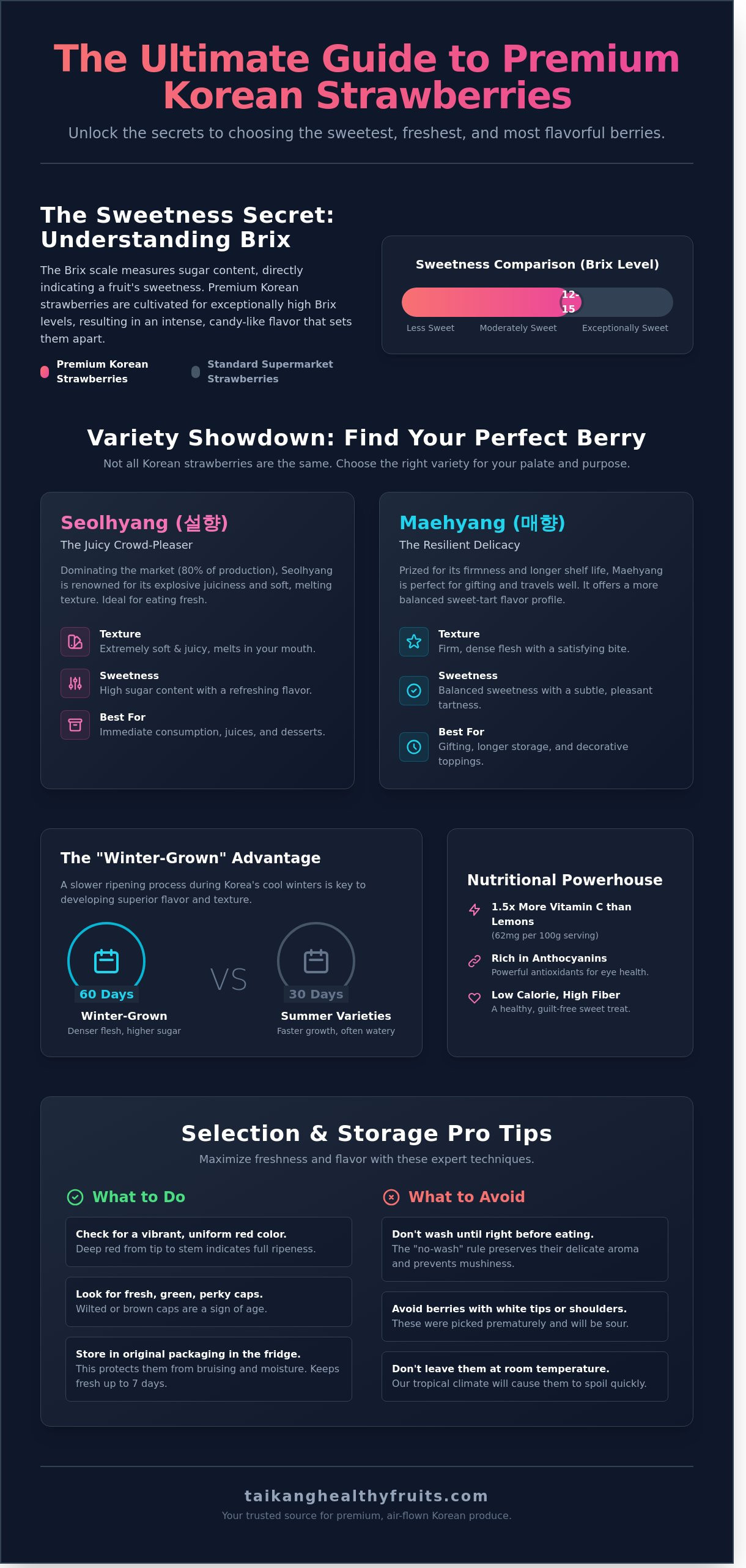
Korean farmers utilize the Brix scale to measure the sugar concentration in their harvest. Most standard strawberries found in supermarkets score between 8 and 10 degrees Brix. In contrast, premium korean strawberries consistently reach 12 to 15 degrees Brix. This high sugar level isn't a happy accident. It's the result of sophisticated greenhouse farming. South Korea manages over 10,000 hectares of strawberry production using "Smart Farm" technology. These systems monitor every variable, adjusting nutrient delivery and light exposure to ensure every berry meets a strict sweetness standard. This data-driven approach ensures that the fruit remains consistent in quality throughout the entire export season.
The transition to high-tech greenhouses has allowed farmers to control the environment with extreme precision. By using hydroponic systems and elevated growing benches, they prevent soil-borne diseases and ensure the fruit never touches the ground. This keeps the berries clean and reduces the need for heavy pesticides. It also allows for easier harvesting, which prevents bruising and maintains the aesthetic appeal that Singaporean consumers expect. The pride in this natural origin is evident in the final product's purity and safety.
The "Winter-Grown" Advantage
The primary season runs from December to June. During these months, the Korean peninsula experiences cold nights and cool, sunny days. This climate slows the ripening process. While summer varieties ripen in 30 days, winter-grown berries take up to 60 days. This longer cycle allows the fruit to develop a denser flesh and a much higher sugar concentration. It ensures a firm, juicy texture without the watery taste found in mass-produced alternatives.
Nutritional Profile and Health Benefits
These berries are a nutritional powerhouse for health-conscious Singaporeans. A 100g serving provides 62mg of Vitamin C, which is 1.5 times more than lemons. They are also rich in anthocyanins, the antioxidants that give the fruit its deep red color and support eye health. Low in calories and high in fiber, korean strawberries offer a wholesome snack option. They provide a safe and natural way to enjoy a sweet treat while maintaining a balanced lifestyle.
Maehyang vs. Seolhyang: Understanding Popular Varieties
Singapore's fruit markets are currently filled with a diverse range of korean strawberries, but not all berries offer the same experience. The specific variety you choose determines the texture, sweetness levels, and how long the fruit stays fresh in your refrigerator. Farmers in South Korea have spent decades refining their crops. This focus on strawberry production technology in Korea has led to the creation of specialized cultivars that cater to different consumer needs, from casual snacking to high-end corporate gifting.
Understanding these differences helps you get the best value for your money. While one variety might be perfect for a birthday cake topping, another is better suited for a long-distance delivery. In Singapore, the choice usually comes down to the balance between juiciness and structural integrity. Most imports arrive via cold-chain air freight to ensure they reach your table within 24 to 48 hours of harvest.
The Seolhyang Variety: The Juicy Crowd-Pleaser
Seolhyang is the most dominant variety in the market. It accounts for nearly 80% of the total strawberry production in Korea. These berries are famous for their soft, melting texture and high juice content. They're typically heart-shaped and bright red. Because they're so delicate, they don't handle long storage well. It's best to consume them immediately for maximum freshness. Their natural sweetness makes them a favorite for families and children who prefer a softer bite.
The Maehyang Variety: The Export Champion
Maehyang is the variety specifically bred for the international market. It features firm flesh and an elongated, elegant shape. This firmness is a key advantage. It allows the berry to withstand transport without bruising or leaking juice. This makes it the ideal choice for premium fruit gift boxes where visual perfection is required. Maehyang is the variety with the longest shelf life for delivery. It offers a crisp initial bite followed by a deep, concentrated sweetness that often measures above 12 Brix on the sugar scale.
Luxury Cultivars: King’s Berry and Vitaberry
The luxury segment has seen a surge in popularity in Singapore over the last two years. The King's Berry is a true jumbo cultivar. It's often twice the size of normal berries and can weigh up to 30 or 40 grams per piece. Beyond its size, it carries a subtle peach scent that lingers on the palate. Vitaberry is another premium choice. It was bred for health-conscious consumers and contains 30% higher Vitamin C content than standard varieties. You can identify these premium options in our new arrivals section during the peak winter harvest months.
When you're deciding which korean strawberries to buy, consider the occasion. If you're hosting a dinner party and want a show-stopping centerpiece, the King's Berry is the right choice. For a healthy daily snack, the juicy Seolhyang offers great value. If you're sending a gesture of appreciation to a business partner, the Maehyang provides the reliability and presentation you need. You might want to browse our seasonal collection to see which varieties are currently at their peak ripeness. Choosing the right variety ensures you enjoy the specific flavor profile and texture you're looking for.
Korean vs. Western Strawberries: Is the Premium Price Justified?
Korean strawberries often carry a higher price tag than Western supermarket varieties. A standard 250g pack typically retails between S$15 and S$30 in Singapore. This investment reflects a commitment to quality that mass-produced fruit rarely matches. You aren't just paying for berries; you're paying for a specialized supply chain that treats produce like fine jewelry. The value lies in the experience of eating fruit at its peak ripeness rather than fruit that ripened in a shipping container.
The price difference is rooted in the philosophy of the harvest. Western commercial berries are often bred for durability and long shelf lives. They're designed to survive weeks of sea freight. In contrast, Korean varieties are bred for flavor, fragrance, and texture. This focus on sensory quality requires a more expensive, delicate approach to logistics and handling.
The Cold Chain Logistics Challenge
The journey from a farm in Seoul to a doorstep in Singapore happens within a strict 24-48 hour window. Speed is essential because korean strawberries have thin, delicate skins that don't tolerate long journeys. They fly via air freight to ensure they arrive fresh. This rapid transport avoids the degradation that occurs during weeks of sea travel. It also requires a seamless cold chain. Temperature-controlled environments must be maintained at every step to prevent the fruit from sweating or softening.
Supermarket berries often lose their flavor because of broken cold chains. If the temperature fluctuates during transit, the sugars inside the berry begin to break down. By the time the fruit reaches a shelf, it's often watery or sour. The premium price in Singapore ensures that the berries remain at a constant, optimal temperature from the moment they're picked until they reach your kitchen.
Visual and Sensory Differences
Western berries are frequently picked while they're still green and hard. This allows them to withstand the pressure of being stacked in crates. While they eventually turn red on the outside, they often remain white and hollow on the inside. This lack of internal ripening leads to a tart, acidic taste that requires sugar or cream to be palatable. Korean berries are ripened on the vine until they're at least 90% red. This results in a fruit that's sweet to the core.
A scientific analysis of Korean strawberry flavor confirms that these varieties possess a unique volatile profile. This profile creates a distinct floral, candy-like aroma that fills a room the moment you open the pack. The eating experience is different too. Instead of a crunchy or fibrous texture, these berries offer a soft, melting sensation. They're consistently sweet, floral, and aromatic.
The "Zero-Waste" factor is a significant part of the price analysis in 2026. When you buy a cheaper pack of berries, you often discard 20% of the fruit because of bruising or sour, white tops. With premium korean strawberries, every part of the berry is edible and delicious. There's no need to cut away hard centers. You get 100% value from every gram you purchase. For health-conscious consumers in Singapore, this transparency in quality justifies the S$15 to S$30 market rate. You're buying purity, safety, and a guaranteed taste experience.
How to Select, Store, and Serve Your Strawberries
Selecting the perfect punnet requires a sharp eye and a keen sense of smell. High-quality korean strawberries are famous for their intense sweetness, but their delicate nature means they require careful handling from the moment you pick them up. You'll want to look for specific physical markers that indicate the fruit was harvested at peak maturity and handled with care during transit.
Choosing the Best Berries at a Glance
Start by looking at the calyx, which is the green leafy top. On the best berries, these leaves will point upward or curl away from the fruit. A flat or wilted calyx often suggests the berry was picked too early or has been sitting on the shelf for more than 48 hours. The surface must be a deep, glossy red from the tip all the way to the shoulder. Any white or green patches near the stem mean the berry hasn't reached its full sugar potential. Don't be afraid to use your nose. You should be able to smell the fragrance from at least 1 meter away. If there's no scent, the flavor will likely be muted. Check the packaging too. Premium suppliers ensure there's a small gap of 2 to 3 millimeters between each fruit. This prevents bruising and allows air to circulate, which keeps the skin firm.
Storage Secrets for Singaporean Homes
Singapore's average humidity of 80% can be a challenge for fresh produce. To keep your berries fresh for up to 5 days, keep them in their original plastic or cardboard container. These containers are designed with ventilation holes that manage moisture levels. Place the punnet in the coldest part of your refrigerator, usually the middle shelf, where temperatures stay between 2 and 4 degrees Celsius. Moisture is the enemy of a firm berry. It triggers mold growth within hours. You should only wash your berries immediately before you plan to eat them to maintain their natural texture and prevent sogginess. If you notice a single berry starting to soften, remove it from the pack immediately. This prevents the spread of spoilage to the rest of the batch.
Elegant Serving and Pairing Ideas
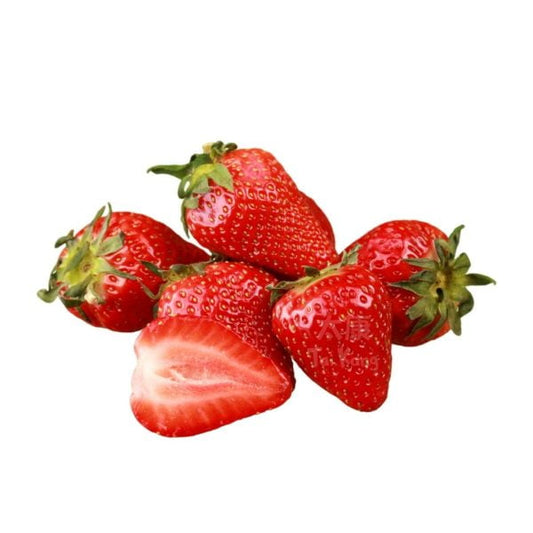
Presentation transforms a simple snack into a luxury experience. To highlight the beauty of korean strawberries, slice them vertically. This reveal shows off the internal white star-shape that contrasts beautifully against the red flesh. They're a perfect addition to premium fruit hampers, providing a pop of color and a burst of hydration. For a simple dessert, pair them with a dollop of light, unsweetened cream. The fats in the cream balance the natural acidity of the fruit. In a corporate setting, whole berries serve as an excellent centerpiece. A 2023 survey of Singaporean offices found that 75% of employees prefer fresh fruit platters over traditional pastries during meetings. They're easy to pick up, mess-free, and provide a clean energy boost without a sugar crash.
Experience the Best of Korea with Tai Kang Healthy Fruits
Tai Kang Healthy Fruits bridges the gap between the lush orchards of South Korea and the dining tables of Singapore. Every batch of korean strawberries we import undergoes a manual selection process. We don't just buy in bulk; we choose based on brix levels, skin tension, and color saturation. This ensures that every punnet meets the high standards expected by Singaporean parents and health enthusiasts who prioritize quality over quantity. Since our founding, we've focused on sourcing produce that tastes exactly as it does in the country of origin.
Freshness depends on speed and temperature control. Our cold chain management maintains a constant temperature between 2 and 4 degrees Celsius from the moment the fruit leaves the Korean packing house. We've optimized our logistics to ensure fruits reach our Singapore warehouse within 48 hours of harvest. This "farm-to-table" model minimizes nutrient loss and preserves the delicate aroma of the berries. We track every shipment with digital sensors to ensure no breaks in the cooling process occur during transit across the 4,600 kilometers to Changi Airport.
The year 2026 is set to be a landmark for fruit lovers in Singapore. Agricultural experts in South Korea are currently refining 12 new hybrid varieties scheduled for export by early 2026. These new cultivars focus on higher resistance to transport stress and even deeper sweetness profiles. We're already securing partnerships with these innovative farms to ensure our customers are the first to taste these upcoming harvests. Staying ahead of seasonal trends allows us to offer varieties that you won't find in standard supermarkets.
For those looking to share the gift of health, we offer extensive customization. Corporate clients often request bespoke fruit hampers for wellness programs, while families choose us for birthday celebrations. We provide premium packaging that protects the fruit while presenting it as a luxury gift. You can add personalized messages or select specific fruit combinations to suit the recipient's taste. Our gift sets start from S$60 and include only the highest grade of seasonal produce available.
Quality Assurance You Can Trust
We implement a 3-step inspection process for every shipment. First, our team in Korea checks the harvest. Second, we inspect the temperature logs upon arrival in Singapore. Third, our local staff manually checks each punnet before it leaves for your home. We maintain 100% transparency. You'll know the specific province and farm your fruit comes from. This accountability is the core of our freshness guarantee. If a product doesn't meet our brix standards, it doesn't make it to our store shelves.
Order Your Seasonal Favorites Today
You can now explore our current selection of Korean strawberries and seasonal fruits directly through our online store. We offer same-day delivery for orders placed before 10:00 AM, perfect for last-minute cravings or corporate events. Our fleet covers the entire island to ensure your berries arrive in pristine condition. Shop the full collection of fresh, healthy fruits now to experience the peak of Korean agriculture delivered straight to your doorstep.
Bring the Taste of Korea to Your Singapore Home
Choosing the right fruit means prioritizing both flavor and nutrition. These seasonal berries are celebrated globally for their high sugar levels. They often reach 12 to 14 Brix, making them significantly sweeter than many Western counterparts. By understanding the profiles of Seolhyang and Maehyang varieties, you can select the perfect balance of juiciness and firmness for your table. This produce isn't just a treat. It's a testament to meticulous farming standards and premium quality.
Tai Kang Healthy Fruits simplifies your search for excellence. We provide hand-selected premium grade berries that undergo a strict 100% quality inspection before they reach you. Our efficient logistics network ensures island-wide delivery within 24 hours of the fruit's arrival in Singapore. We maintain no hidden costs, no compromised freshness, and no delay in service. It's why more than 50 corporate partners rely on us for their wellness gifting needs. We believe in transparency and the intrinsic value of fresh, safe produce for every family.
Order Fresh Korean Strawberries for Singapore Delivery
Treat yourself to a bowl of vibrant, sweet berries today and taste the difference that professional care makes.
Frequently Asked Questions
When is the best season to buy Korean strawberries in Singapore?
You can find the best Korean strawberries in Singapore from December through April. The peak harvest occurs during the cold winter months of January and February when sugar content is highest. During this five month window, temperatures in Korea stay between -5°C and 10°C. These cool conditions allow the berries to ripen slowly. This results in a firmer texture and a Brix sweetness level often exceeding 12%.
How long do Korean strawberries stay fresh after delivery?
Korean strawberries typically remain fresh for 3 to 5 days when stored correctly in a refrigerator at 0°C to 4°C. Because they're harvested at 80% to 90% ripeness to ensure maximum flavor, they have a shorter shelf life than tougher varieties. To maintain quality, keep them in their original ventilated packaging. Don't remove the stems until you're ready to eat them to prevent moisture loss.
Why are Korean strawberries so much more expensive than those from Australia or the USA?
The price reflects premium cultivation methods and rapid logistics. While some berries might cost S$5.00 per pack, premium korean strawberries often retail between S$12.00 and S$25.00. Most are grown in high-tech greenhouses using smart farming technology to control humidity and light. They're also air-freighted to Singapore within 24 hours of harvest. This ensures you receive a sweet, juicy berry rather than a firm, tart one.
Can I include Korean strawberries in a fruit hamper for a hospital visit?
Yes, they're a thoughtful choice for hospital hampers because of their high nutritional value. A 100g serving provides 62mg of Vitamin C, which is 70% of the recommended daily intake for adults. This helps support immune recovery and collagen production. Since korean strawberries are easy to chew and naturally sweet, patients often prefer them over harder fruits. Just ensure the recipient has access to a refrigerator for storage.
What is the difference between Seolhyang and Maehyang strawberries?
Seolhyang accounts for 84% of Korea's production and is known for being incredibly juicy and soft. It's the most common variety you'll see in Singapore markets. In contrast, the Maehyang variety is firmer and has a distinct conical shape. Maehyang berries are often preferred for export because their sturdier skin survives travel better. They also tend to have a slightly higher sugar concentration, often reaching 13% Brix.
Do I need to wash Korean strawberries before eating?
You should give korean strawberries a quick rinse under cool, running water just before consumption. Most Korean farms use Good Agricultural Practices (GAP) certification to minimize chemical use, but a 30 second rinse removes any lingering dust or organic residue. Don't soak them in water. Soaking causes the berries to absorb moisture. This dilutes the natural sugars and softens the delicate flesh. Pat them dry gently with a paper towel.
Are Korean strawberries genetically modified (GMO)?
No, all commercial korean strawberries are 100% non-GMO. They're developed through traditional cross-breeding techniques at research centers like the Nonsan Strawberry Experiment Station. Breeders spend 5 to 10 years perfecting a single variety to enhance natural sweetness and aroma without any genetic modification. This commitment to natural breeding ensures the fruit remains safe, wholesome, and packed with authentic flavor for your family to enjoy.