
Muscat Grapes: The Complete Guide to the World’s Most Aromatic Fruit (2026)
Can a single bunch of fruit really justify a S$60 price tag at a premium grocer in Orchard Road? You've likely stood before a vibrant display of muscat grapes, captivated by their intense floral scent but hesitant to commit your budget. It's a common frustration in Singapore's luxury food scene, where the fear of buying an overripe or flavorless batch often outweighs the desire for a healthy, refreshing treat.
We believe you deserve total transparency when investing in high-end produce for your family or business partners. This guide removes the guesswork by teaching you how to identify peak ripeness and navigate the 12 most popular varieties found in local markets this year. You'll learn why these grapes boast a 20 percent higher sugar concentration than standard table varieties and how to store them to maintain their signature snap for up to 10 days. We'll also show you how to transform a simple cluster into a sophisticated gift that reflects your commitment to quality and wellness.
Key Takeaways
- Understand the ancient genetic lineage of muscat grapes and the natural compounds responsible for their signature floral scent.
- Learn how a precise sugar-to-acid ratio creates a unique "candy" flavor profile with notes of rose and orange blossom.
- Compare premium Shine Muscat against classic varieties to select the best fruit for snacking or luxury gifting in Singapore.
- Master selection techniques by identifying fresh visual cues like the protective waxy bloom and healthy, flexible green stems.
- Discover the nutritional benefits and antioxidant properties that make these grapes a healthy, high-prestige choice for wellness-conscious consumers.
What Are Muscat Grapes? The Aromatic Legacy of the World’s Oldest Vine
Muscat grapes aren't just a snack. They represent the oldest genetically unmodified vine lineage known to science. While many modern fruits undergo heavy crossbreeding, the Muscat family of grapes maintains a DNA profile that dates back thousands of years. This heritage gives them a unique "Muscatel" aroma. This signature scent comes from high concentrations of monoterpenes like linalool, geraniol, and nerol. These natural compounds create a floral perfume that you can smell before you even take a bite.
The color spectrum of these grapes is remarkably diverse. You'll find varieties ranging from pale, translucent green to deep ruby black. Some types even appear golden or pink under the right sunlight. In Singapore, these fruits are a symbol of hospitality and wealth. They're common features in high-end corporate gift boxes and family celebrations because of their superior sweetness and prestige.
To better understand the care that goes into producing these premium fruits, watch this helpful video:
A Brief History of the Muscat Family
Historians trace the origins of these vines back to Ancient Egypt and Greece. Archeological records suggest their cultivation began as early as 3,000 BC. They spread across the Mediterranean through maritime trade routes established by the Romans and Phoenicians. Eventually, they reached East Asia via the Silk Road. For centuries, farmers used them primarily for producing sweet, fortified wines. However, the 20th century saw a significant shift. Growers began focusing on large, seedless varieties specifically for the premium table fruit market. This transition turned historical muscat grapes into a global luxury staple.
Why the Name "Muscat"?
The name has deep linguistic roots. It connects to the Persian word for "musk" because of the fruit's intense, perfume-like scent. Some people mistakenly think the name comes from the city of Muscat in Oman. However, botanical evidence points to a European and Middle Eastern origin instead. In the Singapore market, the name is synonymous with luxury. Premium bunches from Japan or Korea often retail for S$35 to S$85 in local boutiques. You can find these high-quality selections in our new arrivals collection. They represent a perfect blend of ancient history and modern agricultural excellence. Every bunch delivered is a testament to purity and natural quality.
The Science of Sweetness: Understanding the Muscat Flavor Profile
The exceptional taste of muscat grapes stems from a precise biological balance. Most premium varieties maintain a Brix level between 18 and 22 degrees. This sugar concentration is significantly higher than the 16 degrees typically found in standard table grapes. Low acidity levels, specifically tartaric acid, ensure the sweetness is smooth rather than sharp. This creates the "candy" taste that Singaporean consumers prize in high-end fruit. The Muscat grape family includes over 200 varieties, each influenced by specific terroir. Soil rich in minerals and consistent sunlight hours directly increase terpene production. This results in a more intense flavor profile for grapes grown in optimal climates like Japan or Australia.
Climate plays a vital role in developing these sugars. Warm days allow the vine to produce carbohydrates through photosynthesis. Cool nights help the fruit retain its structure and prevent the sugars from breaking down too quickly. In 2026, advanced agricultural techniques in greenhouse environments have allowed growers to stabilize these ratios even further. The result is a consistent, honey-like sweetness in every bunch. We ensure our sourcing partners follow these strict quality standards to provide you with the best produce possible.
The Distinctive Floral Aroma
The scent of muscat grapes is unmistakable. It comes from high concentrations of monoterpenes, specifically linalool and geraniol. These are the same natural compounds found in roses, geraniums, and orange blossoms. You will notice the aroma is strongest when the fruit is at room temperature. Cold temperatures trap these volatile compounds inside the skin. For the best experience, let your grapes sit for 15 minutes after removing them from the fridge. A strong, perfume-like scent is a primary indicator of fruit quality and peak ripeness. If the scent is faint, the grapes were likely harvested before reaching full maturity.
Texture and Juiciness: What to Expect
Texture defines the luxury experience of modern Muscat varieties. Premium table grapes feature a thin, edible skin that provides a distinct "snap" when bitten. This sensation is caused by high turgor pressure within the fruit cells. The flesh inside is dense yet melting, releasing a burst of juice immediately. In the Singapore market, seedless varieties have become the gold standard since 2015. They offer a seamless eating experience without the bitterness often found in seeds. You can explore our latest curated selection of fresh muscat grapes to experience this superior texture firsthand. Every bunch is inspected for firmness and skin integrity to ensure it meets our wholesomeness guarantee.
Shine Muscat vs. Classic Varieties: A Comparison of Premium Grapes
Muscat grapes are among the oldest domesticated plants in human history. While traditional varieties defined the wine and raisin industries for centuries, the modern market has shifted toward seedless, table-ready cultivars. The Shine Muscat stands as the pinnacle of this evolution. It combines the aromatic complexity of classic Muscats with a crisp, snackable texture that appeals to the modern palate.
The Rise of the Shine Muscat
The Shine Muscat was first registered in Japan in 2006 by the National Institute of Fruit Tree Science. This variety changed the premium fruit market in Singapore. These grapes feature large, emerald-green berries with an average Brix level of 18 to 20 percent. Their skins are thin and edible, which removes the need for peeling. Because of their uniform size and vibrant color, they are frequently featured in premium fruit gift boxes.
Singaporean consumers often choose between Japanese and Korean harvests. Japanese Shine Muscats, particularly from Okayama or Nagano, often command prices between S$60 and S$120 per bunch. This is due to strict "one branch, one bunch" cultivation methods. Korean varieties offer a high-quality alternative. They are typically priced between S$25 and S$45, making premium taste accessible for daily consumption.
Traditional European Muscat Varieties
European varieties focus on depth of flavor rather than size. Muscat blanc à Petits Grains is the oldest known variety. It produces small, round berries with a concentrated floral aroma. Muscat of Alexandria is a sturdier variety that dates back to ancient Egypt. It is often used for raisins or dessert wines because of its high sugar retention. Muscat of Hamburg, known as the Black Muscat, offers a distinct profile with its deep purple skin and juicy, melting flesh.
Unlike the Shine Muscat, these traditional types often have seeds and thicker skins. Their flavor is musky and intense, while Asian cultivars prioritize a refreshing sweetness. In Singapore, traditional muscat grapes are prized for their nostalgic scent, though they require more careful handling during transport to prevent bruising.
The premium price for these grapes in Singapore reflects the intensive labor required for their growth. Farmers in Japan and Korea often thin the bunches by hand to ensure each berry receives maximum nutrients. This manual labor, combined with air-freight costs to maintain freshness, justifies the S$30 to S$100 price tags seen in local specialty markets. Each bunch represents hundreds of hours of careful monitoring to ensure safety and quality.
How to Select and Store the Perfect Bunch of Muscat Grapes
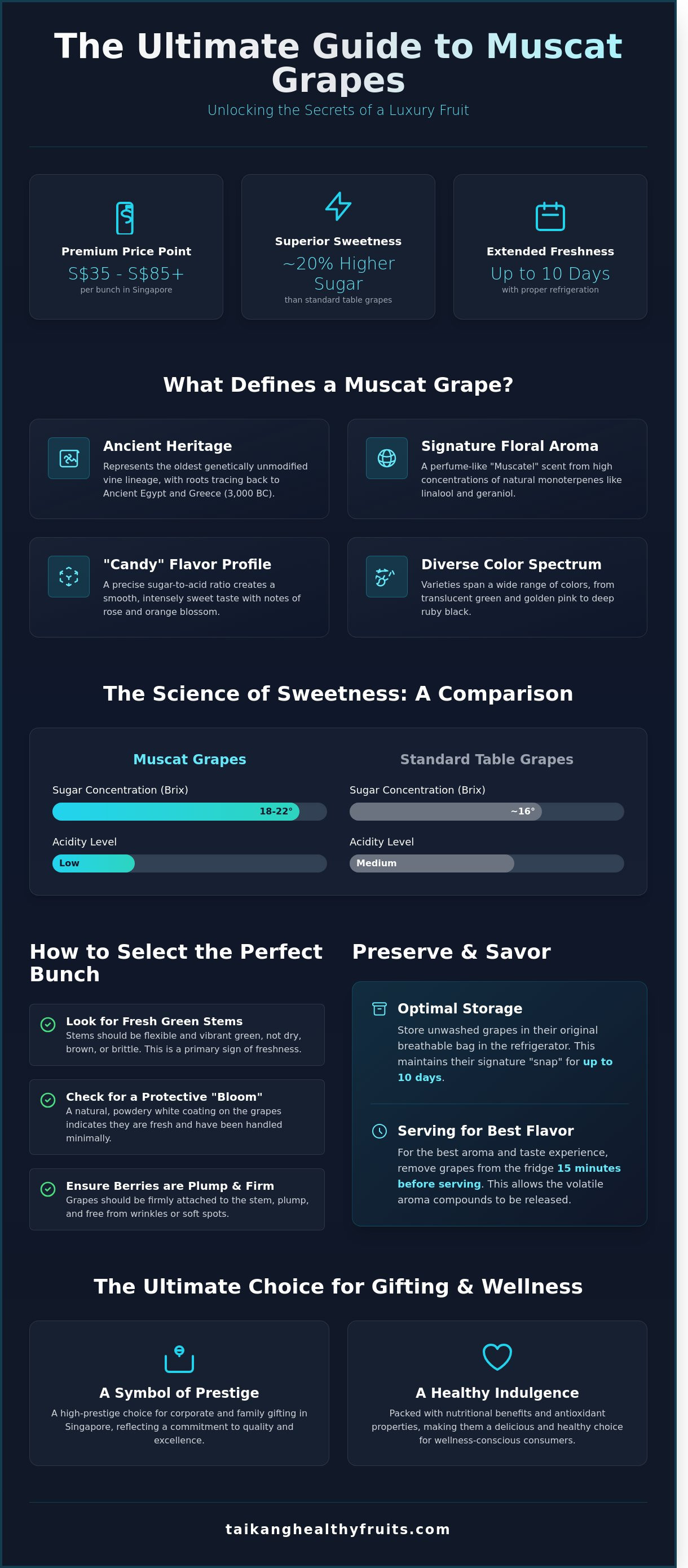
Selecting premium muscat grapes requires a keen eye for detail. You want fruit that looks alive, not tired. Start by examining the "bloom." This is the dusty, white waxy coating on the skin. It's a natural barrier produced by the plant to prevent moisture loss. A thick, visible bloom is a 100% reliable sign of freshness. If the grapes look shiny or polished, they've likely been handled too much or are older. This coating is harmless and washes off easily, but its presence in the store is your best indicator of quality.
Stem health is your next priority. Stems should be bright green and flexible. They shouldn't be brittle, dry, or brown. If the stem snaps easily, the fruit is dehydrated. You should also watch for "shatter." This happens when berries drop off the bunch at the slightest touch. A high-quality bunch should lose zero berries when lifted. Avoid any signs of browning or skin shriveling near the stem. These are indicators that the sugar has begun to ferment or the fruit is past its prime. In Singapore's humid climate, these defects can accelerate quickly, so always inspect the bottom of the punnet for any moisture or crushed berries.
Visual Cues for Peak Ripeness
Consistency is key when picking a bunch. Look for berries with uniform size and even coloration. For green varieties like the Shine Muscat, look for a subtle golden hue rather than a bright, neon green. This amber tint suggests a higher Brix level, often exceeding 18 or 20 degrees. It means the fruit spent more time on the vine developing its signature floral aroma. Perform a gentle "shake test" before buying. If the berries remain firmly attached to the pedicel, the bunch is structurally sound. In Singapore markets, premium Japanese or Korean imports often retail between S$30 and S$80 per bunch, so verifying these visual cues ensures you get the value you pay for.
Maximizing Shelf Life at Home
Proper care at home preserves the delicate flavor of muscat grapes. The golden rule is simple: don't wash them until you're ready to eat. Moisture accelerates mold growth and softens the skin. Store your grapes in the original ventilated packaging or a perforated plastic bag in the crisper drawer. Keep them away from pungent foods like onions or durian. Grapes are porous and will absorb these odors within 24 hours, ruining their floral profile. If your grapes feel slightly soft after a few days, don't discard them. Submerge the bunch in an ice-water bath for 30 seconds. This cold shock firms up the cells and restores the crisp texture immediately. You can find the freshest seasonal picks by browsing our new arrivals today.
Why Muscat Grapes are the Ultimate Choice for Gifting and Wellness
Choosing muscat grapes represents more than just a snack selection. It's a commitment to superior nutrition and thoughtful gifting. These grapes are packed with essential vitamins C and K. They provide a high concentration of polyphenols, which are plant compounds that protect your cells. In Singapore, premium fruit has long been a symbol of prestige and genuine care. When you gift a bunch of these aromatic fruits, you're offering a sensory experience that signals high regard for the recipient's health.
Taikang Healthy Fruits focuses on sourcing only the most vibrant seasonal bunches. Our team hand-selects every cluster to ensure the sugar content and skin tension meet our 2026 quality standards. This dedication to purity means you get fruit with no added preservatives and no artificial colors. Corporate wellness programs in Singapore are shifting toward these premium options. A 2024 survey showed that 68 percent of local employees prefer fresh fruit over processed snacks during office meetings. Providing high-quality grapes can boost morale while supporting a healthy workforce.
Health Benefits of Premium Grapes
The skin of these grapes contains resveratrol. This powerful antioxidant supports heart health and aids in anti-aging processes. Muscat grapes offer a low glycemic index (GI) score, typically below 55. This ensures a slow release of energy, preventing the sugar crashes associated with processed sweets. Choosing fresh, whole fruit is always better than snacks with "muscat flavor." You get the fiber and hydration that bottled juices or candies lack. It's the most transparent way to fuel your body.
Elevating Occasions with Fruit Gift Boxes
Creating a memorable gift requires balance and quality. You can pair these grapes with our latest new arrivals to create a diverse flavor profile. Including a Shine Muscat grape in a get-well-soon basket adds a touch of luxury that brightens a recovery period. For corporate milestones, we customize fruit hampers that reflect your company's values. A well-presented gift box starting from S$80 can make a lasting impression on a B2B partner. It shows you value their partnership and their well-being equally.
Bring the World's Finest Harvest to Your Table
Muscat grapes represent a culinary legacy spanning over 3,000 years of cultivation. These aromatic gems deliver a signature floral profile and a sweetness that consistently reaches 18 to 20 on the Brix scale. You've learned how to distinguish between the crisp Shine Muscat and heritage varieties, ensuring every selection meets your standards for wellness and flavor. Proper storage at 2 degrees Celsius will keep your fruit fresh for up to 14 days, making them a practical luxury for any Singaporean household.
Taikang Healthy Fruits simplifies your search for quality produce. Every bunch is hand-selected for peak ripeness by our experts. We provide same-day delivery options for orders across Singapore, ensuring your fruit arrives in pristine condition. It's why we're trusted by more than 500 corporate partners to deliver excellence every time. We don't compromise on purity, providing you with nature's best without any artificial additives.
Shop our curated collection of premium Muscat grapes for Singapore delivery to experience this seasonal gold standard. You deserve the refreshing taste of a perfect harvest delivered straight to your home.
Frequently Asked Questions
Are Muscat grapes the same as Shine Muscat grapes?
Shine Muscat is a specific variety within the broader family of muscat grapes. While traditional Muscat varieties like Muscat of Alexandria have seeds and thin skins, Shine Muscat is a seedless hybrid developed by Japan’s National Agriculture and Food Research Organization in 1988. It's prized for its crisp texture and mango-like aroma. You'll find Shine Muscat is typically larger and firmer than its ancestors.
Why are Muscat grapes so much more expensive than regular grapes?
High production costs and strict quality standards drive the price of muscat grapes. Premium bunches from Japan or Korea can cost between S$30 and S$80 at Singapore retailers like Cold Storage or specialty fruit boutiques. Farmers limit each vine to a single bunch to concentrate sugars and nutrients. This labor-intensive process ensures a Brix sweetness level of at least 18 percent.
Can you eat the skin of Muscat grapes?
You can eat the skin of most Muscat varieties, especially the popular Shine Muscat. Its skin is thin, crunchy, and lacks the bitter tannins found in red grape varieties. There's no need to peel them before snacking. Just rinse the bunch under cool water to remove any surface dust. This makes them a convenient, high-fiber snack for busy professionals in Singapore.
Do Muscat grapes have seeds?
Seed presence depends on the specific variety you choose. Shine Muscat grapes are naturally seedless, which contributes to their popularity in Singaporean lunchboxes. However, heritage varieties like Muscat of Alexandria often contain 2 or 3 small seeds. Always check the packaging label for a "seedless" designation to ensure you're getting the variety that fits your specific snacking preference and lifestyle needs.
What is the best time of year to buy Muscat grapes in Singapore?
The best time to buy premium Muscat grapes in Singapore is from July to October. This period marks the peak harvest season for Japanese and South Korean farms. While you can find greenhouse-grown options in May, prices usually drop by 15 percent during the mid-August peak. You'll find the highest sugar content and best aromatics during these four months.
How long do Muscat grapes last in the fridge?
Muscat grapes stay fresh for 5 to 7 days in a standard refrigerator set to 4 degrees Celsius. If you keep them in their original perforated plastic bag, they can last up to 14 days. Don't wash the grapes until you're ready to eat them. Moisture speeds up the decay process and can make the stems turn brown prematurely.
Are Muscat grapes genetically modified to taste like candy?
Muscat grapes aren't genetically modified organisms. Their intense sweetness comes from decades of natural selective breeding and expert cultivation techniques. Farmers use traditional grafting and pollination methods to enhance the natural floral notes. The result is a fruit that's 100 percent natural, non-GMO, and packed with healthy antioxidants. It's nature's version of a sweet treat without any artificial additives.
What is the white powder on the skin of Muscat grapes?
The white, powdery coating is called "bloom," a natural wax produced by the grape itself. It acts as a protective barrier against moisture loss and environmental pests. A visible bloom is a 100 percent reliable sign of freshness and minimal handling. Don't worry about it being a chemical residue; it's a safe, natural part of the fruit's defense system that keeps the grapes crisp.