
Shine Muscat vs Kyoho Grapes: The Ultimate 2026 Buying Guide for Premium Grapes
Spending more on a bunch of fruit doesn't always guarantee the exact experience you're looking for. It's natural to feel hesitant when choosing between luxury varieties. You might worry about finding overripe berries or feel confused by different origins. You want to ensure your investment in a gift or a personal treat delivers the pure, high-quality flavor you deserve.
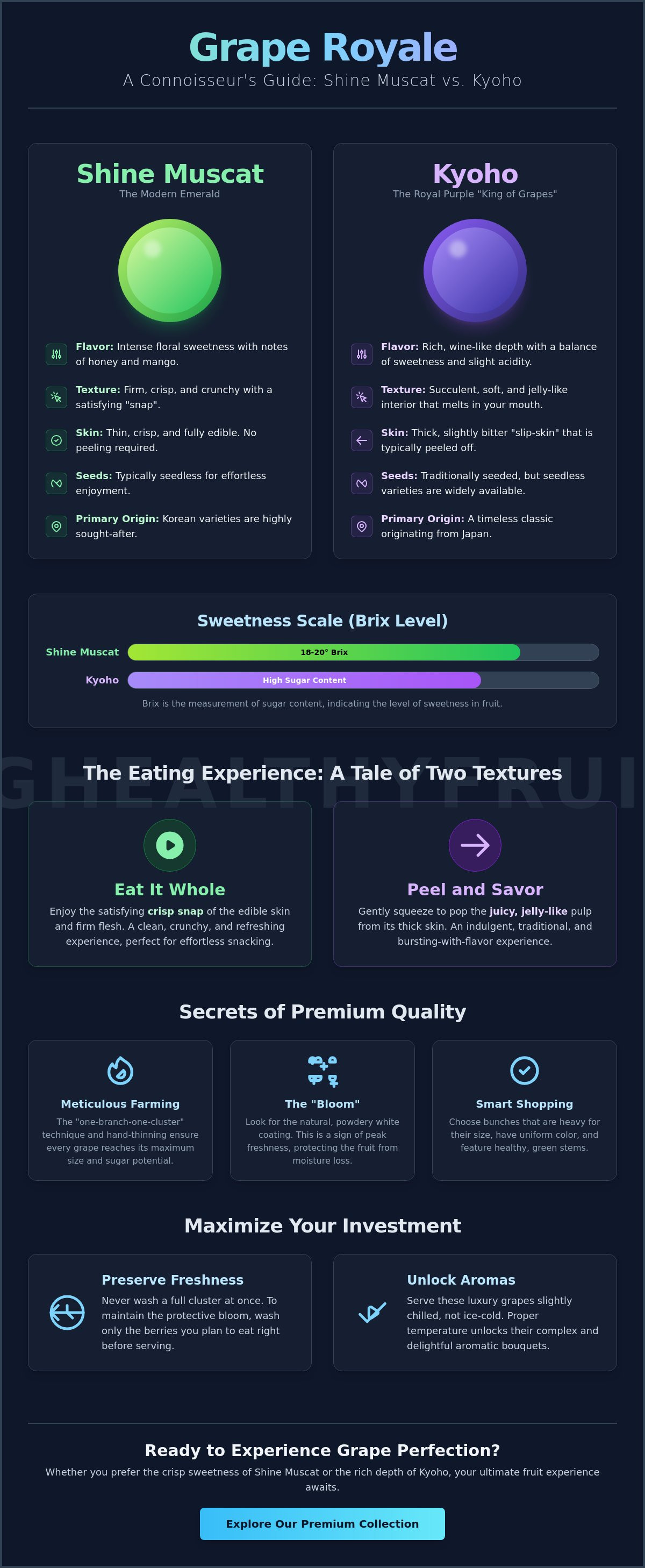
This guide explores the essential differences in the shine muscat vs kyoho grapes debate to give you total confidence. We'll break down the crisp, floral notes of Korean Shine Muscat Grapes, which typically reach a sweetness level of 18 to 20 degrees Brix. We also look at the rich, honeyed depth of Japanese Kyoho Grapes. You'll learn how to identify peak freshness by looking for the natural white "bloom" on the skin. We explain why the "King of Grapes" requires peeling, unlike its thin-skinned, seedless counterparts. By the end of this article, you'll know exactly which variety suits your palate or your next premium gift box.
Key Takeaways
- Learn the visual and flavor distinctions in the shine muscat vs kyoho grapes debate to choose between emerald green sweetness and royal purple depth.
- Understand the meticulous one-branch-one-cluster farming technique that ensures every berry reaches its maximum potential size and sugar content.
- Identify premium quality in the market by evaluating weight, color uniformity, and stem health.
- Discover why you should never wash a full cluster at once to maintain its natural freshness.
- Learn the proper serving temperatures to unlock the complex aromatic bouquet of these luxury fruits.
Comparing Shine Muscat and Kyoho Grapes: Key Differences at a Glance
The premium fruit market offers two distinct icons that represent the peak of viticulture. When looking at shine muscat vs kyoho grapes, the first thing you'll notice is the striking color contrast. Shine Muscat grapes resemble bright, translucent emeralds. Kyoho grapes, known as the "King of Grapes," present a deep, royal purple hue that's almost black. These varieties dominate the high-end market because of their impressive size and the meticulous care required to grow them.
To see how these premium fruits compare in a real-world setting, watch this helpful video:
This Shine Muscat grape overview highlights why it's become a global sensation. While the Muscat is a modern favorite, the Kyoho remains a timeless classic for those who appreciate traditional depth. Both varieties are staples in our premium fruit collection, offering unique experiences for different palates. Understanding their specific traits helps you choose the right bunch for your needs.
Flavor Profiles: Honey-Sweet vs. Wine-Like Richness
Shine Muscat grapes are famous for their intense, floral sweetness. Many people describe the taste as a blend of honey and tropical mango. With sugar levels reaching 18 to 20 degrees Brix, they provide a consistently sweet experience without much acidity. Kyoho grapes offer a more complex profile. They balance high sugar content with a slight acidity that creates a rich, wine-like depth. This makes the Kyoho a favorite for those who enjoy a more robust fruit flavor with a lingering finish.
Physical Characteristics: Edible Skins and Seedless Varieties
The texture of the skin is the biggest physical differentiator. Shine Muscat has a very thin, crisp skin that's entirely edible. You can eat them whole, enjoying the satisfying snap as you bite into the firm flesh. Kyoho grapes are a "slip-skin" variety. Their skin is thick and slightly bitter; most people gently squeeze the grape to pop the juicy flesh out of the skin. While traditional Kyoho can have seeds, both varieties are now widely available in seedless formats for effortless snacking.
The Sensory Experience: Why These Grapes Command a Premium
The high cost of these fruits reflects a labor-intensive journey from the vineyard to your table. Farmers often employ the "one-branch-one-cluster" technique. This method ensures that all the vine's nutrients flow into a single bunch of grapes rather than being spread thin across many clusters. Skilled workers perform meticulous hand-thinning. They carefully remove smaller or crowded berries so the remaining grapes can reach an optimal size and shape. You'll see the results of this care in the "bloom." This natural white powder protects the fruit from moisture loss and serves as a clear indicator of freshness. Brix level is the measurement of sugar content in premium fruit.
The Texture Factor: Jelly-Like Kyoho vs. Crunchy Shine Muscat
The eating experience differs significantly between these two varieties. A fresh Shine Muscat grape offers a firm, snappy "pop" that feels clean and crisp. Its flesh is dense and holds its shape well. In contrast, the Kyoho grape features a succulent, jelly-like interior. When you slip the skin off, the juice bursts forth immediately. This traditional texture is very popular with those who appreciate a more nostalgic, juicy fruit. Younger children often find the seedless crunch of the Muscat easier to manage. Many adults prefer the indulgent, melting softness that defines a perfectly ripe Kyoho.
Aroma and Aftertaste: Floral Musky Notes vs. Bold Concord Flavors
The scent of a premium grape cluster can fill an entire room. Scientific studies have identified specific aromatic compounds in Kyoho and Shine Muscat that define their unique identities. Shine Muscat provides a light, floral aroma with distinct hints of honey and musk. Kyoho grapes deliver a bold, punchy scent reminiscent of classic Concord grape juice. This deep fragrance is a hallmark of the variety's heritage. We invite you to explore our latest arrivals to experience these incredible aromas firsthand. Choosing between shine muscat vs kyoho grapes often comes down to whether you prefer a delicate floral finish or a robust, wine-like aftertaste. You can find both of these exceptional varieties in our online store today.
Smart Shopper’s Guide: Origin, Seasonality, and Quality Indicators
Choosing between shine muscat vs kyoho grapes requires more than just looking at the price tag. You need to understand the harvest calendar to ensure you're buying at the peak of flavor. Japanese Shine Muscat grapes typically grace the market from August through January. The peak season for Japanese Kyoho grapes is slightly shorter, running from late August to November. Korean imports often align with these windows, providing a consistent supply of premium clusters throughout the second half of the year. Buying within these peak months ensures you receive fruit with the highest natural sugar content and the best structural integrity.
A premium grade cluster is easy to spot if you know what to look for. It should feel heavy in your hand, signaling that the berries are full of juice. High-quality fruit depends on specialized packaging that protects the delicate skins during transit from the orchard to your doorstep. Look for these specific markers:
- Weight: A heavy bunch indicates maximum hydration.
- Color Uniformity: Berries should have a consistent hue without pale spots.
- Stem Health: Stems must be green and supple, not brown or dry.
Japanese vs. Korean Shine Muscat: Understanding the Heritage
The Shine Muscat was originally developed in Japan. You can review the official cultivar release information to see how researchers prioritized its seedless nature and edible skin. While Japan holds the heritage, South Korea has become a powerhouse in premium cultivation. Both regions follow strict export protocols to maintain quality. Choosing Korean Shine Muscat Grapes is often a smart move for the budget-conscious. They offer the same signature sweetness and crisp texture at a more accessible price point than some Japanese boutique labels.
Identifying Peak Freshness: Stem Color and Bloom
Always inspect the stems first. They should be bright green and flexible, not brittle or dark. Another key indicator is the "bloom." This is the fine, white powdery coating found on the skin of fresh grapes. It's a natural protective layer, not a chemical residue. A thick, even bloom on a Kyoho grape is a hallmark of minimal handling and peak freshness. For a deeper look at selection techniques, you can reference our Shine Muscat guide. Understanding the nuances of shine muscat vs kyoho grapes helps you invest in the best possible fruit. If you're ready to taste the difference, you can browse our current selection of premium grapes today.
Maximizing Your Investment: Serving, Storage, and Gifting Etiquette
Preserving the integrity of premium fruit requires specific care to maintain its natural value. The golden rule for both varieties in the shine muscat vs kyoho grapes comparison is to avoid moisture. Never wash the entire cluster until the moment you are ready to eat. Water can sit in the crevices of the bunch and lead to premature spoilage. By keeping the fruit dry, you maintain the protective "bloom" that keeps the skin firm. Serving temperature also plays a vital role in your experience. Cold fruit is refreshing, but ice-cold temperatures can mask the delicate floral notes of the Shine Muscat. We suggest letting the grapes sit at room temperature for about 20 minutes to unlock their full aromatic bouquet.
Proper Storage Techniques for Long-Lasting Freshness
- Step 1: Keep the grapes in their original protective foam or plastic housing. These materials are specifically designed to prevent bruising and maintain the structural integrity of every individual berry during handling.
- Step 2: Store the bunch in the refrigerator's crisper drawer. Keep them away from strong-smelling foods like onions or garlic, as grapes can absorb surrounding odors through their porous skins.
- Step 3: Remove only the amount you plan to eat from the fridge 15 to 30 minutes before serving. This brief period of "tempering" allows the natural sugars to become more prominent on the palate.
Gifting Premium Grapes: Curating the Perfect Fruit Box
High-end fruit is a cornerstone of professional and personal gifting. It represents health, respect, and a commitment to quality. These grapes are the star of our Premium Fruit Gift Box. Pairing the vibrant emerald Shine Muscat with the deep purple Kyoho creates a visually stunning "Green and Purple" contrast that feels both modern and traditional. This combination is a popular choice for Customized Fruit Hampers, offering a balance of crisp texture and rich, honeyed juice. We invite you to browse our collection of fresh Korean and Japanese fruits to find the best seasonal picks for your next significant occasion.
Elevate Your Fruit Experience with Confidence
Choosing the right premium fruit is an investment in quality and wellness. You now understand the essential differences in the shine muscat vs kyoho grapes comparison. Whether you prefer the honey-like snap of a seedless Muscat or the bold juice of a royal purple Kyoho, you can shop with total certainty. Remember to look for the natural bloom and vibrant green stems that signal peak freshness. Proper storage and serving at the right temperature will ensure you enjoy every ounce of flavor these grapes offer.
We believe in transparency and purity. Every bunch we offer is hand-selected for peak ripeness to ensure the best tasting experience. Our team uses specialized cold-chain packaging to maintain the integrity of the fruit from the orchard to your home. We are proud to offer island-wide national delivery for all our premium selections. You don't have to worry about quality when you choose fruit grown with such meticulous care.
Shop our curated collection of Fresh Korean and Japanese Grapes. We look forward to helping you discover your new favorite variety.
Frequently Asked Questions
Are the skins of Kyoho grapes edible?
Technically, Kyoho grape skins are edible, but most people choose to peel them before eating. The skin is thick and contains tannins that can taste quite bitter. This variety is known as a slip-skin grape, which means the flesh easily slides out when you gently squeeze the berry. Removing the skin allows you to enjoy the sweet, jelly-like interior without any astringency. It's the traditional way to savor this rich Japanese favorite.
Why are Shine Muscat grapes so much more expensive than regular grapes?
The higher cost reflects the labor-intensive cultivation methods used by professional farmers. Techniques like one-branch-one-cluster farming focus all the plant's nutrients into a single bunch. Workers also perform meticulous hand-thinning to ensure every berry reaches an ideal size and sweetness level. This precision farming results in a premium product with a high Brix level. You aren't just buying fruit; you're investing in a carefully managed agricultural masterpiece.
What is the best time of year to buy Japanese Kyoho grapes?
The peak season for Japanese Kyoho grapes is from late August through November. During these months, the fruit reaches its maximum sugar content and characteristic deep purple color. While some house-grown varieties appear as early as June, the best quality for export is found during the autumn months. Buying during this window ensures you get the freshest clusters with the most robust, wine-like aroma and succulent texture.
How can I tell if a Shine Muscat grape is sweet enough before buying?
When comparing shine muscat vs kyoho grapes for sweetness, look for a slight yellowish-green tint rather than a dark green. A yellow hue often indicates a higher sugar content and full maturity. You should also check for a fine, white powdery coating known as bloom. This natural layer signals that the fruit is fresh and hasn't been over-handled. Stems should be bright green and flexible, not brown or brittle.
Do Shine Muscat grapes have seeds?
Shine Muscat grapes are almost always seedless, which makes them a popular choice for easy snacking and gifting. This variety was specifically developed in Japan to be eaten whole, including the thin, crisp skin. The absence of seeds allows you to enjoy the firm, crunchy texture without any interruption. It's one of the primary reasons they've become a modern favorite for families and premium gift boxes alike.
Should I buy Japanese or Korean Shine Muscat grapes?
Both Japanese and Korean Shine Muscat grapes follow very strict quality standards for export. Japan is the original home of the cultivar and often commands a higher prestige in the market. However, South Korea has mastered the cultivation process and often provides excellent value. Korean bunches typically deliver the same signature floral sweetness and crisp bite at a more accessible price point. Both origins are excellent choices for premium gifting or personal enjoyment.