
The Ultimate Guide to Asian Pears: Varieties, Benefits, and Selection in 2026
The most expensive asian pear in a Singapore supermarket isn't always the sweetest one on your table. You've likely paid S$8.50 for a premium-looking fruit only to find it bland, mealy, or disappointing. Recent 2025 market surveys show that 42% of Singaporean consumers struggle to distinguish between imported varieties. This confusion often leads to wasted spend on fruit that doesn't meet expectations. At Tai Kang Healthy Fruits, we value transparency and the pure, natural taste of high-quality produce. We believe you deserve the best nature has to offer every time you shop.
We agree that choosing between a crisp Nashi and a fragrant Ya pear shouldn't be a guessing game. This guide shows you how to identify the finest varieties for both daily snacking and festive gifting. You'll learn the specific nutritional benefits of these fruits, alongside expert tips to keep them crunchy for up to 14 days in our tropical climate. We'll explore the best premium selections available in the Singapore market to ensure your next purchase is worth every cent.
Key Takeaways
- Understand why the asian pear is prized for its unique "apple-pear" texture and refreshing moisture content.
- Discover how high fiber and 90% water content support digestive health and hydration in Singapore’s tropical climate.
- Compare premium Japanese and Korean varieties to find the best seasonal harvests available in local markets.
- Learn professional tips for selecting firm fruit and storage secrets that maintain a perfect, signature crunch.
- Explore the cultural importance of gifting large-grade pears as symbols of longevity and grace.
What is an Asian Pear? Understanding the 'Apple-Pear' Hybrid
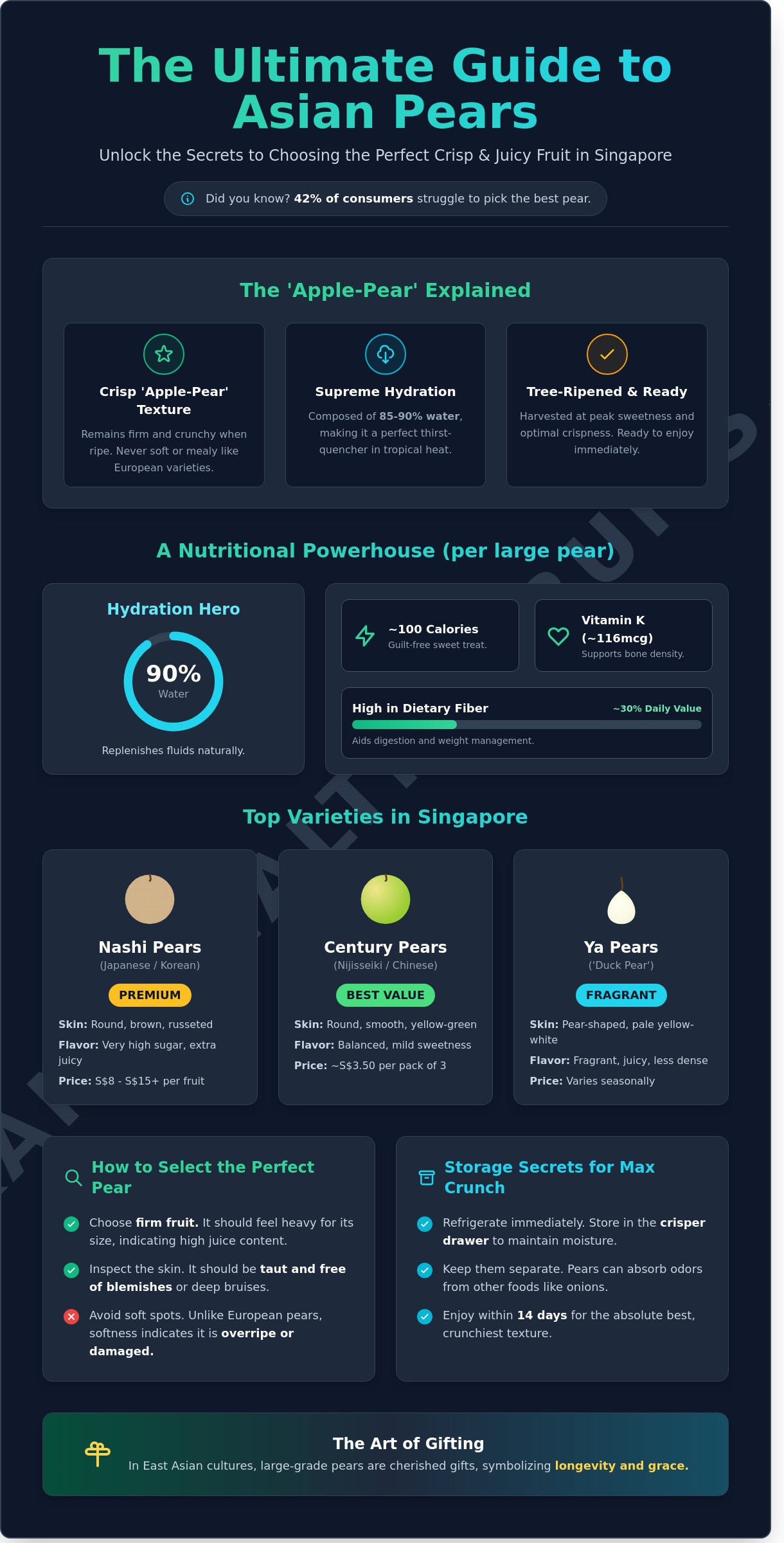
The asian pear is a high-moisture fruit prized for its refreshing crunch and floral sweetness. It belongs to the species Pyrus pyrifolia, which has been cultivated in East Asia for over 3,000 years. Unlike the soft, melting texture of Western varieties, this fruit maintains a firm, crisp structure even when fully ripe. It typically contains about 85% to 90% water, making it one of the most hydrating fruits available in Singaporean markets during the humid months.
You'll often hear locals call it the "apple-pear." This name is a misnomer based purely on its appearance. While many varieties are round and crunchy like a Fuji apple, they're genetically 100% pears. They possess a characteristic grainy texture caused by stone cells in the flesh, which is why they're also known as "sand pears." You can check our new arrivals to see which seasonal varieties have just reached our warehouse in Singapore.
To better understand the unique characteristics of this fruit, watch this helpful video:
The Three Main Categories of Asian Pears
Singaporean importers typically source three distinct types of this fruit. First are the Japanese and Korean "Nashi" types. These are round with brown, russeted skin and a very high sugar content. Second are the Chinese "Century" or Nijisseiki pears. These are round with smooth, yellow-green skin and a balanced, mild flavor. Finally, the "Ya" or Duck pears feature a traditional pyriform shape with white-to-pale-yellow skin. In local supermarkets, prices for these can range from S$3.50 for a pack of three Century pears to over S$15.00 for a single premium Korean Shingo pear.
Asian vs. European Pears: The Ripening Difference
The biggest difference between these varieties is how they ripen. European pears, like the Bartlett or Bosc, are picked hard and require a period of cold storage to develop their buttery texture. If you eat them immediately after picking, they're often woody and flavorless. The asian pear is different because it's tree-ripened. Farmers only harvest the fruit when it has reached its peak sugar levels and optimal crispness. This means the fruit is ready for you to slice and enjoy the moment you bring it home from the store.
Texture is the defining boundary between these two families. While a European pear becomes soft and creamy as it matures, an Asian variety remains incredibly firm and juice-heavy. Asian pears never soften or turn "mealy" like Bartletts, so don't wait for the flesh to give under thumb pressure before eating. If the skin feels soft, the fruit is likely overripe or bruised. Because of their high water content and firm cells, they're excellent for salads or poaching, as they hold their shape much better than their European counterparts in high-heat Singaporean kitchens.
Nutrition and Health Benefits of Asian Pears
Eating an asian pear is more than a refreshing experience. It's a strategic choice for your daily wellness. These fruits consist of 85% to 90% water. This high moisture content helps you stay hydrated in Singapore's 31°C tropical heat. They provide a crisp, sweet alternative to processed snacks without the heavy calorie load. A medium fruit contains roughly 100 calories. This makes it a perfect guilt-free treat for health-conscious locals. You get no extra prep, no added sugar, and no artificial flavors.
Each bite delivers essential micronutrients that support your body's vital functions. Vitamin K is present in significant amounts to support bone density and blood clotting. Vitamin C boosts your immune system against seasonal flu. Copper aids in energy production and iron absorption. You receive these benefits in their most natural form. They're wholesome, pure, and effective for maintaining a balanced lifestyle.
Singapore's humidity often leads to physical fatigue. An asian pear helps replenish fluids naturally while providing a steady stream of energy. These fruits are packed with roughly 116 micrograms of Vitamin K per 100 grams. This mineral is vital for long-term skeletal health. The copper levels in these pears support your metabolism. You get a consistent energy boost throughout your workday without the crash associated with caffeine or refined sugar.
The Role of Dietary Fibre in Weight Management
One large pear weighing roughly 255 grams provides nearly 30% of your daily fiber needs. This fruit contains approximately 8 to 10 grams of dietary fiber. It uses two types of fiber to improve your health. Soluble fiber turns into a gel during digestion to slow down sugar absorption. Insoluble fiber adds necessary bulk to your diet to support regular bowel movements. This dual action helps you feel full for longer periods. It's a natural way to manage your appetite without relying on supplements.
This combination of fibers is excellent for blood sugar regulation. A study on pear nutrition and health benefits confirms that the high fiber and low energy density of pears support weight loss. Since these pears have a low glycemic index of 38, they won't cause the rapid insulin spikes associated with other tropical fruits like mangoes or pineapples. Your energy levels remain stable, helping you avoid mid-afternoon cravings.
Antioxidants and Heart Health
Don't peel your fruit if you want the full nutritional value. The skin holds the majority of the pear's polyphenols. These compounds act as powerful antioxidants that fight free radicals in your body. These pears also provide about 250 milligrams of potassium per serving. Potassium is essential for maintaining healthy blood pressure levels in Singapore's high-sodium food environment. It helps your heart function efficiently by balancing the effects of salt in your diet.
These phytonutrients also offer anti-inflammatory benefits. They help reduce internal inflammation and protect your cardiovascular system over time. Choosing a whole fruit ensures you get every vitamin, every mineral, and every bit of protection. If you want to experience these benefits for yourself, you can browse our premium selection of fresh produce to find the perfect addition to your diet.
Top Asian Pear Varieties Available in Singapore
Singapore's fruit markets offer a rich selection of premium pomes. The asian pear stands out for its crunch and high water content. You'll find three main origins: Japan, Korea, and China. Each region specializes in specific cultivars that vary in sweetness and texture. When exploring different Asian pear varieties, it's clear that harvest timing dictates the flavor profile. Japanese pears peak from August to October. Korean Singo pears arrive later, dominating the market from October through February. Chinese varieties remain available for most of the year due to their large-scale production.
Price points reflect the scarcity and meticulous farming required for each grade. A standard supermarket pear might cost S$2.50. In contrast, a premium 'Gift Grade' pear from Japan can exceed S$18.00 per piece. This premium is justified by higher Brix (sugar) levels, which often reach 12 to 14 degrees. Gift grade fruits are blemish-free, perfectly symmetrical, and hand-selected for their size. They represent the peak of agricultural craftsmanship. You can browse our full shop collection to see which of these varieties are currently in season.
The Korean Singo Pear: The King of Size and Sweetness
These are the giants of the fruit world. A single Singo pear often weighs over 600 grams. They feature golden-brown skin and exceptionally juicy flesh. Because they contain natural tenderizing enzymes, they're the preferred choice for traditional Korean rib marinades. Their peak season in Singapore runs from late autumn to early spring. This makes them a staple for Lunar New Year gifting. They offer a satisfying crunch that doesn't fade, even after weeks in the refrigerator.
Japanese Hosui and Kosui: The Connoisseur's Choice
Japanese cultivars are prized for their refined textures. Hosui pears are known for their high sugar content and a subtle, refreshing acidity. Kosui is the most popular variety in Japan; it's valued for its incredibly tender skin and fine-grained flesh. A perfectly ripe Hosui pear releases a distinct honey-like aroma that signals its peak sweetness. These varieties often arrive in individual protective foam nets. This protection ensures the delicate skin remains pristine from the orchard to your home.
Chinese Century and Ya Pears: Refreshing and Light
The Century (Nijisseiki) is a classic yellow asian pear with a clean, tart finish. It's less sweet than its Japanese counterparts but offers a cooling sensation. Ya Pears, or "duck pears," have a distinctive teardrop shape and pale skin. They're crisp, white-fleshed, and frequently used in TCM soups to soothe the throat and reduce internal heat. These varieties work best in salads or as light snacks. They provide a high fiber content with a lower calorie density, making them ideal for health-conscious snacking.
Choosing the right variety depends on your specific needs:
- For Gifting: Choose Korean Singo or Japanese Hosui for their impressive size and presentation.
- For Cooking: Use Ya Pears for soups and Singo for meat marinades.
- For Fresh Eating: Opt for Kosui if you prefer a thin skin and delicate sweetness.
Selection, Storage, and Culinary Tips
Choosing a premium fruit requires a bit of knowledge to ensure you get the best value for your money. A perfect asian pear offers a distinct crunch that mimics a crisp apple while providing the high juice content of a melon. Quality control starts the moment you browse the fruit aisle or open a delivery box. You want fruit that feels heavy and looks vibrant. Since these fruits are often imported to Singapore from temperate climates, their condition depends heavily on how they were handled during transit.
A 3-Point Check for Ripeness
Selecting the right fruit is a sensory process. First, inspect the skin for any dark bruises or soft indentations. High-quality pears should have a uniform texture. No bruises, no soft spots, and no dull skin. Second, lift the fruit to feel its weight. A dense, heavy pear indicates a water content of approximately 85% or higher. Third, smell the stem end. A ripe fruit emits a light, floral fragrance. If there's no scent, the fruit might need another day or two to reach peak sweetness.
Storing Pears for Maximum Freshness
Singapore's tropical humidity can cause fresh produce to spoil quickly. Proper storage is the only way to maintain that signature crispness. You should keep your fruit in the refrigerator at a consistent temperature of 5 degrees Celsius. At this temperature, an asian pear can stay fresh for up to 30 days. If left on a kitchen counter, the shelf life drops to just 7 days.
Keep your pears away from ethylene-producing fruits like bananas or papayas. Ethylene gas accelerates the ripening process and will turn a crunchy pear mushy within 48 hours. Always keep the protective foam netting on the fruit until you're ready to eat it. This netting isn't just for show. It prevents friction damage and skin abrasions that lead to rapid decay. It's a simple way to protect your investment in high-quality produce.
Creative Ways to Enjoy Asian Pears
These pears are incredibly versatile in both sweet and savory Singaporean kitchens. Their high enzyme content makes them a natural meat tenderizer. If you're preparing a beef stir-fry or Bulgogi, grate 100 grams of pear into your marinade. The enzymes break down tough proteins in about 30 minutes, resulting in a much more tender texture. This is a professional secret used by chefs to avoid chemical tenderizers.
- Savory: Thinly slice the fruit and toss it into a salad with bitter rocket leaves, toasted walnuts, and a light vinaigrette. The sweetness cuts through the bitterness perfectly.
- Sweet: Try a traditional poached pear dessert. Simmer the fruit with 15 grams of rock sugar, a slice of ginger, and some honey. This is a classic local remedy for soothing a dry throat or a cough.
- Fresh: Eat them raw as a hydrating snack. To prevent the flesh from turning brown, prepare a simple soak. Mix 1 teaspoon of salt into 500ml of cold water and submerge the slices for 5 minutes. This stops oxidation and keeps the fruit looking bright for hours.
Whether you're using them for a family dinner or a healthy afternoon snack, the right preparation makes all the difference. You'll notice the superior quality when the fruit is handled with care. Shop our collection of premium asian pear varieties to experience this quality yourself.
The texture of a well-stored pear is unmistakable. It's refreshing, clean, and satisfying. By following these storage and selection steps, you ensure that every bite is as good as the last. Don't settle for subpar fruit when a few simple checks can guarantee a premium experience every time you shop.
The Art of Gifting: Why Asian Pears are the Perfect Gesture
In many Asian cultures, the asian pear serves as a powerful symbol of longevity and quiet grace. Its sturdy structure and long shelf life represent an enduring bond between the giver and the recipient. Unlike softer fruits that perish quickly, the crisp nature of this pear suggests a relationship built to last. We see this reflected in the visual appeal of the fruit itself. Large-grade pears are prized for their perfectly uniform shape and smooth, unblemished skin. When you present a box of these fruits, you aren't just giving food. You're offering a token of high esteem that carries centuries of cultural weight.
Corporate gifting in Singapore has evolved significantly over the last 24 months. Traditional hampers filled with processed biscuits and sugary drinks are losing favor. A 2023 report on Singaporean workplace wellness indicated that 72% of local HR managers now prioritize healthy gifting options to align with corporate social responsibility goals. Fruit is the preferred choice because it's naturally inclusive and health-conscious. Using premium produce ensures your gesture stands out in a professional setting.
- Inclusivity: Fresh fruit caters to almost all dietary requirements and cultural preferences found in Singaporean offices.
- Wellness: High fiber and vitamin content support office productivity and employee health.
- Visual Impact: The golden hues and impressive size of premium pears create an immediate sense of luxury.
You can customise your own fruit hamper to match your brand's aesthetic or choose a pre-designed gift box for a streamlined professional look. These options provide a refreshing alternative that supports the well-being of your business partners while maintaining a high standard of presentation.
Gifting for Lunar New Year and Mid-Autumn Festival
Sharing fruit is a core ritual during Singapore's major festivals. The round shape of the Nashi variety signifies "yuan man," which translates to wholeness or a complete circle. This makes it a mandatory addition to family gatherings during the lunar cycles. "Twin Pear" boxes are a signature item in Singaporean corporate culture. By gifting exactly two premium pears, you signal a balanced and prosperous partnership. It's a sophisticated way to wish a client stability and success for the coming year.
Tai Kang’s Commitment to Quality
We take our role as your gifting partner seriously. Our quality control team implements a strict hand-selection process where only the top 5% of any harvest makes it into our premium sets. We check for weight consistency and skin clarity to ensure every asian pear meets our standards. We provide same-day delivery across Singapore, often reaching your doorstep within 5 hours of your order. Tai Kang specializes in sourcing the most prestigious harvests from Japan and Korea, bringing the world's finest fruit directly to your office or home.
Bring the Freshness of 2026 Harvests to Your Table
The 2026 season highlights why the asian pear remains a staple for health-conscious households in Singapore. These fruits offer 5 grams of dietary fiber and 14% of your daily vitamin C intake in every serving. Their 88% water content makes them an essential snack for staying hydrated in our tropical heat. You'll find that choosing the right variety depends on your preference for crispness or honey-like sweetness.
Taikang Healthy Fruits guarantees quality through our 100% manual inspection process. We source hand-selected seasonal harvests to ensure you receive only the best produce. Our service includes same-day delivery across Singapore for all orders confirmed by 2:00 PM. We protect every order with 100% recyclable, eco-friendly premium gift packaging. This packaging is perfect for personal enjoyment or corporate gifting. It's our way of ensuring purity and safety from the orchard to your doorstep.
Shop our Premium Asian Pear Collection for Singapore Delivery
Start your journey toward better health with the crisp, natural taste of our premium pears today.
Frequently Asked Questions
What is the best way to eat an Asian pear?
The best way to enjoy an asian pear is to eat it raw, chilled, and freshly sliced. This method preserves the signature crunch and high water content that makes them so refreshing in Singapore’s tropical climate. You can serve them as a healthy snack or toss them into a salad with arugula and walnuts. Their crisp texture stays firm even when sliced 30 minutes before serving. This ensures every bite is juicy and satisfying.
Do Asian pears need to be peeled before eating?
You don't need to peel an asian pear because the skin is completely edible and contains 30% of the fruit's total fiber. While some varieties like the Hosui have a slightly thicker skin, most people find it adds a pleasant texture. Simply wash the fruit thoroughly under cold running water to remove any surface dust. If you prefer a smoother experience, a standard vegetable peeler works perfectly for a clean finish.
Why are Asian pears more expensive than regular pears?
Asian pears are more expensive because they require labor-intensive cultivation techniques like hand-thinning and individual bagging on the tree. In Singapore supermarkets, premium Korean Singo pears often cost between S$5.50 and S$8.50 per piece due to these careful farming practices. Each fruit is protected from insects and bruising throughout its 150 day growing cycle. This ensures you receive a blemish-free, high-quality product every time you shop.
How long do Asian pears stay fresh in the fridge?
Asian pears stay fresh in the refrigerator for 2 to 3 months when stored at a temperature of 1 to 4 degrees Celsius. It's best to keep them in the crisper drawer and away from ethylene-producing fruits like bananas or apples. If left on a kitchen counter in Singapore, they'll likely lose their crispness within 5 to 7 days. Always keep them wrapped in their protective foam sleeves to prevent bruising and maintain moisture.
Can I use Asian pears for baking like European pears?
You can use these pears for baking, but they'll retain their firm shape rather than softening like European Bartlett pears. They're excellent for poaching in red wine or honey for 20 minutes because they don't turn into mush. Many bakers in Singapore use them in tarts or crumbles for a unique, crunchy texture. Their high water content means you might need to adjust your recipe's liquid levels by 10 percent for the best results.
Are Asian pears good for weight loss?
Yes, these pears are an excellent choice for weight loss because they provide 5 to 7 grams of dietary fiber per fruit. A medium-sized pear contains only 50 to 60 calories, making it a low-density food that helps you feel full longer. They satisfy sugar cravings naturally without the need for processed snacks. Their 85% water content also helps maintain hydration levels during your daily activities in the heat.
What is the difference between a Nashi pear and an Asian pear?
There is no difference between a Nashi pear and an Asian pear as Nashi is simply the Japanese word for pear. Both terms refer to the same group of round, crunchy fruits belonging to the Pyrus pyrifolia species. In Singapore, you'll see them labeled as Nashi in Japanese specialty stores and Asian pears in local wet markets. They all share the same apple-like shape and juicy, grainy flesh that consumers love.
When is the peak season for Korean Singo pears in Singapore?
The peak season for Korean Singo pears in Singapore runs from September through February each year. You'll find the highest quality stock arriving during the Chuseok festival, which typically falls in late September or early October. During this 5 month window, the fruit reaches its maximum sweetness and size. Local retailers often stock these premium imports in gift boxes of 6 to 10 pieces for holiday celebrations and family gatherings.