
The Ultimate Guide to Japanese Musk Melon: Why It Is the King of Fruits
Would you spend S$200 on a single piece of fruit if you knew it required 100 days of expert manual labor to reach perfection? It's natural to feel hesitant when faced with such a premium price tag. You want to ensure every cent translates into that legendary, melt-in-your-mouth sweetness rather than a disappointing "dud." We understand that the fear of choosing an underripe or low-grade fruit is real when you're investing in a luxury experience.
In this guide, we'll reveal the secrets behind the japanese musk melon. We'll explore the precise "one tree, one fruit" cultivation method used by Shizuoka farmers to concentrate all nutrients into a single masterpiece. You'll learn how to decode complex grading labels and identify a genuine premium melon by its distinctive T-shaped stalk. We'll also show you how to find a reliable delivery service in Singapore that guarantees peak ripeness. By the end of this article, you'll have the confidence to select and enjoy the world's most luxurious fruit with total peace of mind.
Key Takeaways
- Understand the "One Vine, One Fruit" philosophy that defines the japanese musk melon as a global symbol of quality.
- Learn how to identify peak ripeness using the "bottom-press" test and the condition of the T-shaped stem.
- Discover why this luxury fruit is the premier choice for corporate gifting and "Get Well Soon" gestures in Singapore.
- Distinguish between authentic Shizuoka harvests and regional imitations to ensure you receive genuine premium value.
- Recognize the importance of air-flown logistics in maintaining the integrity and flavor of high-end greenhouse produce.
What is a Japanese Musk Melon and Why is it Famous?
The What is a Japanese Musk Melon question often leads to a story of extreme agricultural precision. Unlike standard melons grown in open fields, the japanese musk melon is a luxury fruit cultivated entirely within climate-controlled greenhouses. Farmers treat these fruits like delicate art pieces. They provide a stable environment where temperature and humidity never fluctuate more than a few degrees. This level of care results in a fruit that's consistently sweet, fragrant, and visually perfect. It's a staple of Japan's high-end gift culture, where fruit serves as a symbol of respect and gratitude.
You can identify a premium melon by its striking appearance. It features a thick, raised netting that covers the entire surface in a symmetrical pattern. A signature T-shaped stem remains attached to the top. This stem is a mark of quality. It proves the farmer used the "one tree, one fruit" method. By pruning all other blossoms, the plant funnels its entire supply of nutrients into a single melon. The internal flesh is a vibrant, translucent green. It has a melting texture that differs significantly from the crunchy texture of local melons found in Singapore wet markets. In Japan, it earned the title "King of Fruits" because of this unparalleled sensory experience. In Singapore, a single melon can cost between S$80 and S$200 depending on the season and grade.
The Shizuoka Heritage and Crown Melon Label
Shizuoka Prefecture is the world's gold standard for melon cultivation. The region began its greenhouse journey in 1924. Its unique geography provides long hours of sunlight, which is vital for developing high sugar levels. Melons from this region often carry the "Crown Melon" label. This brand represents the pinnacle of Shizuoka's output. Every authentic melon features a blue and silver sticker with a unique traceability number. You can verify this number online to see the specific farmer's history. This system ensures 100% transparency and food safety for international buyers. It confirms the fruit met strict standards for shape, sugar content, and aroma before leaving Japan.
Understanding the Premium Grading System
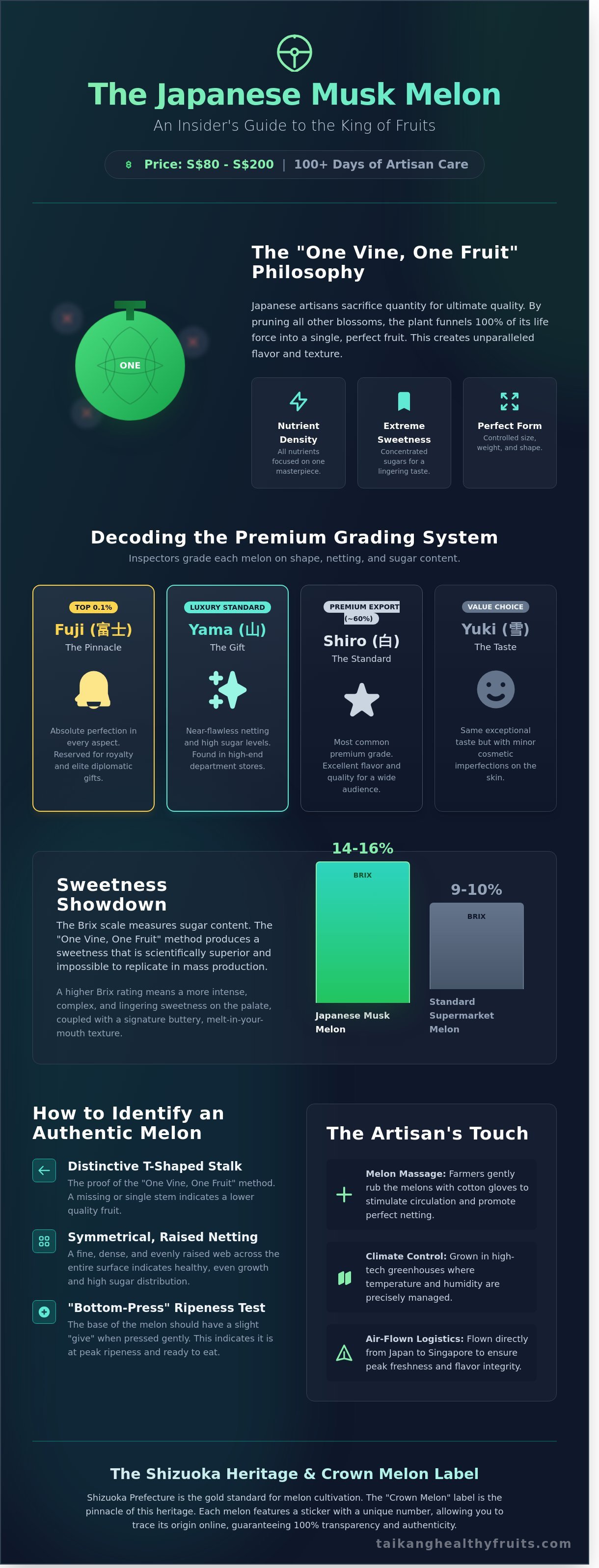
Professional inspectors categorize melons into four distinct grades based on strict criteria. The Fuji grade is the highest. It represents less than 0.1% of the total harvest. These rare fruits are usually reserved for royalty or elite diplomatic gifts. The Yama grade is the luxury standard. You'll find these in high-end Singaporean department stores like Takashimaya or Isetan. They possess near-flawless netting and a high Brix (sugar) level. Shiro grade melons are the most common premium export, making up about 60% of high-quality sales. Finally, Yuki grade melons are for those who want the taste of a japanese musk melon with minor cosmetic imperfections. Each grade offers a clear promise of quality and flavor.
The Artisan Cultivation: Why the Price Tag is Justified
The premium price of a japanese musk melon reflects a labor-intensive process that starts long before the fruit reaches Singaporean shores. While industrial farms might produce 30 to 40 melons per vine, Japanese artisans follow a strict "one vine, one fruit" philosophy. This method is not about efficiency; it's about perfection. Farmers identify the strongest bud on each vine and prune away every other competing blossom early in the growth cycle. This ensures the plant directs 100% of its nutrients, water, and sugars into a single specimen. It's a calculated sacrifice that transforms a simple fruit into a luxury commodity.
The "One Vine, One Fruit" Method
This radical pruning results in a Brix rating, or sugar content, that consistently reaches 14% to 16%. In contrast, standard supermarket varieties often hover around 9% or 10%. By focusing the plant's entire life force into one fruit, farmers create a depth of flavor and a buttery texture that's impossible to achieve through mass production. This level of dedication explains why a single fruit can retail for S$80 to S$150 at high-end boutiques in Orchard Road or specialized Japanese grocers. The process requires constant monitoring, as the removal of secondary fruits must happen at the precise moment to avoid shocking the plant.
- Nutrient Density: Every drop of mineral-rich water is funneled into one fruit.
- Sugar Concentration: High Brix ratings ensure a sweetness that lingers on the palate.
- Size Control: Farmers can manage the exact weight and circumference of the melon.
The Art of the Melon Massage
The human touch defines the final quality of the japanese musk melon. Farmers perform a ritual known as "ball-massaging" to stimulate the melon's internal circulation. They use white cotton gloves to gently rub the skin several times throughout the growing phase. This process encourages the development of the iconic, raised netting that consumers look for. It also helps distribute sugars evenly throughout the flesh, ensuring the first bite is just as sweet as the last. If you're looking for this level of purity and care in your produce, you might enjoy the premium selection at Tai Kang Healthy Fruits, where quality meets transparency.
To prevent sunburn or uneven coloration, each fruit wears a dedicated "melon hat" made of thick, protective paper. This protects the delicate skin from the intense light found in climate-controlled greenhouses. These greenhouses are marvels of engineering. They maintain a steady temperature between 25 and 30 degrees Celsius, regardless of the weather outside. Computerized systems monitor humidity levels every 60 seconds to prevent mold and ensure the perfect rind texture. This 365-day precision allows Singaporean consumers to enjoy peak freshness even during the local monsoon season.
Quality doesn't depend on luck or favorable seasons in this artisanal world. It depends on the farmer's ability to act as both a scientist and a caretaker. Every blemish is a failure, and every perfect net is a badge of honor. When you purchase one of these melons in Singapore, you aren't just paying for food. You're paying for hundreds of hours of manual labor, specialized equipment, and a cultural commitment to excellence that has been refined over decades.
Selection and Ripening: How to Enjoy the Perfect Slice
Buying a japanese musk melon in Singapore is a significant investment in quality. These fruits often retail for S$80 to S$200 at premium grocers like Meidi-Ya or Isetan. You want to ensure you consume the fruit at the precise moment of peak sweetness. Most melons arrive in Singapore via air freight from Shizuoka or Hokkaido while they're still firm. This ensures the delicate netting remains intact during transit.
To check for ripeness, use the bottom-press test. Apply gentle pressure to the base of the fruit, which is the area opposite the stem. A rock-hard base means the sugars haven't fully developed yet. You're looking for a slight give or springiness. This physical change indicates the flesh has softened into its signature custard-like texture. It's a reliable method used by professional fruit sommeliers to guarantee the best eating experience.
The T-shaped stem is a hallmark of authentic cultivation. It proves the melon was grown using the "one tree, one fruit" method. Farmers prune away all other blossoms so the vine directs every nutrient into a single japanese musk melon. A fresh stem is green and sturdy. As the melon nears its peak, the stem will begin to wither and turn slightly brown. Don't worry if it looks dry. This is a natural signal that the internal sugars are at their highest concentration.
Singapore's high humidity levels, which often exceed 80 percent, can speed up the ripening process. Keep your melon at room temperature in a cool, shaded spot away from direct sunlight. Most melons reach their sweet spot within 3 to 5 days of arriving at your home. Once the fruit is ripe, the aroma becomes unmistakable. You'll notice a sweet, floral fragrance that can fill an entire room. If you aren't ready to eat it immediately, move it to the refrigerator to halt the ripening process for up to 48 hours.
Identifying the Peak of Ripeness
The base of the melon should feel soft but not mushy under your thumb. Check the netting on the skin; it should be thick, raised, and consistent across the surface. A ripe melon emits a deep, musky scent even before it's cut. If the stem is completely brittle and snaps off easily, the fruit is likely overripe. Aim for a stem that appears wilted but remains firmly attached to the fruit.
Serving and Pairing Suggestions
Chill the melon for exactly 120 minutes before serving. Over-chilling for more than 4 hours numbs your taste buds and masks the delicate flavor profile. Cut the melon into thick wedges and remove the seeds gently to preserve the precious juice. Pair your slice with a warm cup of premium Gyokuro green tea. The savory umami of the tea perfectly balances the intense, honey-like sweetness of the fruit.
Proper storage is essential for maintaining the integrity of the fruit. Never store an uncut melon in the fridge for long periods, as cold temperatures can cause the skin to develop spots. Keep it on a soft surface, like a folded towel or the original foam cushioning, to prevent bruising. By following these steps, you ensure every S$1 spent translates into a world-class culinary experience.
Gifting Etiquette: The Musk Melon in Singaporean Culture
In Singapore's social fabric, the act of gifting is a nuanced language. High-end fruit serves as a bridge of respect, gratitude, and well-wishes. The japanese musk melon sits at the pinnacle of this hierarchy. It isn't just a snack; it's a profound gesture of sincerity. While a standard fruit basket might be a casual thought, a premium melon represents a significant investment in a relationship. In a city where time is a luxury, presenting a fruit that took 100 days of meticulous care to grow says more than words ever could.
The Symbolism of Luxury Fruit Gifting
High-end fruit represents deep respect and genuine well-wishes in Asian culture. The japanese musk melon is the ultimate "Get Well Soon" gesture for several practical reasons. It has a high water content, often exceeding 88%, which provides essential hydration for patients. Its rich concentration of Vitamin A and C supports the immune system during recovery. Beyond nutrition, there's the "wow factor" of receiving a Shizuoka melon. The perfectly symmetrical, raised netting on the rind is a visual testament to quality. When a visitor brings a melon with a pristine T-shaped stalk, it signals that the fruit was the only one allowed to grow on its vine. This exclusivity makes the recipient feel truly valued.
Approximately 70% of premium fruit purchases in Singapore are intended for gifting rather than personal consumption. This trend is driven by the desire to offer something healthy, beautiful, and culturally appropriate. Unlike flowers that wither or chocolates that might not suit dietary needs, a luxury melon is a universal symbol of health. It fits perfectly into the Singaporean ethos of "giving face" while promoting a wholesome lifestyle.
Curating a High-End Fruit Hamper
Presentation defines the gift's perceived value. In the Singaporean market, a single melon priced between S$120 and S$200 is rarely handed over in a plastic bag. It belongs in a traditional "Kiri" wooden box or a silk-lined gift set. These materials aren't just for show; they protect the delicate skin from bruising during transport. For those looking to make a broader impact, incorporating these melons into a Premium Fruit Gift Box allows for a diverse tasting experience. Pairing the musky sweetness of the melon with the tartness of Korean strawberries or the crispness of Shine Muscat grapes creates a balanced palate.
Corporate gifting in Singapore has evolved to favor these edible luxuries. Data suggests that 65% of local corporate clients prefer receiving premium produce over traditional plaques or desk ornaments. A well-arranged hamper makes a lasting impression during board meetings or client appreciation events. You can find expertly curated options through Tai Kang Healthy Fruits hampers, which ensure every piece of fruit meets rigorous aesthetic and taste standards. During festive seasons like the Lunar New Year, these arrangements are often customized with gold ribbons and red accents to symbolize prosperity and wealth. Customizing the selection ensures the gift aligns with the specific occasion, whether it's a housewarming or a milestone anniversary.
Choosing the right fruit is an art form that balances tradition with modern health consciousness. If you're looking to impress a business partner or wish a loved one a speedy recovery, a curated selection is the most effective way to communicate your intent. Browse our full range of Premium Fruit Gift Boxes to find a gift that leaves a lasting impression of quality and care.
Where to Buy Authentic Japanese Musk Melon in Singapore
Finding a genuine japanese musk melon in Singapore requires more than a trip to your local neighborhood supermarket. Many budget-friendly options labeled as "Japanese-style" actually originate from farms in Malaysia, Vietnam, or China. These regions don't adhere to the strict "one vine, one fruit" cultivation policy used in Shizuoka. While they look similar on the outside, their brix (sugar) levels often struggle to reach 10%. An authentic melon from Japan consistently hits 14% to 16% on the brix scale. Buying an imitation means you'll miss the creamy texture and complex aroma that defines this luxury experience.
Protecting the T-shaped stem is vital for quality assurance. This stem isn't just for show; it proves the melon received all the nutrients from its mother vine until the moment of harvest. At Tai Kang Healthy Fruits, we prioritize air-flown logistics over sea freight to maintain this integrity. Sea transit can take 10 to 14 days, which often leads to stem dehydration and fruit fermentation. Our air-flown melons arrive in Singapore within 48 hours of being auctioned in Japan. This speed ensures the fruit stays firm and the stem remains turgid. If you need a gift for a client or a centerpiece for a dinner tonight, our same-day delivery service operates across all 28 districts in Singapore for orders placed before 11:00 AM.
The Tai Kang Quality Guarantee
We source our stock directly from Japanese fruit auctions, ensuring every japanese musk melon meets the highest grading standards. Our team conducts a 100% inspection rate upon arrival at our warehouse. We check for netting uniformity and skin elasticity before the melon reaches your doorstep. This hands-on approach eliminates the risk of bruised or overripe fruit. You can browse the latest arrivals to see which seasonal varieties are currently available at their peak ripeness.
Ordering for Your Home or Office
It's simple to shop the full collection through our secure online portal. We offer flexible options for every type of customer, from fruit enthusiasts to corporate managers. Our systems are designed to make premium fruit accessible for any occasion.
- Weekly Subscription Boxes: Perfect for families who want a 10% savings on premium seasonal picks delivered to their door.
- Corporate Wellness Programs: We help offices replace processed snacks with nutrient-dense fruit, which can improve employee satisfaction by 20% according to recent workplace health surveys.
- Bulk Order Benefits: Corporate orders over S$800 qualify for wholesale pricing and dedicated account management to help maintain pantry budgets.
- Customizable Gift Hamper: Every luxury melon can be paired with a handwritten note and premium packaging for formal gifting.
Our commitment to transparency means you always know the origin of your fruit. We don't use aggressive sales tactics because the quality of a perfectly grown melon speaks for itself. Whether you're ordering a single fruit for a special occasion or setting up a recurring delivery for your office, we ensure the process is seamless and the quality is guaranteed.
Bring the World's Finest Fruit to Your Table
You've discovered why the "one vine, one fruit" cultivation method is essential for creating the world's finest produce. This artisan technique ensures 100 percent of the plant's nutrients flow into a single japanese musk melon, achieving a consistent sweetness level of 14 percent or higher. These melons represent more than just food; they're a symbol of respect and health in Singaporean culture. Our team follows a strict inspection process for every shipment. We look for perfect T-shaped stems, symmetrical netting, and the ideal weight of 1.3 kilograms per fruit.
We provide direct air-flown delivery from Japan to Singapore to maintain the cold chain and peak ripeness. Our selection features no artificial ripening agents, no wax coatings, and no shortcuts. This commitment to purity is why over 50 corporate organizations trust us for their premium wellness gifting needs. You can rely on our expertise to deliver a masterpiece of nature to your doorstep.
Experience the King of Fruits; Order Your Shizuoka Musk Melon from Tai Kang Today
Bring the authentic taste of Shizuoka to your dining table and enjoy a moment of pure luxury.
Frequently Asked Questions
Why is the Japanese Musk Melon so expensive compared to local melons?
The japanese musk melon is expensive because farmers use the "one tree, one fruit" method to concentrate all nutrients into a single melon. This labor-intensive process takes 100 days of manual care, including hand-pollination and individual fruit massages. In Singapore, you'll typically pay between S$50 and S$200 per fruit. These prices reflect the high air freight costs and the strict quality standards required for export.
How long does a Japanese Musk Melon last once it arrives in Singapore?
A Japanese melon usually stays fresh for 3 to 7 days when kept at room temperature. You'll know it's at peak ripeness when the base of the fruit feels slightly soft under gentle thumb pressure. Most premium melons arrive in Singapore with a sugar content of 14% Brix or higher. Don't leave it out for more than 10 days, as the flesh will become overly soft and lose its signature aroma.
Can I eat the seeds of a Japanese Musk Melon?
You can eat the seeds, but we recommend removing them to enjoy the smooth, buttery texture of the flesh. The seeds are 100% edible and contain small amounts of natural fiber. However, the seed sac is very watery and can dilute the concentrated sweetness of the fruit. Most professional chefs scoop the seeds out with a spoon to ensure a clean and elegant presentation for guests.
What is the difference between a Crown Melon and a regular Musk Melon?
Crown Melon is a specific premium brand from Shizuoka prefecture that represents the top 10% of all Japanese production. These melons undergo 20 separate inspections and are graded into four categories: Fuji, Yama, Shiro, and Yuki. Regular musk melons from other regions are still high quality but don't follow the same 365-day greenhouse climate control standards. You're paying for guaranteed consistency and a melt-in-your-mouth experience with every Crown fruit.
How do I know if the melon I bought is actually from Japan?
Authentic Japanese melons always feature a T-shaped stem and a specific brand sticker on the skin. You should look for a 10-digit identification number or a QR code printed on the label. You can enter this code on the official Shizuoka website to see the farmer's name and the exact harvest date. This traceability system ensures you're receiving a genuine product rather than a cheaper variety from a different country.
Is Japanese Musk Melon healthy for elderly people?
The japanese musk melon is an excellent choice for elderly family members because it's soft, hydrating, and easy to digest. Each 100g serving provides 340mg of potassium, which helps maintain healthy blood pressure levels. Since the fruit is 90% water, it's a wholesome way to stay hydrated throughout the day. It provides natural energy without any added sugars, preservatives, or artificial colors.
Should I store my melon in the fridge or at room temperature?
Store your melon at room temperature in a cool, shaded spot until it's fully ripe. Don't put it in the fridge too early, as cold temperatures stop the ripening process and dull the natural fragrance. Once the melon is ripe, chill it for 2 to 3 hours before you plan to serve it. This short cooling period makes the juice more refreshing while preserving the delicate cell structure of the fruit.
What does a Japanese Musk Melon actually taste like?
A Japanese melon tastes like a complex blend of honey, floral nectar, and fresh cream. The texture is incredibly silky and dissolves on your tongue almost instantly. Unlike local varieties that can be crunchy, these melons maintain a consistent 15% sugar level from the center to the rind. It's a juicy and fragrant experience that leaves a clean, sweet aftertaste without any bitterness.