
Yamanashi Peaches: A Guide to Japan's Sweetest Summer Treasure
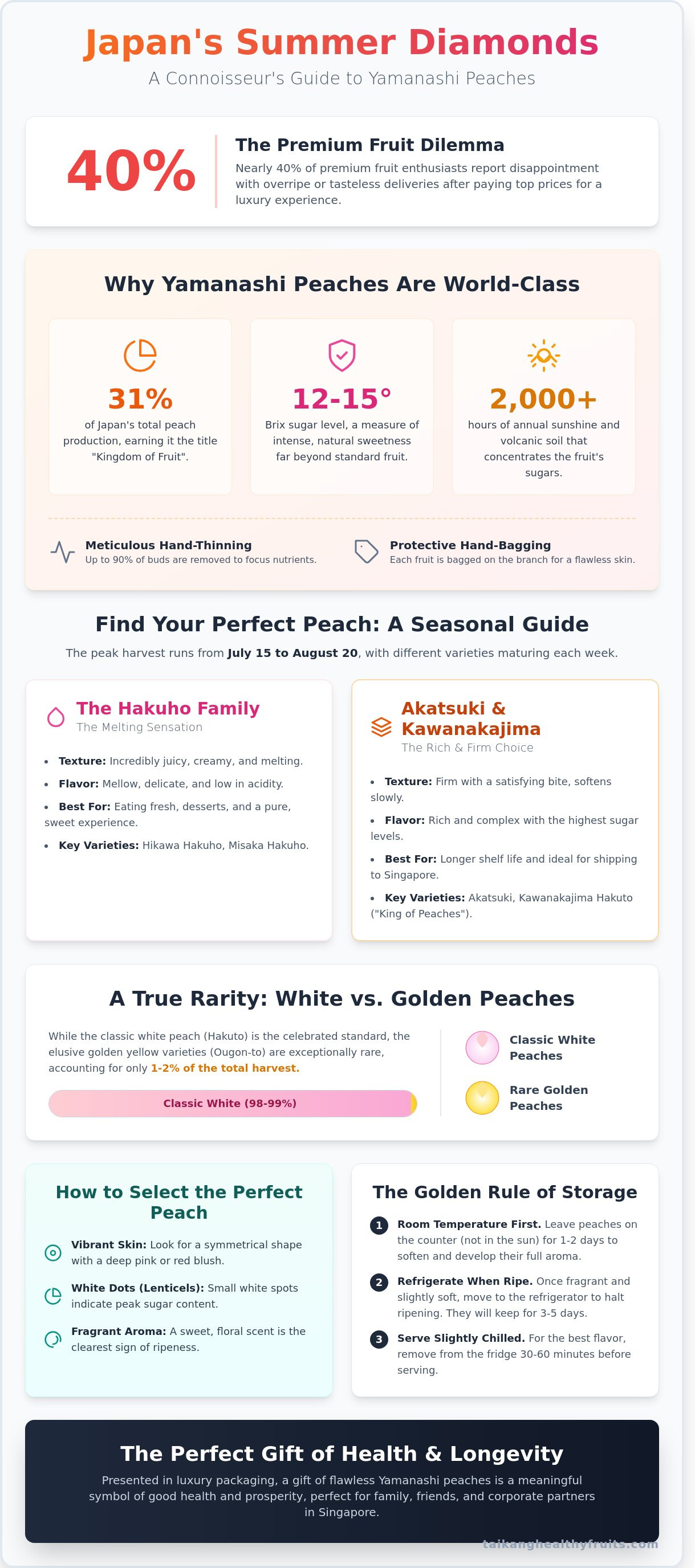
A single premium peach from Japan's "Kingdom of Fruit" can cost over S$25 in a Singapore specialty store, yet nearly 40% of premium fruit enthusiasts report disappointment with overripe or tasteless deliveries. You've likely felt that frustration after paying a high price for a gift or a family treat only to find the texture is mealy. It's discouraging when yamanashi peaches don't deliver the juicy, honey-like experience you expected. We believe in providing the transparency you need to make healthy, high-quality choices for your home.
This article helps you identify and enjoy Japan's finest summer export with complete certainty. You'll learn the specific differences between the creamy Hakuho and the firm Akatsuki varieties to find your perfect match. We'll also share professional storage methods and the exact July 15 to August 20 window when flavor peaks. Our guide offers clear steps, honest advice, and professional tips to help you select and store these seasonal treasures like an expert.
Key Takeaways
- Understand why Yamanashi is celebrated as Japan's "Kingdom of Fruit" and how its unique climate produces world-class "Summer Diamonds."
- Learn to navigate the seasonal harvest calendar to choose between buttery, melting textures and refreshingly crisp varieties.
- Discover the rare differences in flavor and rarity between classic white peaches and the elusive golden yellow varieties.
- Master the essential "Golden Rule" for storing and ripening yamanashi peaches to ensure peak sweetness and prevent bruising.
- Explore how to select premium fruit gifts in Singapore that combine luxury packaging with meaningful symbols of health and longevity.
Why Yamanashi Peaches are Japan's 'Summer Diamonds'
Yamanashi peaches represent the pinnacle of Japanese stone fruit. This region is widely recognized as Japan's "Kingdom of Fruit." According to 2022 data from the Ministry of Agriculture, Forestry and Fisheries, Yamanashi accounts for 31% of the country's total peach production. These fruits are famous for their impressive size, high sugar content, and soft, velvety skin. They offer pure flavor, consistent quality, and exceptional nutrition. For many, they are more than just a snack. They are a symbol of summer luxury and a testament to refined health.
In the Singapore market, these fruits are often called "Summer Diamonds." This nickname reflects their high value and the short window of their seasonal availability. A premium peach from this region often reaches a Brix level (sugar content) of 12 to 15. This is significantly higher than standard supermarket varieties. They provide a clean source of hydration and vitamins without the need for processed additives. It's a natural indulgence that fits perfectly into a health-conscious lifestyle.
The Volcanic Terroir of Fuefuki City
Fuefuki City sits at the heart of Yamanashi's peach industry. The region's success relies on its unique volcanic terroir. This well-drained soil prevents the roots from holding too much water, which forces the trees to concentrate natural sugars within the fruit. The geography of the Kofu Basin provides over 2,000 hours of annual sunshine. It also creates extreme temperature fluctuations. Hot days and cool nights help the fruit develop its signature sweetness. The basin's natural slope ensures that water never logs the roots; this keeps the fruit firm and flavorful rather than watery.
The History of Japanese Peach Cultivation
Modern yamanashi peaches evolved from wild varieties into the elite "Hakuto" or White Peach lineage. This transformation was driven by decades of selective breeding. Farmers today use a meticulous hand-thinning process. They typically remove up to 90% of the initial fruit buds. This ensures the remaining peaches receive all the tree's nutrients. Each individual fruit is then hand-bagged while still on the branch. This labor-intensive technique protects the delicate skin from pests and UV damage. It results in a flawless, pale pink exterior that is prized by gift-givers. You can find these expertly grown selections in our gift box collection, which highlights the very best of the season's harvest.
Exploring the Top Yamanashi Peach Varieties
The harvest for yamanashi peaches follows a strict calendar from early July to late August. Each week brings a different profile of flavor and texture to the market. Early season fruit tends to be smaller and highly aromatic. As the season progresses into August, the peaches grow larger and develop a deeper sweetness. Farmers use a Brix refractometer to measure sugar content. A Brix level of 12 is the standard for quality, while premium gift-grade fruit often hits 15 or higher.
You can judge a peach by its appearance. Look for a vibrant pink or red skin with small white dots. These dots are called lenticels. They show that the fruit has reached its maximum sugar potential. The flesh should appear slightly translucent near the skin. If you prefer a softer fruit, look for the Hakuho lineage. If you like a crunch, the Hakuto varieties are your best choice. Understanding these nuances helps you select the perfect fruit for your palate.
The Hakuho Family: The Melting Sensation
The Hakuho group is the gold standard for dessert peaches. Hikawa Hakuho arrives first in early July. It's famous for its abundant juice that flows the moment you slice it. Misaka Hakuho follows shortly after. These peaches are known for their impressive size, often weighing over 300 grams each. Their flavor is mellow and low in acidity. This makes them a favorite for children and those who enjoy a delicate, creamy mouthfeel. You can find these seasonal gems in our new arrivals collection during the peak summer months.
Akatsuki and Kawanakajima: The Rich and Firm Choice
If you prefer a peach with more substance, the Akatsuki and Kawanakajima varieties are excellent. Akatsuki is a hybrid that offers a fine, almost crunchy texture when first picked. It softens slowly, allowing for a longer shelf life in your refrigerator. Kawanakajima Hakuto is often called the "King of Peaches." It matures in August and boasts the highest sugar levels of the season. These firmer yamanashi peaches are ideal for the Singapore market. They withstand the 7 hour flight from Japan better than softer types. This ensures they arrive at your door in perfect condition without bruising, maintaining the high standards expected by local consumers.
White vs. Yellow Peaches: Which Should You Choose?
Yamanashi peaches come in two primary categories, and your choice depends on your specific palate. White peaches are the hallmark of the region, but yellow peaches are a true rarity. In a typical harvest, golden yellow varieties account for only 1% to 2% of the total yield. You'll recognize them by their vibrant golden skin, which stands out against the soft pink and creamy white hues of the standard varieties. While white peaches are best enjoyed fresh to appreciate their delicate nature, yellow peaches hold their shape beautifully in gourmet tarts or poached desserts. You can shop our latest arrivals to see which of these seasonal treasures are currently available for delivery in Singapore.
Flavor Profiles and Texture Differences
White peaches offer a low-acidity experience that emphasizes pure sweetness. They're famous for a delicate floral aroma and a high moisture content that creates a melt-in-your-mouth sensation. Golden yellow peaches provide a different profile. They feature tropical notes and a dense texture similar to a ripe mango. The finish is slightly tangy, providing a sophisticated balance to the fruit's natural sugars. If you prefer a sugary, mellow snack, choose the white variety. If you enjoy bold, complex flavors, the yellow peach is your best option.
- White Peaches: Floral, honey-like sweetness, and very juicy.
- Yellow Peaches: Tangy, tropical, and firm enough for slicing.
Nutritional Value and Health Benefits
Both types of yamanashi peaches are nutritional powerhouses for health-conscious consumers. They contain high concentrations of Vitamin C and Vitamin A, which are essential for skin health and immune support. One medium peach provides roughly 10% of your daily dietary fiber needs, aiding digestion. These fruits are also rich in potassium, a mineral that supports heart health by managing blood pressure levels. Since these peaches are approximately 89% water, they're an excellent way to stay hydrated during a humid Singapore afternoon. They offer a clean, natural energy boost without any added sugars or preservatives.
- Skin Health: High Vitamin A content promotes a natural glow.
- Hydration: High water content helps maintain fluid balance.
- Heart Support: Potassium and fiber contribute to cardiovascular wellness.
How to Store and Serve Premium Japanese Peaches at Home
Handling yamanashi peaches requires patience and a gentle touch. These fruits are prized for their high sugar content and soft texture. The golden rule for storage is simple: never put an unripe peach directly into the fridge. Cold temperatures halt the ripening process and can turn the flesh mealy. Instead, keep your peaches on the counter at a room temperature of 25 to 28 degrees Celsius until they reach peak sweetness.
Checking for ripeness is a delicate task. You shouldn't press the fruit with your fingers, as this causes immediate bruising. Instead, hold the peach in your palm and check for a slight "give" near the stem. The "sniff test" is your best tool. A ripe peach emits a deep, floral aroma that is unmistakable. Before serving, you can browse our full fruit collection to find the perfect pairing for your summer dessert platter.
Cleaning is the final step before preparation. To remove the fine peach fuzz safely, rinse the fruit under cool, running water. You can use a soft cloth or a dedicated fruit brush to gently wipe the skin. This ensures a smooth mouthfeel if you choose to eat the skin, which contains beneficial fiber and nutrients.
The Art of Ripening in Singapore’s Climate
Singapore’s humidity is generally helpful for fruit, but air-conditioning is a hidden enemy. Keep your peaches away from direct sunlight and air-con vents. Direct airflow dries out the skin and prevents even ripening. Once the peach is soft and fragrant, place it in the fridge for exactly 30 minutes before eating. This short chilling period provides a refreshing temperature without dulling the complex flavor profile of the yamanashi peaches.
Professional Peeling and Slicing Techniques
To enjoy the smooth texture of a premium peach, you might want to remove the skin entirely. Use the blanching method for the best results. Submerge the fruit in boiling water for 15 seconds, then immediately drop it into an ice bath. The skin will slide off without damaging the flesh. For slicing, use the "avocado method." Cut around the pit vertically and twist the two halves gently. To prevent the fruit from turning brown, dip the slices into a bowl of water with a squeeze of fresh lemon. This light acidic bath stops oxidation for up to 4 hours, keeping your fruit looking vibrant.
The Perfect Gift: Sending Yamanashi Peaches in Singapore
In Asian culture, peaches represent longevity, health, and prosperity. Gifting yamanashi peaches is more than a simple gesture; it's a sincere wish for the recipient's well-being. These fruits are the crown jewels of summer produce. We ensure every peach arrives in pristine condition. Each fruit is nestled in protective foam and presented in elegant, minimalist packaging. This aesthetic reflects the luxury of the fruit inside. You can explore our premium gift boxes to find the ideal presentation for your next occasion.
Corporate Gifting and Wellness
A 2023 survey of Singaporean professionals found that 88% of employees feel more appreciated when receiving fresh, healthy gifts over traditional processed snacks. Premium fruit boxes boost morale and strengthen client relations through tangible quality. We offer customization for bulk office deliveries to suit your corporate needs. A hand-selected gift makes a lasting impression that generic, mass-produced hampers cannot match. Our team manages the logistics so your clients receive perfectly ripe fruit. You can order fruit hampers for special occasions to impress your business partners today.
Curating the Perfect Selection with Tai Kang
We pride ourselves on a transparent supply chain. Our yamanashi peaches move from the airport to your doorstep within 24 hours of arrival. This speed preserves the delicate scent and firm texture of the fruit. Our specialists inspect every peach for three specific criteria: a vibrant pink hue, a minimum weight of 250 grams, and a sweet, floral aroma. We don't compromise on quality. We offer reliable delivery across Singapore, ensuring your gift arrives fresh and ready to enjoy. Our process is simple, wholesome, and focused on the natural excellence of Japanese produce.
Bring the Taste of Yamanashi to Your Table
Enjoying yamanashi peaches is a celebrated summer tradition that brings Japan's finest orchards directly to your home. These fruits stand out for their delicate skin, juicy flesh, and incredible floral aroma. You now know how to distinguish between the creamy sweetness of white peaches and the rich, tangy profile of yellow varieties. Storing them correctly at room temperature and serving them chilled ensures every bite delivers the refreshing experience you expect from premium produce.
Taikang Healthy Fruits remains Singapore's trusted source for these seasonal treasures. We guarantee quality by hand-selecting fruit that reaches a minimum 12+ Brix sweetness level. Our team uses 100% temperature-controlled national delivery to protect the integrity of every peach during transit. We focus on purity and safety; our peaches have no added preservatives and no artificial ripening agents. You can trust that the fruit arriving at your door is as natural and wholesome as the day it was picked.
Experience the sweetness of Yamanashi, shop our Peach Collection today!
It's the perfect time to share these sun-ripened gems with your loved ones. We look forward to helping you discover your new favorite summer treat.
Frequently Asked Questions
When is the best time of year to buy Yamanashi peaches in Singapore?
The best time to buy Yamanashi peaches in Singapore is from late June to early August. During these 8 weeks, the fruit reaches its peak sugar content and fragrance. We air-fly these premium fruits directly from Japan to ensure they arrive within 48 hours of harvest. You'll find the widest selection of varieties during the July peak.
How can I tell if a Japanese peach is ripe and ready to eat?
You can tell a Japanese peach is ripe by its intense floral aroma and a slight softening near the stem. Don't press the fruit's body, as this causes bruising within 2 hours. A ripe peach feels heavy for its size. It should have a deep pink or red blush covering 80% of its surface.
Why are Yamanashi peaches so much more expensive than other peaches?
Yamanashi peaches cost more because farmers hand-pollinate each blossom and limit every branch to just 1 fruit. This ensures all nutrients concentrate into a single peach. Prices in Singapore typically range from S$18 to S$35 per piece. Each fruit undergoes 3 separate quality inspections before export to meet strict Japanese Grade A standards.
Can I eat the skin of a Japanese peach?
Yes, you can eat the skin of a Japanese peach after a gentle wash. The skin contains high levels of antioxidants and dietary fiber. Simply rub the fuzz off under cool running water for 15 seconds. Many enthusiasts prefer peeling them to enjoy the melting texture, but the skin is 100% safe and nutritious.
How long will Yamanashi peaches stay fresh after delivery?
Yamanashi peaches stay fresh for 2 to 3 days at room temperature in a cool spot. If you want them to last longer, place them in the refrigerator's crisper drawer for up to 5 days. We recommend eating them within 48 hours of delivery for the best flavor. Take them out of the fridge 30 minutes before serving to restore their natural sweetness.
Is there a difference between a peach and a nectarine from Japan?
The main difference is the skin texture, as peaches have a soft fuzz while nectarines are completely smooth. Japanese peaches are typically larger and have a higher juice content than nectarines. Both fruits belong to the same species, but nectarines have a recessive gene that removes the fuzz. In Yamanashi, farmers apply the same rigorous 100% organic fertilizer standards to both crops.
Which variety is the sweetest: Hakuho or Akatsuki?
The Akatsuki variety is generally sweeter with a sugar content of 13% to 15%, while the Hakuho is prized for its extreme juiciness. Hakuho peaches have a softer, "melting" flesh that dissolves quickly. Akatsuki peaches offer a firmer bite and a longer shelf life. Both varieties represent the top 5% of fruit production in the region.
Do you offer same-day delivery for peach gift boxes in Singapore?
We offer same-day delivery in Singapore for orders placed before 12:00 PM. A standard delivery fee of S$15 applies to all gift box orders. Every box is transported in a temperature-controlled vehicle set to 12 degrees Celsius. This ensures your premium fruit arrives in perfect condition without any heat damage.