
Fruits for Athletes: What to Eat Before and After Training
Bananas, dates, tart cherries, berries, watermelon, and oranges are the go-to fruits for athletes, and each one earns its spot for a specific job. Bananas and dates deliver fast carbs and potassium for pre-workout energy, best eaten 30 to 60 minutes before you train. Watermelon and oranges replace fluid and electrolytes, useful before or during long, sweaty sessions. Tart cherries and berries fight exercise-induced inflammation and work best in the recovery window right after training.
- Banana — pre-workout energy, 1 medium fruit, 30–60 minutes before
- Dates — quick pre-workout fuel, 2–3 pieces, 30 minutes before
- Watermelon — hydration and citrulline, 1 cup, before or during long sessions
- Orange segments — electrolytes and vitamin C, 1 medium orange, pre or intra-workout
- Tart cherries (juice or fresh) — post-workout recovery, roughly 1 cup or 8 oz juice
- Blueberries — antioxidant recovery support, 1 cup, post-workout with protein
- Grapes or raisins — during long-duration cardio, small handful every 30–45 minutes
For workouts over an hour, sports-nutrition guidance recommends roughly 30 to 90 grams of carbohydrate per hour, a target two bananas or a small handful of dates cover easily.
Key Takeaways
Fruit works as athletic fuel because it delivers fast carbohydrates, hydration, and electrolytes with far less digestive burden than a full meal, plus recovery-supporting compounds like anthocyanins.
| Point | Details |
|---|---|
| Match fruit to timing | Eat fruit alone 30–60 minutes pre-workout; add protein or fat and extend to 60–90 minutes. |
| Hit your carb target | Aim for 30–90 grams of carbs per hour on long sessions, roughly one to two bananas or a handful of dates. |
| Use tart cherries for recovery | A 2026 meta-analysis of 147 athletes links twice-daily tart cherry juice to better recovery of jump height. |
| Watch digestion and allergies | Smaller portions 30–45 minutes out reduce GI issues; oral allergy syndrome and low-FODMAP needs require substitutions. |
| Keep a reliable supply on hand | Tai Kang Healthy Fruits offers inspected, temperature-controlled fruit delivery and a subscription plan for consistent training fuel. |
Table of Contents
- Why Fruit Matters for Athletic Performance
- Best Fruits for Athletic Performance by Goal
- Timing and Portions Around Your Training
- Quick Fruit Snacks for Training and Race Day
- What the Research Actually Shows
- Sourcing Fresh Fruit Consistently for Training
- Endurance Athletes vs. Strength Athletes: Different Fruit Needs
- Fruit Allergies and Dietary Restrictions to Watch
- Keeping Fruit Fresh from Kitchen to Gym Bag
- Avoiding Stomach Trouble from Pre-Workout Fruit
- A Coach’s Note on Fruit and Consistency
- Get Consistent Fruit Delivery for Your Training Schedule
- Frequently Asked Questions
- Sources
Why Fruit Matters for Athletic Performance
Carbohydrates are the body’s preferred fuel once exercise intensity climbs, and fruit delivers them in a form your gut can process fast without the heaviness of a full meal. That speed matters more than people think: a slow-digesting pre-workout meal can still be sitting in your stomach when you’re supposed to be sprinting.
Fruit’s water content does double duty for hydration, and its potassium supports the muscle contractions and nerve signaling that keep cramping at bay during long sessions. Bananas and oranges are particularly high in potassium relative to their calorie count.
Then there’s the pigment story. Dietitians increasingly push a “rainbow” approach to fruit intake, because different pigments carry different phytonutrients — anthocyanins in berries and cherries, lycopene in watermelon — that support blood flow and help manage the low-grade inflammation training produces. MyPlate backs whole fruit specifically for its combination of hydration, carbs, and micronutrients you won’t find in a sports gel.
- Carbs: fast fuel with minimal digestive burden
- Water and potassium: hydration and muscle function
- Anthocyanins and lycopene: inflammation control and blood flow support
Pro Tip: If you’re chasing a specific carb target, don’t eyeball it. A medium banana runs about 25 to 30 grams of carbs, so two of them gets you close to the low end of that 30–90 gram per hour range for endurance efforts.
Best Fruits for Athletic Performance by Goal
1. Energy before training: bananas and dates
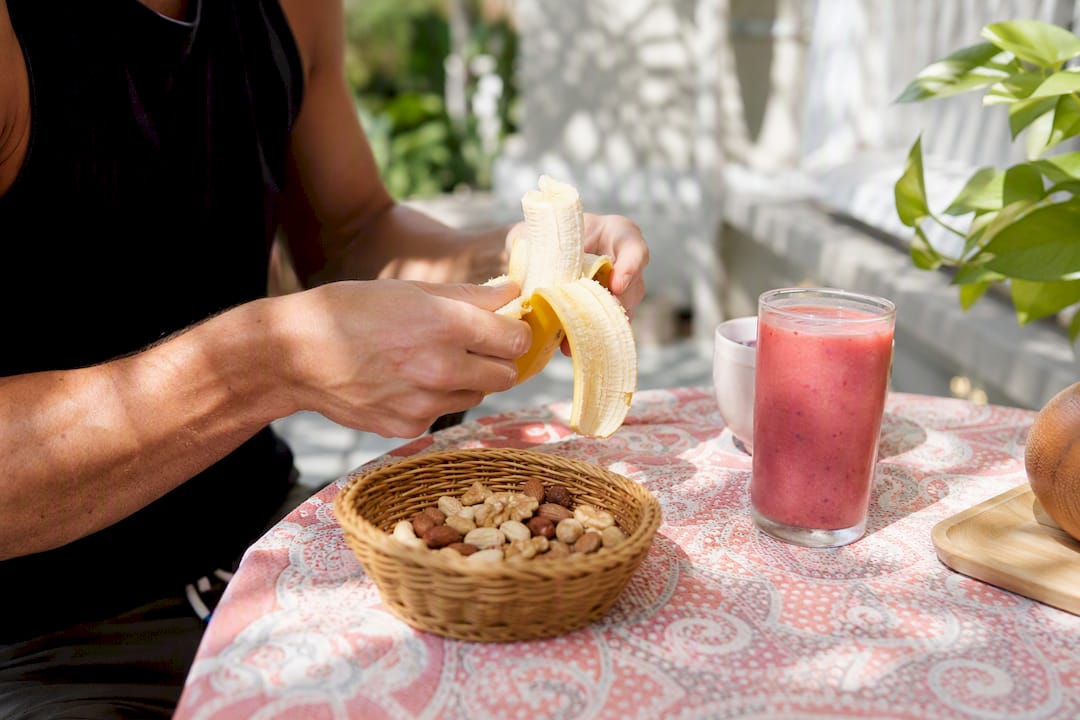
A banana 30 to 60 minutes before a session gives you roughly 25 to 30 grams of fast carbohydrate plus potassium, and it rarely causes stomach trouble. Dates are denser: two to three pieces deliver a similar carb hit in less volume, which some athletes prefer when they’re training on a tight schedule or feel full easily.
2. Hydration and electrolytes: watermelon and oranges
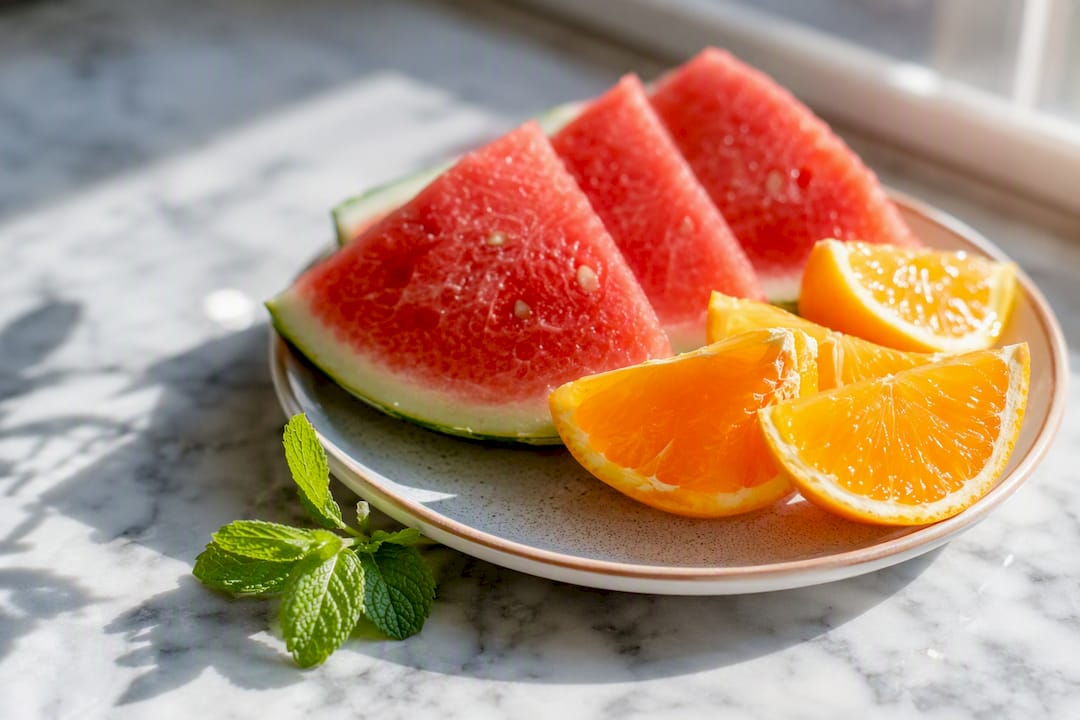
Watermelon is roughly 90% water and contains citrulline, an amino acid tied to improved blood flow, making it a smart choice before or during hot, long sessions. Orange segments work similarly and travel better than a cut melon if you need something portable for a midday practice.
3. Recovery and inflammation: tart cherries and blueberries
Tart cherries have the strongest research backing in this category. Berries generally, and blueberries specifically, contribute antioxidant capacity that several reviews link to reduced perceived muscle soreness, though the effect sizes vary by study and population.
4. Long-duration fueling: grapes, raisins, and fruit-based gels
For events lasting more than 90 minutes, grapes and raisins offer a compact carb source you can eat in small handfuls every 30 to 45 minutes without the sugar crash of candy. As a rough field conversion, 30 to 60 grams of carbs per hour is close to one to two bananas or six to eight dates, while pushing toward 60 to 90 grams per hour usually means combining fruit with a concentrated dried-fruit option or a gel.
5. Antioxidant support across the board
Reviews covering fruits commonly studied in sport contexts point to blackcurrant, grapes, pomegranate, cherry, banana, and watermelon as the fruits with the most consistent performance-related research, which is a useful shortlist if you’re deciding where to spend your grocery budget.
If you’d rather not think about sourcing and ripeness on top of your training schedule, Tai Kang Healthy Fruits carries most of these fruits fresh, which simplifies keeping a rotating supply on hand instead of hunting for ripe bananas the night before a race.
Timing and Portions Around Your Training
The window you eat fruit in matters almost as much as which fruit you pick. Fruit alone digests fast enough to eat 30 to 60 minutes before training; pair it with protein or fat, like peanut butter, and push that window to 60 to 90 minutes so you’re not training on a heavy stomach.
- Pre-workout: fruit alone, 30–60 minutes before; fruit plus protein or fat, 60–90 minutes before
- During workouts: for the 30–90 grams of carbs per hour longer sessions require, that’s roughly one to two bananas or a small handful of dates every hour
- Post-workout: fruit combined with 20 to 30 grams of protein within 30 to 60 minutes, such as Greek yogurt with berries
Bigger athletes and longer events push these numbers toward the higher end of every range; a 200-pound endurance athlete on a three-hour ride needs closer to 90 grams of carbs per hour, while a 130-pound gymnast doing 45 minutes of strength work may not need mid-session fuel at all. Younger athletes with smaller stomach capacity often do better with more frequent, smaller fruit portions rather than one large pre-workout serving.
Quick Fruit Snacks for Training and Race Day
- Under 60 minutes to go: one banana, or two to three dates, or a small fruit pouch. No prep needed, nothing that sits heavy.
- Recovery combo A: tart cherry juice mixed into Greek yogurt. Covers protein and the anti-inflammatory angle in one bowl.
- Recovery combo B: a protein shake blended with a cup of blueberries or mixed berries.
- Recovery combo C: banana slices with a tablespoon of peanut butter, a classic for a reason.
- Hydration snack: watermelon cubes with a light pinch of salt, which helps replace sodium lost in sweat.
- Hydration snack, portable: orange segments packed in a small container for the sideline or gym bag.
- Race-day and travel: dried fruit packets, individually wrapped fruit cups, or freeze-dried berries that survive a hot car or a long flight better than fresh produce.
What the Research Actually Shows
A 2026 meta-analysis pooling 10 studies and 147 athletes found that drinking Montmorency tart cherry juice twice daily for eight days improved endurance performance and sped recovery of jump height, a common marker of muscle function. Researchers point to anti-inflammatory effects and improved blood flow as the likely mechanisms, though the athlete samples in these trials were small, so treat the effect as a real but modest edge rather than a guaranteed result for every sport.
Berries carry a similar, if less studied, signal. Their antioxidant and anthocyanin content shows up across reviews as a contributor to lower perceived soreness after hard training, without the same volume of controlled trials tart cherry has.
The clearest takeaway from the current research isn’t that one fruit is magic. It’s that specific pigments and compounds, cherry anthocyanins especially, produce measurable recovery benefits in trials, even though the sample sizes remain small and results vary by athlete.
- Tart cherry: strongest evidence, small samples, measurable recovery effect
- Berries: consistent antioxidant signal, less controlled-trial data
- Carb guidance from major health organizations maps directly onto the fruit portions above
Sourcing Fresh Fruit Consistently for Training
Consistency beats perfection when you’re fueling a training block. Missing your pre-workout banana because the fruit bowl was empty is a bigger problem than picking the “wrong” fruit occasionally.
- Every order at Tai Kang Healthy Fruits goes through quality inspection before it ships
- Fruit is kept in temperature-controlled storage to preserve freshness and flavor
- Customers rate the service 4.85 stars across 46 reviews
- A rewards program supports repeat orders for athletes who want fruit delivered on a routine
Endurance Athletes vs. Strength Athletes: Different Fruit Needs
Endurance and strength training place different demands on the body, and your fruit choices should shift accordingly. Endurance athletes, think runners, cyclists, triathletes, burn through glycogen steadily over long durations, so they benefit most from fruits that supply sustained carbs and replace fluid loss: watermelon, oranges, and grapes during the session, bananas and dates before it. Hydration and electrolyte replacement matter more here because sweat losses accumulate over hours.
Strength athletes have a different problem. A powerlifting or heavy resistance session rarely lasts more than 60 to 90 minutes, and the intensity comes in short, explosive bursts rather than continuous output. Carb needs are real but smaller in absolute terms, so a single banana or a few dates before lifting usually covers the pre-workout energy requirement without needing mid-session fruit at all. Recovery becomes the bigger lever for strength athletes: pairing tart cherries or berries with a protein source after a heavy session supports the muscle repair that strength training specifically demands.
Team-sport and mixed-intensity athletes, think soccer or basketball, sit somewhere between the two. They need the hydration focus of endurance work combined with the recovery focus of strength training, which usually means watermelon or oranges around the session and a berry or cherry-based recovery snack afterward. If you coach a mixed group, it’s worth tailoring fruit recommendations by position or role rather than issuing one blanket plan for the whole roster.
Fruit Allergies and Dietary Restrictions to Watch
Fruit is generally one of the safer food categories for athletes, but it isn’t universally safe. Oral allergy syndrome, a reaction some people with pollen allergies get to raw fruits like apples, cherries, or peaches, can cause tingling or swelling in the mouth. If that sounds familiar, cooked or dried versions of the same fruit often don’t trigger the same reaction, since the proteins responsible break down with heat.
Athletes managing diabetes or blood sugar sensitivity need to factor fruit’s natural sugars into their overall carbohydrate count, particularly with drier, sugar-dense options like dates and raisins. That doesn’t mean avoiding fruit. It means pairing it with protein or fat to blunt the blood sugar response, and timing bigger portions around training when your body is primed to use that glucose.
Low-FODMAP dieters, often people managing IBS, may need to watch portion sizes on high-fructose fruits like watermelon and cherries, since large servings can trigger bloating or GI distress independent of exercise. And anyone with a diagnosed fruit allergy, not just oral allergy syndrome but a true anaphylactic risk, should treat that fruit as off-limits regardless of its performance benefits and talk to an allergist about safe substitutes. There’s no fruit on this list that’s irreplaceable: if cherries are a problem, blueberries or pomegranate cover similar antioxidant ground.
Keeping Fruit Fresh from Kitchen to Gym Bag
Nutrient quality starts declining the moment fruit is cut, so timing your prep matters as much as the fruit itself. Whole fruits like bananas, oranges, and apples hold their vitamin content well for days at room temperature or in the fridge, but pre-cut watermelon or berries lose vitamin C and some antioxidant capacity within 24 to 48 hours, even refrigerated.
For training-day prep, cut fruit the morning of or the night before at the earliest, and store it in an airtight container to slow oxidation. Berries specifically should stay unwashed until right before you eat them; washing early introduces moisture that speeds spoilage. If you’re relying on tart cherry juice for recovery, keep it refrigerated after opening and check the label, since some concentrates are more shelf-stable than fresh-pressed versions.
Freezing is a legitimate option for berries and cherries you’re not eating within a few days, and frozen fruit retains most of its anthocyanin content, making it a reasonable backup for recovery smoothies when fresh isn’t available. Dried fruit, useful for race day, keeps its carbohydrate content but loses some vitamin C in the drying process, so treat it as a fueling tool rather than a nutrient-density strategy.
Avoiding Stomach Trouble from Pre-Workout Fruit
Fruit is generally gentle on digestion, but eating the wrong amount at the wrong time can still leave you doubled over mid-workout. High-fiber fruits and large portions eaten too close to intense exercise are the usual culprits, since blood flow shifts away from the gut once you’re working hard, slowing digestion right when you’ve asked it to speed up.
The fix is mostly about timing and portion size. Smaller fruit portions eaten 30 to 45 minutes before training tend to be tolerated far better than a large serving eaten right before you start, giving your body enough of a head start on digestion. High-fructose fruits like watermelon and cherries in large quantities are more likely to cause bloating than lower-fructose options like bananas, so if you’re sensitive, save the melon for after training rather than right before.
During exercise itself, stick to fruits with lower fiber content, like grapes or a small amount of dried fruit, rather than something fibrous like an apple with the skin on. And if you know you’re prone to GI issues on race day, test any new fruit or combo during a training session first. Race day is not the time to discover watermelon doesn’t sit well an hour before a start gun.
A Coach’s Note on Fruit and Consistency
The athletes who get the most out of fruit aren’t the ones chasing the “perfect” pre-workout food. They’re the ones who keep two or three reliable options, a banana, some dates, a stash of frozen berries, on hand every single week so fueling isn’t a last-minute scramble. Tart cherry juice gets attention for good reason, but consistency with the basics usually outperforms chasing the trendiest recovery fruit.
Get Consistent Fruit Delivery for Your Training Schedule
Sourcing the fruits covered in this guide consistently, ripe bananas, fresh berries, good tart cherries, is often the hardest part of sticking to a fueling plan, not the nutrition science itself. Tai Kang Healthy Fruits solves that by handling the sourcing and quality checks so your fridge is never the reason you skip your pre-workout fuel.
Every order goes through inspection and moves through temperature-controlled storage before it reaches your door, which matters when you’re depending on a banana’s ripeness or a berry’s freshness for training tomorrow morning. For athletes who want this handled automatically, the bi-weekly subscription plan delivers a rotating supply without you having to reorder every week, and repeat orders earn rewards through the Tai Kang Healthy Club. Start your subscription today and stop treating fruit availability as a variable in your training plan.
Frequently Asked Questions
What is the best fruit to eat before a workout? Bananas and dates are the top picks for pre-workout fruit because they provide fast carbohydrates and potassium without weighing down your stomach. Eat them 30 to 60 minutes before training for the best results.
Should you eat fruit after a workout? Yes. Post-workout fruit, especially tart cherries or berries paired with a protein source like yogurt, supports glycogen replenishment and helps manage exercise-induced inflammation within the 30 to 60 minute recovery window.
What is the best fruit for recovery? Tart cherries have the strongest research behind them, with a 2026 meta-analysis linking regular consumption to improved recovery of muscle function. Blueberries and other berries offer a similar, if less studied, antioxidant benefit.
How much fruit should athletes eat before exercising? A single medium banana, two to three dates, or a cup of watermelon is a reasonable pre-workout portion. Larger portions eaten too close to training increase the risk of stomach discomfort.
Can fruit cause digestive issues during exercise? High-fiber or high-fructose fruits eaten in large amounts too close to training can cause bloating or cramping. Smaller portions eaten 30 to 45 minutes beforehand, and lower-fiber choices like grapes during exercise, reduce that risk.
Sources
- Examine research feed: tart cherry meta-analysis (2026)
- PMC article on phytonutrients and performance
- American Heart Association — Food as fuel before, during and after workouts
- MyPlate — Fruits guidance
Recommended
- Fruit and Wellness: How Different Fruits Boost Your Health – Tai Kang Healthy Fruits
- Fruit and Wellness: How Different Fruits Boost Your Health – Tai Kang Healthy Fruits
- Corporate Wellness Fruit Box: The Ultimate Guide for Singapore Offices – Tai Kang Healthy Fruits
- How to Store Fresh Fruits and Keep Them at Their Best – Tai Kang Healthy Fruits