
Gifts for Chinese Clients in Singapore: What to Give and Avoid
The safest gift for a Chinese client in Singapore is a modest, thoughtful one that carries a good meaning: premium fresh fruit such as mandarins or apples, quality tea, or a well-made stationery set. Present it with both hands, in bright wrapping, after the deal is done, and keep it clearly below anything that could look like an inducement. The rest of this guide explains why, and how to get the details right.
We sell fruit gifts in Singapore, so fruit features in this guide. But we have tried to give you the full picture, including the situations where no gift at all is the better choice.
TL;DR
- Choose meaning over price: a simple, well-chosen gift beats an expensive one. Fruit (mandarins, apples, oranges), tea and quality stationery are widely suitable.
- Avoid clocks and watches, shoes, sets of four, pears, knives or scissors, white flowers, handkerchiefs and red-ink messages.
- Singapore’s anti-corruption law covers private-sector business too, so time the gift after negotiations end and never tie it to a favor.
- Wrap in bright colors, hand it over with both hands, honor the most senior person, and do not expect it to be opened in front of you.
- Singapore is culturally diverse. Adapt to the individual client rather than a stereotype.
Table of Contents
- Start with the person, not the stereotype
- The legal line you must not cross in Singapore
- What to give: ideas that work
- What to avoid
- Timing: when to give
- How to wrap and present it
- If your client gives you a gift
- Our perspective
- Ordering a fruit gift for a Chinese client
- A short checklist before you send
- FAQ
- Sources
Start with the person, not the stereotype
“Chinese client” covers a very wide range of people in Singapore: a third-generation Singaporean Chinese business owner, a manager posted from mainland China, a Hong Kong or Taiwan counterpart, a Peranakan family firm. Their gift customs overlap but are not identical. Export Development Canada’s Singapore etiquette guide advises tailoring your conduct to the individual because Singapore is so culturally diverse, and notes that gifts are not generally exchanged in Singapore business in the first place. It also stresses that saving face stays important.
That last point shapes everything below. A good gift never puts the recipient in an awkward position: it is not too lavish to reciprocate, not too personal, and not delivered in a way that forces a public reaction.
Before choosing anything, ask yourself three quick questions:
- How long have we worked together? A first-meeting gift and a ten-year-anniversary gift are very different things.
- Is there an occasion? A festival, a milestone, a completed project, a visit to their home or office.
- Is anything pending? If a tender, contract renewal or approval is still open, hold the gift.
The legal line you must not cross in Singapore
This is where many well-meaning gift guides stop short. In Singapore, a business gift is not only a matter of manners.
The Corrupt Practices Investigation Bureau warns that gifts or entertainment offered to gain an unfair business advantage can be tantamount to corruption, whether or not the recipient can actually grant the request. Baker McKenzie’s 2025 guide explains that the Prevention of Corruption Act 1960 applies to both public and private sector bribery. It criminalizes giving, offering, soliciting or accepting gratification, and defines gratification broadly enough to include non-monetary gifts or entertainment used as an inducement or reward. The same guide notes that Singapore law sets no general statutory spending amount, so there is no safe number to hide behind. Intent and context decide.
In practice, that means:
- Check your own company policy first. Many firms, and almost all government-linked organizations, have gift limits or declaration rules. Your client may be forbidden from accepting anything above a small value.
- Never link the gift to a decision. No gift while a quotation, tender or renewal is pending.
- Give openly. Send it to the company address, address it to the business, and keep a record. The CPIB emphasizes that a clean system depends on diligent record-keeping, regular audits and defined workflows.
- Keep the message neutral. Thank them for the relationship. Do not mention future business.
If you are unsure whether a particular gift or recipient is a problem, ask your compliance officer or a lawyer before you order. That is a question worth five minutes.
What to give: ideas that work
Research on Chinese business gifting points to a consistent set of safe choices. Diffreight’s business-gifting guide recommends quality tea or tea sets, suitable fruit, wine or spirits where appropriate, culturally meaningful silk, porcelain or jade, and high-quality stationery. The Belgian-Chinese Chamber of Commerce adds that a simple, meaningful gift is preferable to an expensive one, naming tea, fresh fruit such as apples and oranges, wine and specialty products from the giver’s home country.
One caution: some of those guides were written for mainland China. In Singapore, corporate gift exchange is less routine, and Expatica notes that chocolates or souvenirs from your own country are a common modest choice, while exchanges between companies can be misread as attempted bribery. So scale down and keep it low-key.
| Gift | Why it works | Watch out for |
|---|---|---|
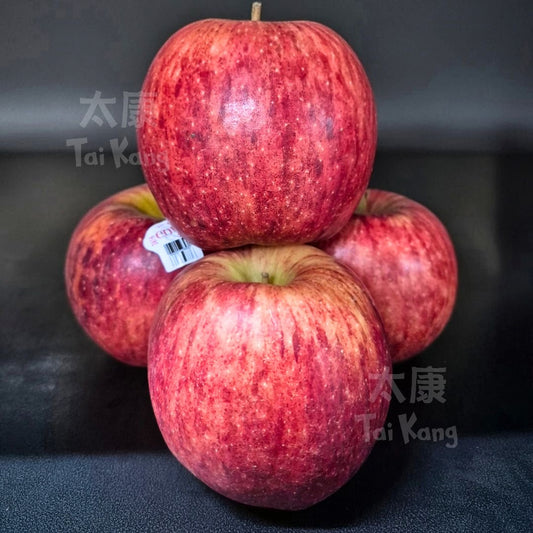
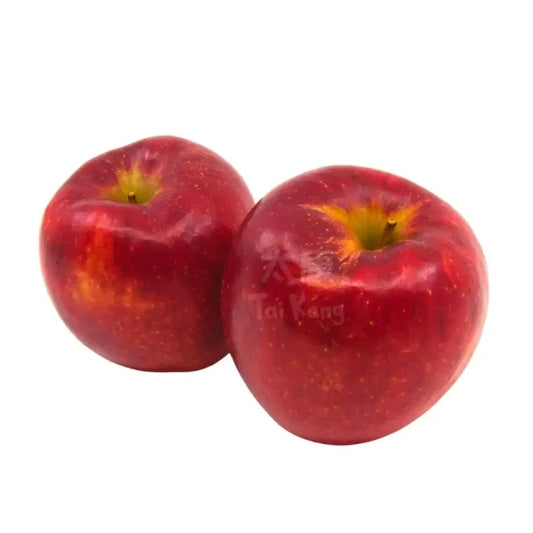
| Premium fresh fruit (mandarins, apples, oranges) | Auspicious, shareable by a whole team, easy to consume, not a lasting obligation | Choose even numbers other than four; skip pears |
| Fruit gift box or hamper | Looks considered without looking extravagant; arrives ready to present | Keep the contents simple and fresh, avoid alcohol if the client may not drink |
| Quality tea or tea set | Traditional, respected, suits both formal and personal relationships | Know their taste; avoid cheap packaging |
| Stationery (notebooks, pens) | Practical, understated, fits corporate rules | Avoid red-ink messages and heavy logos |
| Specialty items from your home country | Shows effort and personality | Check import and food-safety rules for edible items |
| Wine or spirits | Fine for some clients | Not for everyone; check dietary and religious preferences |
Why fruit is such a natural fit
Fruit sits at the heart of Chinese New Year in Singapore. The National Heritage Board notes that it is customary to give a pair of mandarin oranges during house visits, and the host reciprocates with another pair, symbolizing an exchange of goodwill. Fruit also feels light. It is not a luxury item that creates a debt, it can be shared around an office, and it is gone in a few days, which fits the principle that the meaning matters more than the material value.

For festive timing, our Chinese New Year mandarins are packed in pairs and sets, and our Chinese New Year fruit hamper guide walks through which fruits carry which wishes.
Matching the gift to the relationship
A new client, no occasion. Usually, give nothing until the work is done. A short, warm note is enough early on.

A long-standing client at a festival. A modest fruit gift box or tea set addressed to the company is the classic choice. Mandarins at Chinese New Year, a boxed assortment at Mid-Autumn or year-end.
A project completion or milestone. Expatica lists religious celebrations, birthdays, home visits and achievements as the usual gift occasions in Singapore. A completed project fits well, as long as nothing new is under negotiation.
A visit to someone’s home. Bring fruit. It is expected, welcome, and unmistakably personal rather than corporate.
A client team rather than one person. Choose something shareable, such as a fruit box, so no one is singled out and no individual feels obliged.
What to avoid
The BCECC newsletter lists the classic mistakes: clocks or watches, shoes, sets of four, pears, knives or scissors, red-ink messages, white flowers and handkerchiefs. It adds that intimate items may feel too personal in a business setting. Here is why those matter in plain terms:
- Clocks and watches: the Mandarin phrase for giving a clock sounds like attending a funeral.
- Pears: the word for pear sounds like the word for parting.
- Sets of four: four sounds like the word for death. Use two, six or eight items instead.
- Knives and scissors: they suggest cutting a relationship.
- White flowers and handkerchiefs: associated with mourning and sadness.
- Red ink: writing a name in red ink can suggest severing ties, so write cards in black or blue.
- Shoes: they carry an association with bad luck and separation.
For fruit, the practical consequence is simple: if you are building a hamper, skip pears, and count the pieces or the number of items so you do not land on four. A pair of mandarins, six apples or an assortment of eight pieces are all comfortable.
You should also avoid anything that looks too expensive. A lavish gift can embarrass the recipient, trigger company rules, or suggest you want something in return.
Timing: when to give
Singapore is not a gift-heavy business culture, so timing carries more weight than it does elsewhere. Kimberley Taylor’s etiquette guide advises waiting until business negotiations have concluded before presenting a corporate gift, to avoid any appearance of bribery. That fits the legal picture above.
Good moments tend to be:
- Chinese New Year, the season when fruit gifts are most expected
- Mid-Autumn Festival and year-end festive periods
- After a project closes or a milestone is reached
- A significant company anniversary or the client’s own celebration
- A thank-you after a long partnership year
Poor moments are the middle of a tender, the week before a contract decision, or a first meeting.
Festive orders in Singapore tend to cluster in the weeks before the holiday, so order early. Check our reliable corporate gift delivery guide for lead-time advice, and our procurement-ready corporate gift guide if you need to work within a company budget approval process.
How to wrap and present it
Presentation signals respect as much as the gift itself.
- Wrap in bright colors. Expatica advises bright wrapping, giving with both hands, and not expecting the recipient to open it in front of you. Red and gold are auspicious. Avoid white, black and blue-heavy packaging.
- Use both hands to give and to receive.
- Honor the most senior person. Etiquette guidance suggests presenting the gift to the senior person and stating that you want them to accept it on behalf of the company. That framing also helps ease any concern about undue influence.
- Expect a polite refusal. The same guide says a recipient may graciously refuse up to three times before accepting. Keep offering, warmly and without pressure.
- Do not expect it to be opened. Gifts are typically opened later in private, and that is considered more polite.
- Write a short, warm card in black or blue ink. For wording ideas, see our 1 to 3 sentence corporate gift messages.
If your client gives you a gift
Accept it graciously, perhaps after a modest initial hesitation, and use both hands. Do not open it in front of them. Afterward, the BCECC suggests expressing gratitude with a thank-you message or a favor in return. In Singapore, keep the return gesture small and proportionate, and check your own company’s gift policy first. If it exceeds your limit, declare it, and explain politely to the client that your policy requires it. Done kindly, that rarely causes offense.
Our perspective
We deliver fruit gifts across Singapore, and our customers include companies thanking clients and individuals visiting family. A few things we have learned about what makes a gift land well:
- Fresh beats fancy. Our approach is hand-inspected, premium-grade fruit kept in temperature-controlled storage, because the gift is only as good as the first bite. A perfectly ripe mandarin says more than an elaborate box of mediocre fruit.
- Shareable is safer. A fruit box addressed to a team or company feels generous but not binding. It is easy for the recipient to accept under company policy, and it spreads goodwill widely.
- Keep the contents meaningful and simple. Mandarins, apples and oranges carry good wishes. You do not need ten varieties.
- Reliability is part of the gift. A late or damaged delivery causes more embarrassment than no gift. That is why we focus on careful inspection and swift delivery.
- Clean motives matter. In Singapore, the best gift is one you would be happy to have recorded in your company’s gift register.
— Tai Kang
Ordering a fruit gift for a Chinese client
If fruit fits your client, we make it simple. Our corporate fruit gift box range is built for company-to-company gifting with delivery across Singapore. We also offer custom corporate gifting, and we advertise free delivery for larger orders. For ongoing relationships, our subscription plans can keep a regular fruit delivery going to your own office, so your team is looking after itself too.

Browse the full range on our home page, or read our client appreciation fruit gift guide for ideas by budget and occasion.
A short checklist before you send
- Is any contract, tender or approval still pending? If so, wait.
- Does your company policy, and the client’s, allow the gift?
- Is it modest, meaningful and addressed to the company or team?
- Are there any unlucky items: pears, sets of four, clocks, knives, white flowers?
- Is the wrapping bright, and the card written in black or blue?
- Will it arrive fresh, on time, and in good condition?
- Does your record show who sent what, when and why?
FAQ
What is a good gift for a Chinese client in Singapore?
A modest, meaningful item works best. Fresh fruit such as mandarins, apples or oranges, quality tea, or good stationery are widely suitable. Keep it below any gift limit your client’s company may have, and address it to the business rather than to one person.
Is it okay to give fruit to a Chinese client?
Yes. Fruit is a traditional, auspicious gift, and mandarin oranges are exchanged in pairs at Chinese New Year in Singapore. Avoid pears, because the word sounds like parting, and avoid arranging items in sets of four.
When should I give a gift to a Chinese client?
Give it at a festival, a milestone or after a project is finished, not during an open negotiation or tender. Waiting until business discussions have concluded avoids any appearance of an inducement.
Can a business gift be considered bribery in Singapore?
Yes, if it is given to gain an unfair advantage. The Prevention of Corruption Act covers private-sector dealings, and there is no fixed safe spending amount. Check your compliance policy or ask a lawyer if you are unsure.
Should I expect the client to open the gift in front of me?
No. Gifts are usually opened later in private. They may also politely decline a few times before accepting, so keep offering warmly.
Sources
- Culture and social etiquette in Singapore, Expatica
- What to give to Chinese partners, Diffreight
- Gift-giving in the Chinese business world, BCECC Newsletter
- Chinese New Year, Roots.gov.sg
- Prevention of Corruption, Corrupt Practices Investigation Bureau
- Cultural tips for doing business in Singapore, Export Development Canada
- Asia Pacific: Gifts and entertainment, Baker McKenzie
- International Business Gift-Giving, Kimberley Taylor