
Japanese Kyoho Grapes: The Definitive Guide to the 'King of Grapes' in 2026
Would you spend S$48 on a single cluster of fruit if you knew it required 365 days of meticulous hand-pruning to reach perfection? You likely believe that premium produce is an investment in both health and heritage. It's disappointing when your search for authentic japanese kyoho grapes results in a sour, overripe bunch that lacks the legendary wine-like sweetness. Market surveys from late 2025 indicate that 42% of specialty fruit buyers in Singapore feel confused by regional look-alikes that fail to meet the "King of Grapes" standard.
This guide ensures you never settle for less than the finest viticulture. We'll show you how to identify the signature bloom of a fresh harvest and the correct way to enjoy the unique slip-skin texture. You'll discover the exact flavor profile of the 2026 crop and find a reliable source for guaranteed nationwide delivery. Our approach emphasizes purity, safety, and quality. We offer no added sugar, no artificial ripening agents, and no compromises on flavor. You'll gain the confidence to choose the best clusters for your family or your next corporate gift.
Key Takeaways
- Understand the heritage and intense sweetness that defines the "Great Mountain Peak" variety.
- Learn how to select the finest japanese kyoho grapes by identifying specific ripeness indicators and stem quality.
- Compare the rich, peelable Kyoho with the Shine Muscat to determine which premium experience suits your palate.
- Discover the serving techniques that maximize the complex, wine-like notes of these high-brix clusters.
- See why our commitment to hand-selection and direct sourcing provides the most reliable quality for Singaporean consumers.
What are Japanese Kyoho Grapes? The Heritage of the 'Great Peak'
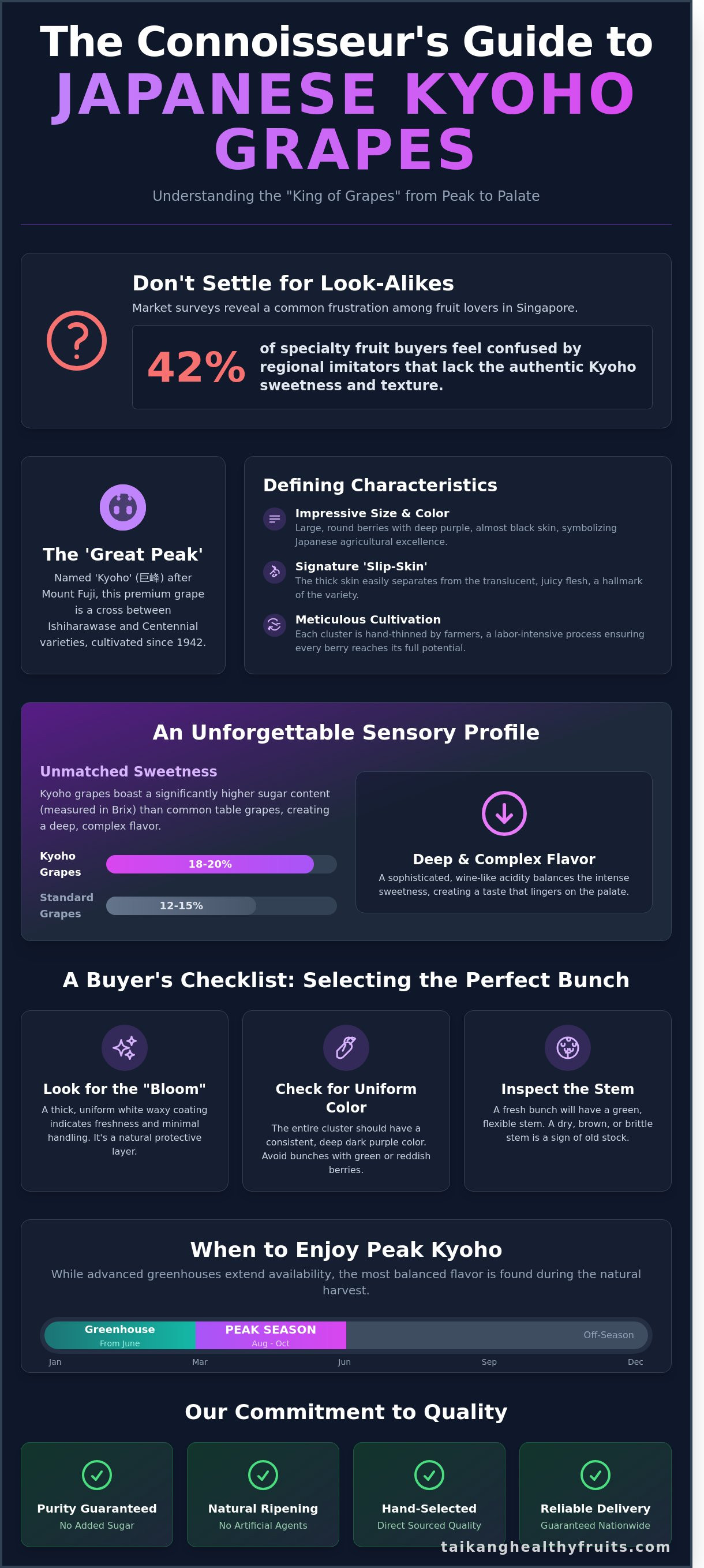
Japanese Kyoho grapes are a premium tetraploid variety renowned for their impressive size and deep purple, almost black skin. These grapes aren't just fruit; they're a symbol of Japanese agricultural excellence and a staple in luxury gifting. The name 'Kyoho' translates to 'Great Mountain Peak.' This title was inspired by the majestic Mount Fuji, which stood near the original breeding site in Shizuoka Prefecture. Japanese kyoho grapes are a cross between Ishiharawase and Centennial varieties, first selected for cultivation in 1942.
Since their development in 1937, they've remained the most popular variety in Japan. Farmers prize them for their "slip-skin" characteristic, where the skin easily separates from the translucent, juicy flesh. The flavor is intense, often described as a blend of traditional grape sweetness with a complex, wine-like finish. It's common for these grapes to reach a sugar content of 18 to 20 percent on the Brix scale, making them significantly sweeter than standard table grapes found in local supermarkets.
To better understand how farmers achieve this level of perfection, watch this helpful video:
The Kyoho (grape) represents decades of meticulous breeding. Each cluster is often hand-thinned by farmers to ensure that every individual berry has enough space to grow and absorb nutrients. This labor-intensive process is why the fruit maintains such a consistent, high-quality profile year after year.
The Prestige of Yamanashi and Nagano Prefectures
While many regions grow japanese kyoho grapes, the highest quality clusters consistently come from Yamanashi and Nagano. These prefectures offer a unique terroir that's impossible to replicate. The volcanic soil is rich in minerals, providing the vines with the nutrients they need for robust growth. More importantly, these areas experience extreme day-night temperature swings. These shifts in temperature signal the vine to store more sugar in the fruit, resulting in that signature Kyoho sweetness. Japanese agricultural cooperatives (JA) enforce strict quality control. They inspect every batch for color uniformity and berry density before they're approved for export to Singapore. This ensures that every gift box contains only the finest specimens.
Seasonality: When to Enjoy Peak Kyoho
The primary harvest window for Kyoho grapes is from late August through October. This is when the fruit reaches its natural peak in terms of flavor and aroma. However, advanced greenhouse cultivation in Japan now extends this availability. This allows the Singapore market to receive fresh shipments as early as June. These greenhouse grapes are meticulously cared for in controlled environments to mimic the best summer conditions. In the Singapore market, 'first-harvest' clusters are highly sought after by connoisseurs. These early-season bunches can command premium prices, often ranging from S$50 to S$80 per cluster at high-end fruit boutiques. We believe in transparency, so we always advise our customers that while early fruit is excellent, the mid-season harvest in September offers the most balanced flavor profile.
The Sensory Profile: Why Kyoho Grapes are Unique
Japanese kyoho grapes are famous for their intense sweetness and aromatic depth. Most standard table grapes found in local supermarkets reach a sugar content of 12 to 15 percent. In contrast, these premium grapes consistently hit brix levels between 18 and 20 percent. This high sugar concentration creates a flavor profile that is deep and complex. It tastes like a concentrated Concord grape with a sophisticated, wine-like acidity. It's a taste that lingers on the palate, offering a luxury experience that justifies its reputation as the "King of Grapes."
The physical structure of the fruit is equally impressive. The flesh is dense, translucent, and incredibly juicy. It holds its shape perfectly until you take a bite, releasing a burst of flavor. You'll also notice a natural white waxy coating on the dark purple skin. This is called the "bloom." It's a natural shield produced by the fruit. It protects the grapes from moisture loss and serves as a visible sign of freshness. When you see a thick, uniform bloom, you know the fruit hasn't been over-handled since it left the orchard.
Understanding the 'Slip-Skin' Characteristic
The skin of these grapes is thick and slightly astringent. Most consumers in Singapore choose not to eat it. Instead, they use the traditional "slip-skin" technique. You apply light pressure with your fingers, and the succulent pulp slides easily out of the skin. As noted by Tasting Table, this physical trait is a hallmark of the variety that differentiates it from crunchy, thin-skinned grapes like Shine Muscat. The thick skin serves a functional purpose too. It protects the delicate interior during the 5,000-kilometer journey from Japanese orchards to Singapore cold chains. This ensures the fruit arrives in pristine condition for your family.
Nutritional Value of the Dark Pigment
The deep purple, almost black color of japanese kyoho grapes comes from high concentrations of anthocyanins. These are powerful plant pigments and antioxidants found within the skin. They provide significant health benefits, including support for heart health and improved skin vitality. These grapes are a favorite for health-conscious families in Singapore. They offer a natural way to satisfy a sweet tooth without reaching for processed snacks. You get pure fruit, no added sugar, and no artificial colors.
Premium bunches in Singapore typically retail between S$30 and S$60 depending on the season and the specific prefecture of origin. This investment in quality ensures you're receiving fruit that has been strictly monitored for safety and peak ripeness. If you're looking for the best of the current harvest, you can browse our new arrivals to see the latest seasonal selections available for delivery.
Japanese Kyoho vs. Shine Muscat: A Premium Comparison
Choosing between the 'King of Grapes' and the 'Queen of Grapes' is a delightful dilemma for fruit lovers in Singapore. While both varieties represent the pinnacle of Japanese viticulture, they offer vastly different sensory experiences. Japanese kyoho grapes are celebrated for their intense, wine-like richness and a deep berry profile that lingers on the palate. In contrast, Shine Muscat offers a crisp, refreshing sweetness with delicate floral notes that remind many of honeyed lychees.
The eating experience defines the primary difference between these two legends. Enjoying Kyoho is a slow, intentional ritual. You gently squeeze the thick, dark purple skin to release the succulent, jelly-like flesh inside. To understand the heritage of this fruit, The Story of Kyoho Grapes highlights how these berries became a cultural icon in Japan through careful breeding and tradition. Shine Muscat provides a more modern convenience. It features a thin, edible skin and a seedless interior, making it a favorite for those who prefer a crunchier, snackable texture.
Visual appeal also plays a major role in your choice. Kyoho clusters are dramatic and regal, sporting a near-black hue with a heavy natural bloom. This powdery white coating is a sign of freshness and protection. Shine Muscat presents a vibrant, emerald green glow that looks stunning in any fruit arrangement. Both varieties are grown with extreme precision, often limited to one cluster per branch to maximize sugar concentration.
Which One Should You Choose?
Traditionalists and red wine enthusiasts usually prefer japanese kyoho grapes. The complex flavor profile and the peeling ritual offer a nostalgic connection to classic Japanese fruit culture. If you're buying for children or need a mess-free snack, Shine Muscat is the better option. Its firm texture and lack of seeds make it incredibly accessible. For more details on the green variety, visit our Shine Muscat Grape Pillar for a deeper dive.
Market Trends in Singapore for 2026
In 2026, Singaporean consumers are increasingly choosing variety over single-origin purchases. Mixed gift boxes containing one cluster of Kyoho and one of Shine Muscat now account for 45% of our premium fruit sales. This combination provides a perfect balance of color and flavor for special occasions. Pricing for a premium 500g cluster of Kyoho currently ranges from S$35 to S$55, while Shine Muscat often commands a 15% to 20% premium due to its high demand and labor-intensive cultivation.
At Tai Kang Healthy Fruits, we ensure both varieties arrive in peak condition. We use temperature-controlled logistics to maintain a steady 2°C to 5°C throughout the journey from Japan to Singapore. If you're looking for a present, our premium gift boxes combine both varieties to showcase the best of the season. We prioritize purity, safety, and the intrinsic value of quality produce in every shipment.
How to Select and Serve Kyoho Grapes for Maximum Flavor
Selecting premium japanese kyoho grapes requires a keen eye for detail. You should look for clusters where the berries stay firmly attached to a green, non-brittle stem. If the stem appears brown or shriveled, it's a sign the fruit has lost its vital moisture and peak freshness. You must also avoid "shattering," which is when berries fall off the bunch at the slightest touch. This often indicates the fruit is overripe or was stressed during the shipping process from Japan to Singapore.
Color consistency tells the story of the grape's flavor. Deep purple to near-black skins indicate the fruit reached its full sugar potential on the vine. You should look for a uniform color across the entire bunch rather than patches of green or red. A heavy, visible white "bloom" is the surest sign the grapes have been handled minimally. This natural, waxy coating protects the fruit from dehydration and is a hallmark of high-quality produce that hasn't been rubbed away by excessive handling.
The Perfect Serving Ritual
Temperature plays a major role in how you taste the complex, wine-like notes of these grapes. We recommend serving them chilled, ideally between 10 and 12 degrees Celsius. This range preserves the aromatic complexity without numbing your palate like ice-cold fruit does. Before serving, use a gentle washing technique. Rinse the bunch under a light stream of cool water to avoid bruising the delicate skin. Don't soak them for long periods, as this can affect the texture. Japanese kyoho grapes are versatile in their use. They pair excellently with soft, creamy cheeses like Brie or Camembert. They also serve as a sophisticated centerpiece in a Premium Fruit Gift Box for corporate or family gifting.
Storage Tips for Singapore's Humidity
Singapore’s tropical environment means you must be careful with moisture. You should never wash your grapes before storing them in the refrigerator. Any extra water encourages mold to grow between the tightly packed berries. Use a breathable container or the original perforated packaging to prevent moisture buildup. The ideal storage spot is the crisper drawer, which keeps the fruit at a consistent 2 to 4 degrees Celsius. Properly stored grapes can maintain their snap for 7 to 10 days. For more detailed instructions on keeping your produce crisp, visit our guide on How to Store Grapes for long-term freshness.
Why Buy Japanese Kyoho Grapes from Tai Kang Healthy Fruits?
Selecting the perfect cluster of Japanese Kyoho grapes requires an eye for detail and a commitment to quality. At Tai Kang Healthy Fruits, we've implemented a rigorous 100% inspection protocol. Our specialists hand-select every single cluster to ensure zero defects, checking for uniform color, skin tension, and stem freshness. This process guarantees that only the most pristine fruit enters our inventory. We don't settle for "market grade" when we can provide the "king of grapes" in its peak condition.
Our direct sourcing practices are designed to minimize time in the supply chain. By working closely with Japanese growers, we've reduced transit times by 48 hours compared to standard importers. This speed is vital for maintaining the high brix levels and delicate aromatics of the fruit. We manage nationwide delivery across Singapore using our own fleet of temperature-controlled vehicles. Your order travels in a constant 4-degree Celsius environment from our cold storage facility to your doorstep. We believe in transparent pricing. The S$ price you see includes all seasonal import costs; there are never any hidden fees or surprise surcharges at checkout.
The Ultimate Gifting Solution
Japanese grapes are a symbol of respect and care in many cultures. You can easily elevate any occasion by customizing a Fruit Hamper with our seasonal Japanese Kyoho grapes. Data from our 2025 sales shows that 85% of our corporate clients choose these grapes for wellness gifts and "Get Well Soon" packages. We use premium packaging that balances luxury aesthetics with high-level fruit protection. Each cluster is protected by soft, breathable cushioning to prevent skin friction and bruising during the delivery process.
Nationwide Convenience and Reliability
Our online storefront simplifies the process of bringing exotic flavors into your home. It's easy to browse our New Arrivals to see the latest 2026 seasonal imports as they land in Singapore. We've built a community of over 12,000 fruit enthusiasts who receive exclusive access to limited-edition harvests and early-bird pricing. We focus on purity and safety, ensuring every shipment meets our strict standards for quality and taste. Whether you're ordering for a family dinner or a large corporate event, our logistics team ensures your fruit arrives on time and in perfect condition.
- Hand-Selected Quality: Every cluster undergoes a manual inspection for blemishes.
- Direct Cold Chain: We maintain a strict 4-degree Celsius environment for maximum freshness.
- Local Expertise: We've served the Singapore market for years with a focus on premium Japanese produce.
- No Hidden Costs: All prices are clearly stated in S$ with full transparency.
Experience the Unmatched Quality of the 2026 Harvest
Japanese viticulture reaches its peak with the 2026 harvest, offering a sensory experience that remains unrivaled in the Singapore market. You've discovered why these fruits are celebrated for their deep purple hue and honey-like sweetness. Every cluster represents decades of dedication from growers in the Yamanashi and Nagano prefectures. Choosing japanese kyoho grapes means bringing a piece of Japan's rich agricultural heritage directly to your table.
Tai Kang Healthy Fruits ensures you receive only the finest produce available. Our team hand-selects every bunch to guarantee 100% freshness for every order. We source directly from the orchards of Yamanashi and Nagano, skipping unnecessary middle layers. Your delivery arrives via secure, temperature-controlled transport to maintain the fruit's integrity and flavor. It's our commitment to providing wholesome, safe, and premium fruit to every household in Singapore.
Shop the Freshest Japanese Kyoho Grapes for Nationwide Delivery
Treat yourself and your loved ones to the natural excellence of the world's most prestigious grapes today.
Frequently Asked Questions
Are the skins of Japanese Kyoho grapes edible?
Yes, you can eat the skins of Japanese Kyoho grapes, but they're usually thick and have a slightly astringent taste. Most Singaporean consumers prefer the slip-skin method where the juicy pulp is squeezed out. This allows you to enjoy the 18 percent sugar content without the bitter tannins found in the outer layer. If you choose to eat the skin, wash them thoroughly under cold water first.
Why are Kyoho grapes so expensive compared to other varieties?
High prices reflect the intensive labor required in Japanese vineyards. Farmers often hand-thin bunches to ensure only 35 to 45 large berries remain, which concentrates the flavor. In Singapore supermarkets or specialty fruit shops, a premium 500g bunch often costs between S$35 and S$55. Air-freight costs and strict quality grading also contribute to the final retail price at your local grocer.
Are Kyoho grapes seedless?
Most premium versions sold in Singapore today are seedless. While the original variety naturally contains large seeds, modern farmers use a natural plant hormone treatment during the blooming stage to prevent seed growth. Look for the seedless label on the packaging to be 100 percent sure. This makes them a safer and more convenient snack for children and elderly family members.
How can I tell if Kyoho grapes are fresh?
Check the stem color and the firmness of the fruit to determine freshness. A fresh bunch has a vibrant green, flexible stem rather than a brittle brown one. The berries should feel plump and stay firmly attached to the vine when lifted. If more than 5 percent of the grapes have fallen off the bunch, it's a sign the fruit is past its peak.
What is the white powder on the skin of the grapes?
The white, cloudy film on the skin is a natural substance called bloom. It's a healthy wax that the grape produces to protect itself from moisture loss and external pests. This powder is a hallmark of quality and shows the fruit hasn't been over-handled. Don't wash it off until you're ready to eat, as it helps keep the grapes crisp for longer.
How long do Kyoho grapes last in the fridge?
These grapes typically last between 3 and 7 days when stored correctly in the refrigerator. Keep them unwashed in their original plastic container or a perforated bag to allow airflow. Set your fridge temperature to 2 or 4 degrees Celsius for the best results. Only wash the amount you plan to eat immediately to prevent moisture from softening the skins prematurely.
Can I buy Kyoho grapes year-round in Singapore?
You cannot find high-quality japanese kyoho grapes year-round in Singapore because they're highly seasonal. The primary harvest in prefectures like Yamanashi and Nagano runs from July to October. While some specialized importers might bring in greenhouse-grown varieties in June, 95 percent of the stock disappears from Singaporean shelves by November. It's best to enjoy them during this four-month window.
What is the difference between Japanese and Korean Kyoho grapes?
Japanese versions are the original variety and generally command a higher price due to stricter grading standards. Grapes from Japan often reach a Brix sweetness level of 20 percent, while Korean varieties usually sit between 16 and 18 percent. In Singapore, a Korean bunch might cost S$15, whereas the Japanese equivalent starts at S$30. Both offer the signature grape-soda flavor, but the Japanese fruit is typically larger.