
How to Ripen Mangoes Fast Using Simple Kitchen Tricks
Place underripe mangoes in a brown paper bag, add an apple or banana, and leave the bag loosely folded at room temperature. Most mangoes soften enough to eat within 24 to 72 hours depending on how firm they were to start. Burying a mango in dry rice or popcorn kernels speeds things up even more, though you’ll need to check it every few hours so it doesn’t slide past ripe. Once a mango gives slightly under palm pressure, it’s ready. Refrigerate it then, not before, to slow ripening and keep it fresh for several days.
TL;DR:
- The rice or popcorn kernel method is the fastest way to ripen a mango, but it requires frequent checking to prevent overripening.
- The paper bag method, especially with an apple or banana inside, typically ripens mangoes within 24 to 72 hours, depending on initial firmness.
- The countertop ripening process takes 3 to 7 days and is the most gradual, requiring no additional tools or materials.
- Ripe mangoes can be stored in the refrigerator for 4 to 7 days, with cut pieces kept in airtight containers or frozen for longer storage.
- The most reliable test for ripeness involves gentle squeezing for slight give and smelling the stem end for a sweet aroma, regardless of color.
Table of Contents
- How to ripen mangoes naturally: paper bag, rice, and countertop methods
- How can you tell when a mango is ripe?
- Do microwave and oven tricks actually ripen mangoes?
- How do you store ripe mangoes to keep them fresh longer?
- What mistakes ruin mango ripening at home?
- Tips from Tai Kang Healthy Fruits for better mango results
- Simple methods beat clever ones
- Sources
How to ripen mangoes naturally: paper bag, rice, and countertop methods
Three approaches cover almost every situation a home cook runs into, and each one trades speed for a different amount of hands-on attention.
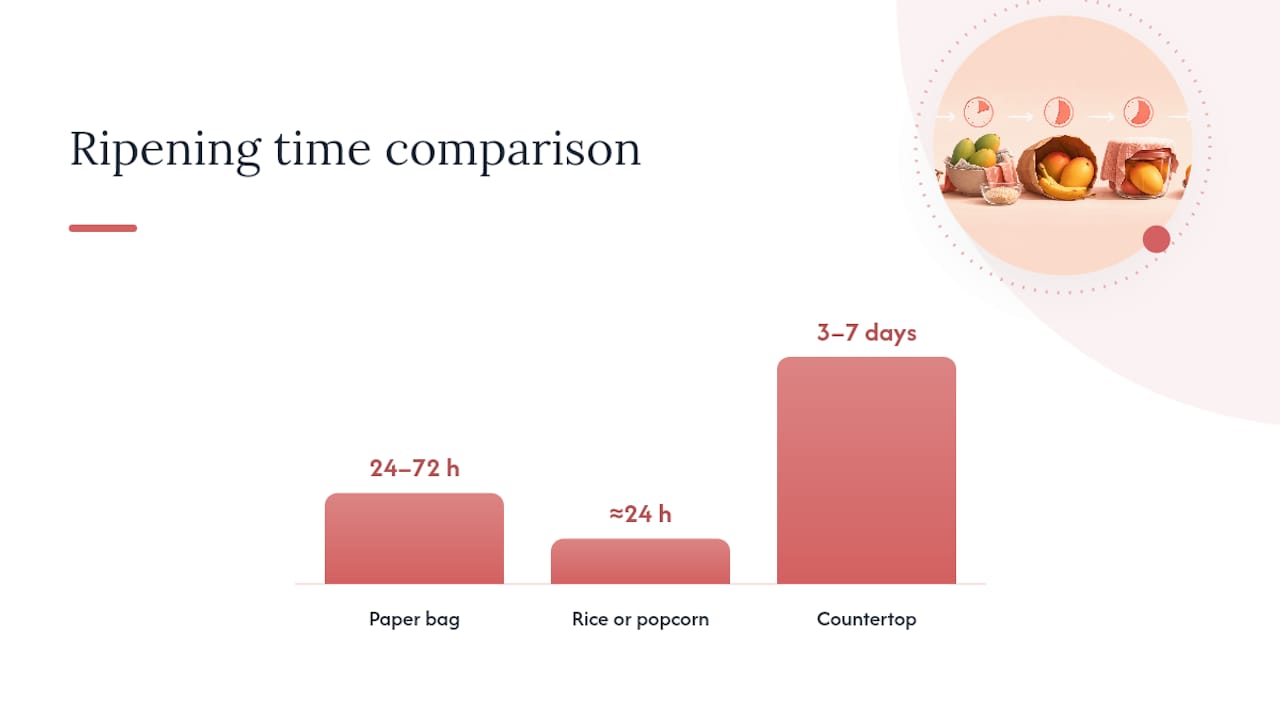
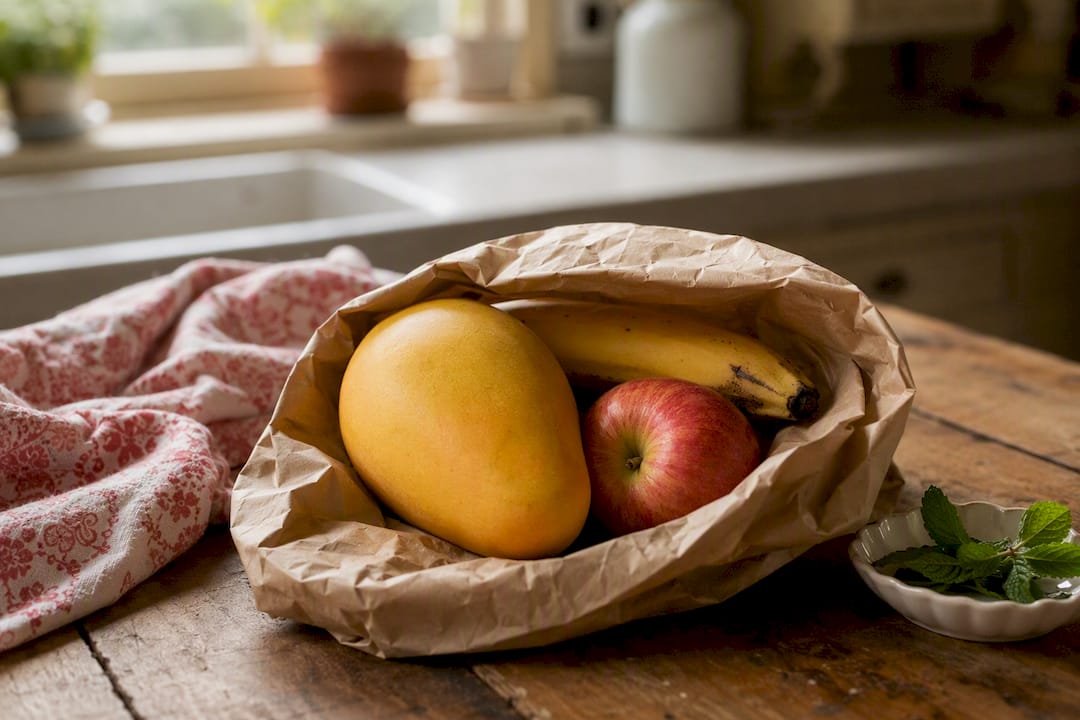
1. The paper bag method. Grab a brown paper bag, not plastic, and drop in your mango. Tossing in a ripe apple or banana boosts the ethylene gas concentration inside the bag, which is the natural hormone that triggers ripening. Fold the top loosely so a little air can still move, set it on the counter out of direct sun, and check every 12 to 24 hours. Depending on how green the mango was when you bought it, expect full ripeness somewhere in the 24 to 72 hour window.
2. The rice or popcorn kernel method. This is the one to reach for when you want to speed up ripening significantly, but it requires frequent checks to avoid overripe fruit. Bury the fruit completely in a bowl of dry, uncooked rice or popcorn kernels, making sure no part of the mango touches moisture. The grains pack tightly around the fruit and trap ethylene far more efficiently than the open air inside a paper bag, which is why this technique often ripens mangoes faster than bagging alone. The catch: check it frequently to avoid overripening. Miss a window and you’ll pull out an overripe, mushy mango instead of a perfect one.
3. Countertop ripening at room temperature. No bag, no rice, just patience. Set the mango in a shaded spot around 70 to 75°F (21 to 24°C) and let ambient ethylene do the slow work. This takes 3 to 7 days depending on the fruit’s starting maturity, and it’s the gentlest method for flavor development since nothing rushes the process.
- Need it tomorrow: rice or popcorn method, checked twice daily.
- Need it in a couple of days: paper bag with a banana thrown in.
- No rush, want the best texture: countertop, left alone.
Pro Tip: Stagger your mangoes across methods if you bought several at once. Bag two, bury one in rice, and leave the rest on the counter. You’ll have ripe fruit spread across the week instead of five mangoes all peaking on the same day.
How can you tell when a mango is ripe?
Skip the color test. Depending on the variety, a ripe mango can be green, yellow, red, or some mix of all three, so color tells you almost nothing reliable across the hundreds of mango varieties grown worldwide.
What actually works is your palm, not your fingertips. Cup the mango in your hand and squeeze gently, the way you’d test a peach. A ripe mango yields slightly under that pressure without feeling mushy or soft in one specific spot, which usually signals a bruise rather than ripeness.
Smell is the second confirmation. Bring the stem end close to your nose. A ripe mango gives off a sweet, faintly floral aroma right at that spot. If you catch a sour or boozy smell instead, the fruit has started fermenting and should be tossed.
- Squeeze: gentle give with the whole palm, not a poke with one finger.
- Smell: fruity sweetness at the stem, not sourness.
- Color: ignore it unless you know the specific variety’s ripe-color pattern.
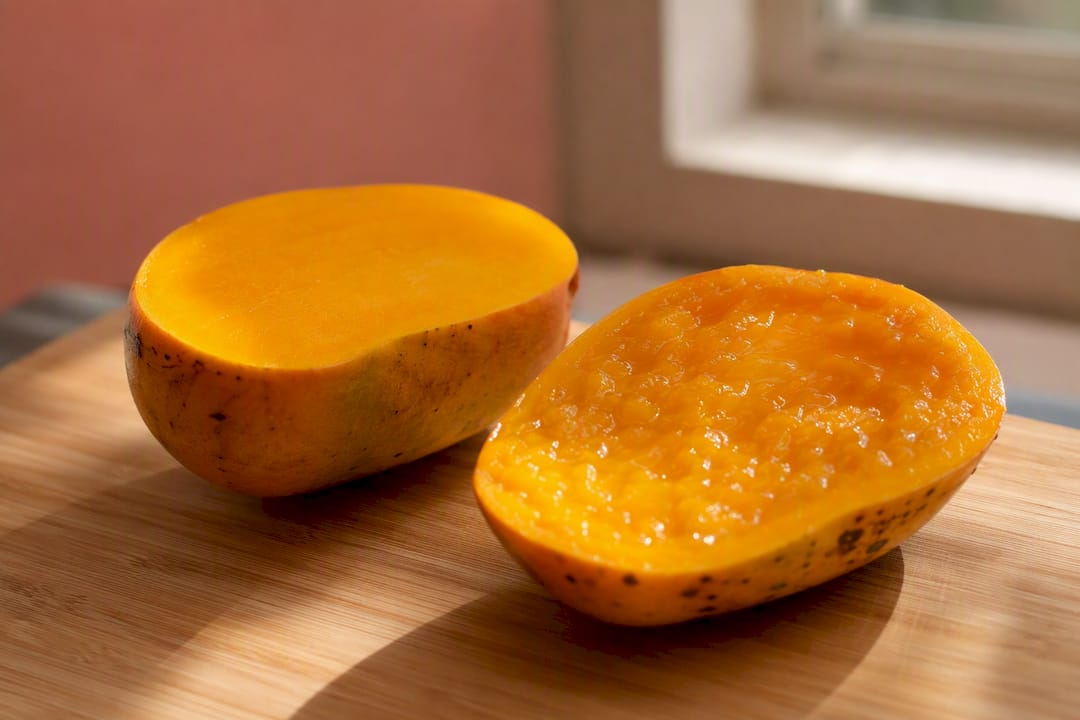
- Test cut: if you’re still unsure, a small slice near the stem shows flesh that’s golden and slightly translucent when ripe, pale and opaque when it isn’t.
The squeeze-and-smell combination remains the most reliable low-tech ripeness test across mango varieties, more consistent than color or even weight.
Do microwave and oven tricks actually ripen mangoes?
Not really, and this trips up more home cooks than any other mango myth. A quick blast in the microwave or a low oven will soften mango flesh within minutes, but that’s heat breaking down cell walls, not the enzymatic starch-to-sugar conversion that happens during real ripening. The result is a mango that feels ripe but tastes flat, sometimes even starchy underneath the softness.
That’s a meaningful difference from what works with bananas, where enzymatic activity continues even after picking and heat can nudge it along. Mangoes don’t behave the same way, and thermal shortcuts won’t replicate the flavor that comes from proper ethylene-driven ripening.
Where thermal methods do earn a place: smoothies, mango salsa, chutney, or baked goods, where texture matters less than availability. If you’re making a shake tonight and the mango’s still rock hard, a few 20 second microwave bursts, checked between each one, gets it soft enough to blend.
- Use thermal hacks only for cooked or blended recipes, never for fresh eating.
- Never reach for chemical ripening agents. They’re a food safety risk, not a shortcut worth taking.
- Reserve the paper bag or rice method for any mango you plan to eat raw.
Pro Tip: If a mango feels ripe but smells like almost nothing, it may have been softened artificially rather than naturally ripened. A properly ripe mango always has that stem-end sweetness.
How do you store ripe mangoes to keep them fresh longer?
Once your mango passes the squeeze test, move it to the refrigerator. Cold temperatures slow the enzymatic activity responsible for ripening, and a fully ripe mango holds good quality for about 4 to 7 days in the fridge depending on how ripe it was when it went in.
For cut mango, store the pieces in an airtight container and use them within a few days. If you’ve cut more than you can eat that week, freezing is the better move: lay the pieces flat in a single layer on a tray until solid, then transfer to a freezer bag. Frozen mango holds up well for up to six months, perfect for smoothies and purees later. For more detail on keeping cut fruit fresh across categories, Tai Kang Healthy Fruits’ fruit storage guide covers container choices and humidity control that apply well beyond mangoes.
- Whole ripe mango: refrigerate, use within 4 to 7 days.
- Cut mango: airtight container, use within a few days.
- Cut mango for later: freeze flat, then bag, good for up to 6 months.
What mistakes ruin mango ripening at home?
The biggest one is impatience that turns into a shortcut with real risk. Some markets abroad still use industrial chemical agents like calcium carbide to force-ripen mangoes overnight, and fruit treated this way often smells faint or almost artificial at the stem end despite looking uniformly colored. That mismatch, strong color but weak aroma, is a warning sign worth trusting.
At home, the more common mistakes are simpler. Sealing a mango inside plastic instead of paper traps moisture and invites mold rather than ripening. Setting fruit in direct sunlight to “help it along” can cause sunscald and uneven softening instead of even ripening. And if you’re using the rice or popcorn method, damp grains are a mold risk within a day or two, so only use fully dry rice and check the bowl often.
- Skip chemically ripened fruit if the smell doesn’t match the color.
- Use paper, never sealed plastic, for bag ripening.
- Keep rice or popcorn kernels completely dry and check every few hours.
- If a mango ever smells fermented or boozy, throw it out. Don’t risk eating it.
Tips from Tai Kang Healthy Fruits for better mango results
At Taikanghealthyfruits, every mango goes through inspection before dispatch, and we sometimes send fruit that’s slightly underripe on purpose. That’s not a shortcut; it’s the safer choice for shipping, since firmer fruit travels better and still ripens beautifully with the paper bag or rice method once it reaches your kitchen.
A few logistics that make a real difference: plan for your mango to need 1 to 3 extra days on the counter after delivery, and store it in a single layer rather than stacked in a bag, since pressure points bruise soft fruit fast. Buyers who order regularly through our rewards program tend to time seasonal mango deliveries around this window rather than expecting fruit ripe out of the box.
If you’ve got several mangoes ripening at once, stagger your checking schedule so you’re not slicing five at the same time. Planning a meal or smoothie day around your ripest mango first cuts down on waste considerably.
- Expect a short ripening window after delivery, not instant ripeness.
- Store mangoes in a single layer to avoid bruising.
- Stagger checks when ripening multiple mangoes at different rates.
Pro Tip: If you’ve got an overripe mango on your hands before you’re ready to eat it, don’t waste it—blend it into a mango lemon tango protein shake instead. Blend it into something like a mango protein shake instead of tossing it.
Simple methods beat clever ones
Every few months a new mango ripening trick shows up online promising to cut the wait to a few hours, and almost none of them beat what your grandmother already knew: a paper bag, a little warmth, and patience. The rice method is the one genuine exception worth adopting, since it’s grounded in the same ethylene science, just concentrated more tightly.
Where I’d push back on common advice is the microwave trend. It works fine for a smoothie, but treating it as a real ripening method sets people up to be disappointed by flat-tasting fruit. Save the heat tricks for recipes, and save the paper bag and rice for anything you plan to eat with a spoon straight out of the skin.
If you’d rather skip the guesswork entirely, Tai Kang Healthy Fruits selects and ships fruit inspected for consistent quality, so you’re starting from a good base every time.
— Tai
Sources
- Ripening And Storing Mangos | National Mango Board
- The Only Way To Tell If a Mango Is Ripe, According to an Expert
- Plainpaper
- How to Ripen Mangoes Quickly: 4 Easy Methods - wikiHow
Recommended
- Mango Delivery in Singapore: Your 2026 Guide to the Freshest Tropical – Tai Kang Healthy Fruits
- How to Tell if a Melon is Perfectly Ripe: The Expert Guide to Peak Swe – Tai Kang Healthy Fruits
- Thai Honey Mangoes: The Ultimate Guide to the World’s Sweetest Fruit – Tai Kang Healthy Fruits
- The Best Way to Store Fresh Grapes: Keep Your Fruit Crisp for Weeks – Tai Kang Healthy Fruits