
0°C vs 5°C: Temperature Controlled Delivery for Singapore Gift Buyers
Temperature-controlled delivery is worth the extra cost for anyone buying premium fruit or gift boxes in Singapore, because heat and humidity degrade fresh produce within hours, not days. It means fruit is kept near 0°C to 5°C from the moment it’s inspected until it lands on your doorstep, cutting spoilage and stretching shelf life. Some premium fruit suppliers run this exact model for their hampers, gift boxes, and subscription deliveries across Singapore.
TL;DR:
- Shipping at near 0°C to 5°C significantly reduces spoilage and extends shelf life compared to ambient temperatures, especially for delicate fruits like figs and berries, which tolerate colder conditions better.
- Suppliers should clearly provide monitored temperature ranges, use sensor tracking, and employ rapid cooling methods like vacuum or hydro-cooling to ensure consistent cold chain standards.
- Proper packaging with insulated boxes and phase-change gel packs is essential for single deliveries, while refrigerated vans are preferred for bulk or subscription services to maintain optimal temperatures.
- Always verify delivery details, including actual temperature ranges, handling notes, and shelf life estimates, before placing an order, and ask for dispatch photos for added assurance.
- Proper temperature control, adherence to Singapore’s SS 668 standard, and swift dispatch minimize quality loss, bruise, or overripe fruit, especially important for corporate gift boxes and recurring household deliveries.
Table of Contents
- What Does Temperature Controlled Delivery Mean for Fruit in Singapore?
- Why Temperature Control Matters for Fruit Quality
- How to Choose a Temperature Controlled Delivery Service
- How Tai Kang Healthy Fruits Handles Temperature Control
- One-Off Gift or Subscription: Which Fits Your Situation?
- Delivering Fresh Fruit Through Singapore’s Heat: A Brand Perspective
- Order Temperature-Controlled Fruit and Gift Boxes Today
- Sources
- FAQ
What Does Temperature Controlled Delivery Mean for Fruit in Singapore?
Temperature-controlled delivery for fruit isn’t one fixed number. Delicate items like figs, berries, and shiitake mushrooms hold up best near 0°C, while sturdier fruit often ships closer to 5°C, since the colder band takes longer to set up and costs more to maintain. Vendors pick the band based on what the fruit can tolerate without frost damage or texture loss.
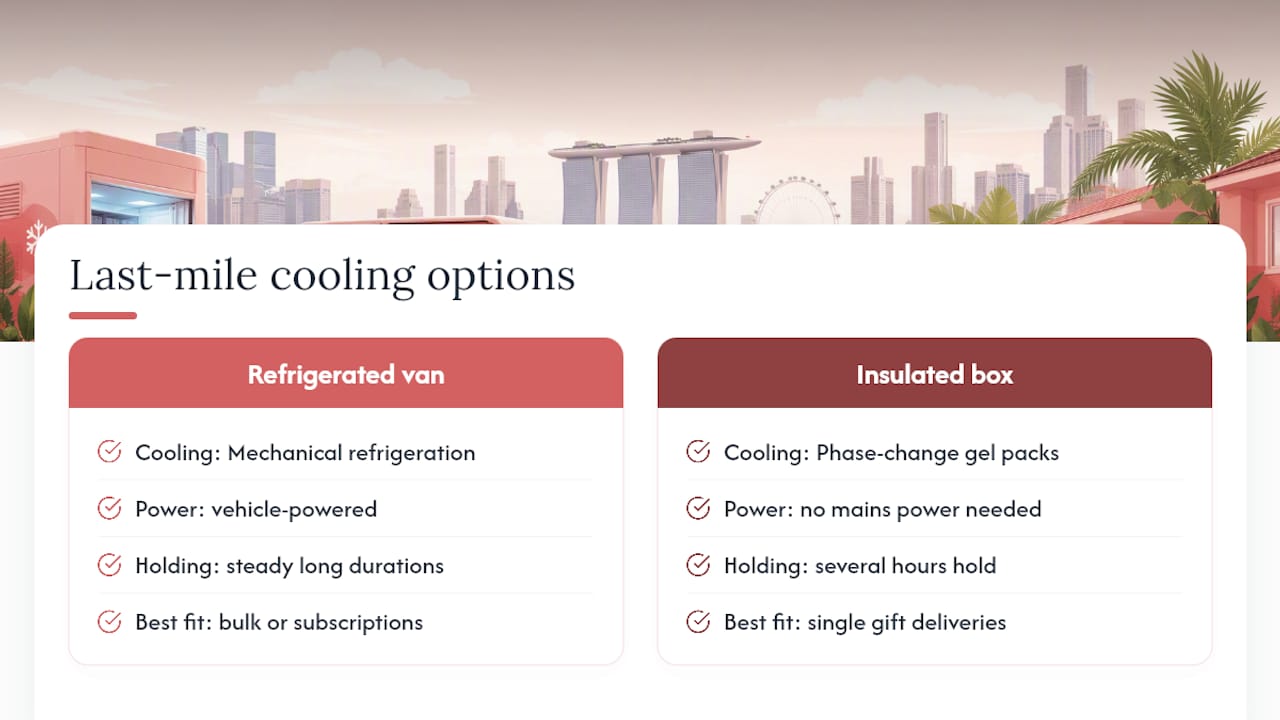
On the last mile, that cold chain takes one of two forms: a refrigerated van holding a steady internal temperature, or an insulated box packed with phase-change gel packs that hold the cold for several hours without power, reflecting the Ordering Fresh Food Workflow best practices. Vans suit bulk or subscription runs. Insulated boxes with active cooling packs suit single gift deliveries where the box might sit at a lobby desk for a while.
A supplier that’s serious about this should show it on the product page, not just claim it. Look for dispatch photos, a note on handling (“refrigerated until door”), and a stated temperature range rather than a vague promise of “freshness.”
Why Temperature Control Matters for Fruit Quality
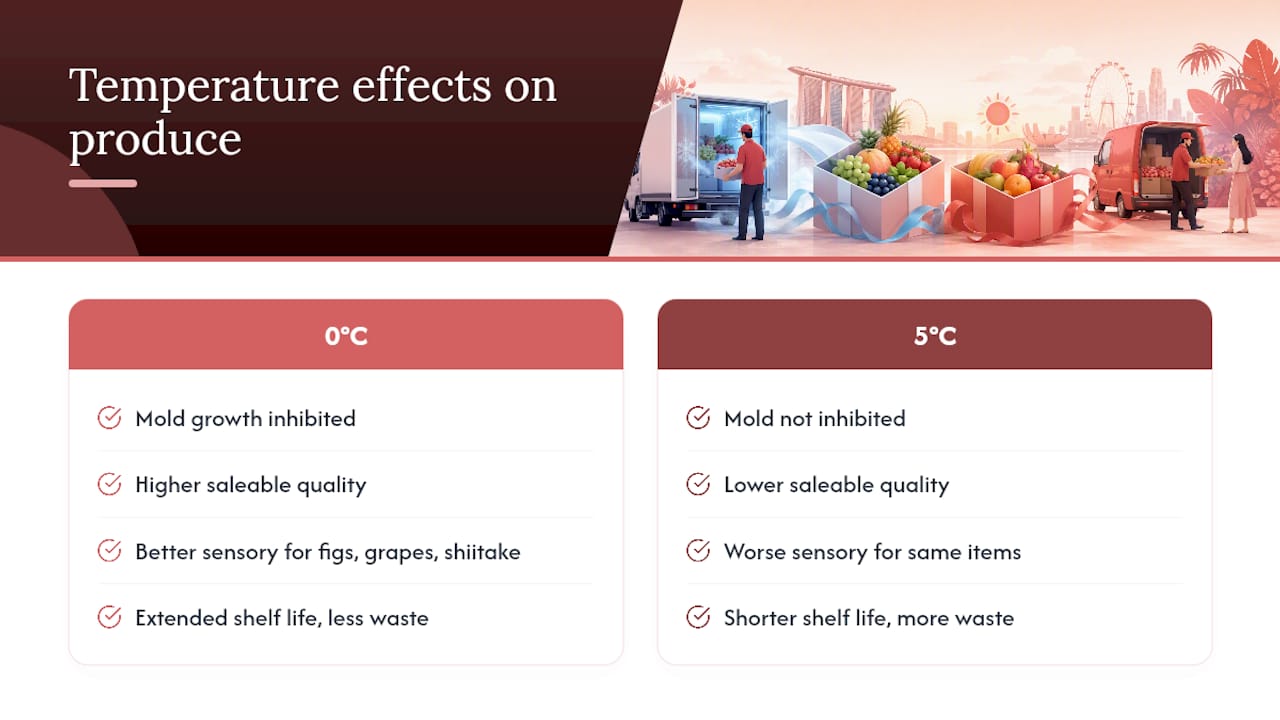
The difference between 0°C and 5°C isn’t marketing. A transport study comparing both temperatures across 28 produce types found that shipping at ice temperature inhibited mold growth and improved saleable quality and sensory scores for figs, grapes, and shiitake mushrooms specifically. That’s a measurable quality gap, not a rounding error.
Singapore’s own cold-chain rulebook backs this up. SS 668 Part 3 sets out codes of practice for handling, packing, storage, transport, and distribution of fresh produce, aimed squarely at preventing the kind of temperature swings that wreck quality before a box ever reaches the door. Suppliers who build their process around this standard tend to catch problems earlier, because the standard forces them to measure and record temperature at each handoff instead of guessing.
The takeaway for shoppers: produce transported at 0°C showed higher saleable quality rates than the same items shipped at 5°C, according to the ice-temperature transport study. Suppliers who control that band closely can extend shelf life and cut waste, which is exactly why active cold-chain handling usually costs more than standard courier delivery.
How to Choose a Temperature Controlled Delivery Service
Not every “chilled delivery” claim in Singapore means the same thing. Before you order a gift box or sign up for recurring deliveries, run through this checklist:
- Ask for the actual temperature range. A real cold-chain supplier states a number (like 0°C to 5°C), not just “kept cool.”
- Confirm whether it’s monitored, not just claimed. Sensor-based tracking during transit is a stronger signal than a verbal assurance.
- Check the pre-cooling method. Rapid post-harvest cooling like vacuum cooling or hydro-cooling pulls field heat out fast and can add several extra days of shelf life versus produce that cools slowly at room temperature.
- Ask about packaging. Insulated boxes with gel packs handle single deliveries well; active refrigerated vans matter more for bulk or subscription orders.
- Check delivery timing options. A supplier that lets you avoid midday delivery windows is taking Singapore’s heat seriously.
- Confirm the guarantee. Photos at dispatch, replacement policies, and a real refund process matter more than a logo on the box.
Pro Tip: If a supplier can’t tell you the temperature range their fruit travels at, assume it’s standard ambient delivery with a cold pack thrown in. Real cold-chain service is specific about numbers, not adjectives.
Expect to pay more for active cooling and express refrigerated transport. That premium buys fewer sensory defects and lower odds your gift box arrives with bruised or overripe fruit, which matters most for corporate orders where the box is a reflection of your company.
How Tai Kang Healthy Fruits Handles Temperature Control
Every order at Tai Kang Healthy Fruits goes through inspection before it’s placed into temperature-controlled storage, then moves to swift home delivery once an order is confirmed. That sequence, inspect, store cold, dispatch fast, is the same structure SS 668 encourages: minimize the time fruit spends outside a controlled environment.
Customers have responded well to it. Some premium fruit providers have strong customer ratings and offer rewards programs designed to encourage repeat business.
When you’re browsing product pages, here’s what to check for:
- A stated handling or storage note, not a generic “fresh guarantee.”
- Delivery details that mention contactless, temperature-aware fulfillment.
- Expected shelf life on arrival, so you know how many days you have before the fruit needs eating.
If a product page is missing all three, ask before you buy.
One-Off Gift or Subscription: Which Fits Your Situation?
A single hamper makes sense for a specific occasion. A Deluxe Harvest Premium Fruit Hamper suits corporate gifting or milestone events where presentation matters as much as freshness. The Nourish and Flourish Gift Box works well as a smaller, more personal gesture, a thank-you, a get-well box, a smaller client gift.
Recurring delivery solves a different problem: keeping a household or office stocked without reordering every week. The bi-weekly subscription plan fits families or offices that want predictable fruit on hand and predictable billing over two months, rather than one-off ordering. Before choosing either path, confirm delivery windows and, for corporate accounts, whether invoicing is handled separately from individual orders.
Delivering Fresh Fruit Through Singapore’s Heat: A Brand Perspective
Singapore’s heat and traffic don’t leave much room for error. Every packaging and timing decision we make gets shaped by how fast fruit degrades once it leaves cold storage, so we build delivery windows around avoiding the worst of the midday sun. Getting that right, consistently, is the whole job.
— Tai Kang
Order Temperature-Controlled Fruit and Gift Boxes Today
Tai Kang Healthy Fruits gives you a way to skip the guesswork that comes with generic courier services promising vague “freshness.” Boxes, whether one-time gifts or recurring orders, ideally move through an inspected, cold-stored, quickly-dispatched process.
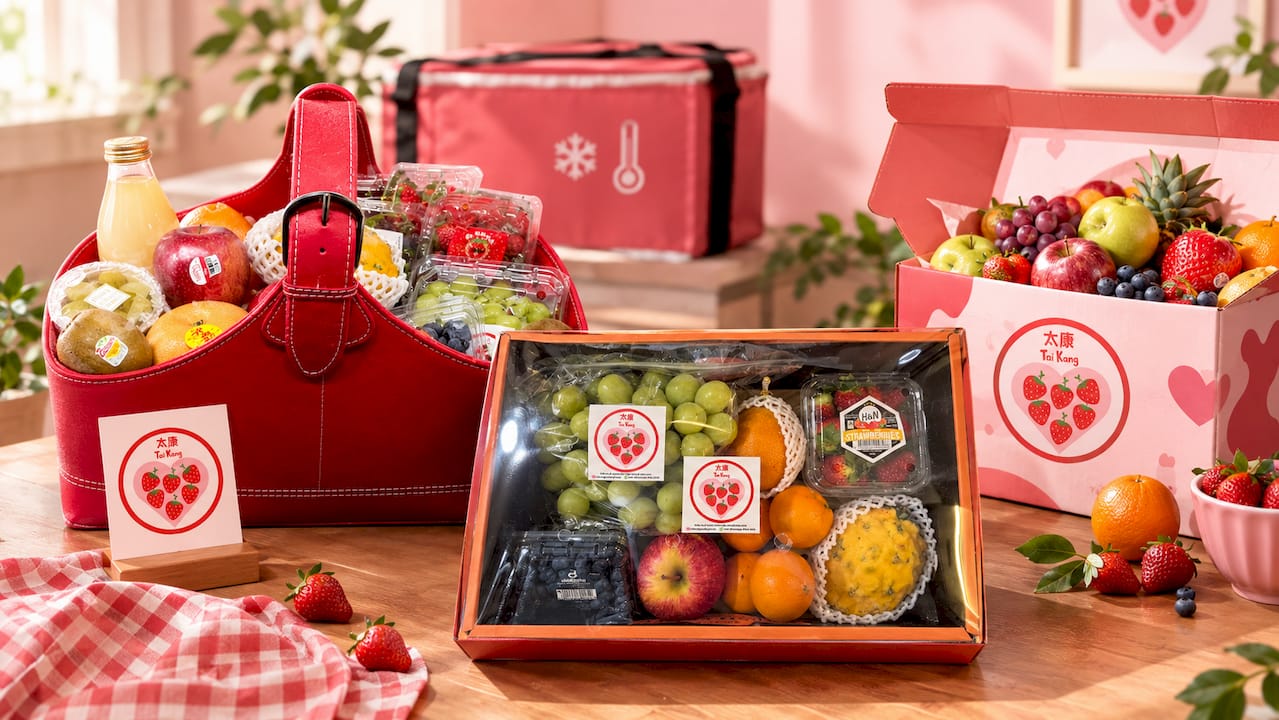
For a special occasion or corporate gifting, the Deluxe Harvest Premium Fruit Hamper delivers a full presentation-ready selection. Want something smaller and more personal? The Nourish and Flourish Gift Box covers that without the extra size or cost. If you’re stocking a household or an office, the bi-weekly subscription locks in two months of regular deliveries at a predictable price, gift messages and delivery windows can be arranged at checkout, and corporate buyers can request invoicing options directly. Place your order today and pick the delivery window that works for your schedule.
Sources
- Transportation at ice temperature inhibits decay and maintains quality (study)
- Jurong Cold Store case: SS 668 adoption improves cold-chain discipline
- Vacuum cooling prolongs shelf life of hydroponic produce
FAQ
How long does temperature-controlled fruit stay fresh after delivery?
It depends on the fruit, but properly cooled produce shipped near 0°C to 5°C typically holds quality for several extra days compared with fruit shipped without refrigeration, based on findings on rapid post-harvest cooling.
Does temperature-controlled delivery cost more?
Yes, active cooling and refrigerated transport cost more than standard courier delivery, but the tradeoff is fewer bruised, overripe, or spoiled items arriving at your door.
What is SS 668 and why does it matter?
SS 668 is Singapore’s cold-chain standard covering handling, storage, and transport of fresh produce; suppliers who follow it, like the operator in the EnterpriseSG case study, tend to catch temperature problems earlier and waste less.
What should I do if my delivery seems to have arrived warm?
Check the packaging and any dispatch photos the supplier provided, then contact the supplier immediately. Reputable suppliers, including Tai Kang Healthy Fruits, offer replacement or refund options when handling falls short.
Is a subscription better than ordering one-off gift boxes?
A subscription suits households or offices needing regular supply, while a one-off hamper or gift box suits specific occasions or corporate gifting where presentation matters more than routine delivery.