
Temperature-Controlled Storage: Why It Determines Fruit Quality
Temperature-controlled storage means keeping fresh fruit inside a continuous cold chain, refrigerated and humidity-managed from the moment it’s picked until it reaches your door, not a self-storage unit or warehouse rack. Get this wrong for even a short window and the damage doesn’t reverse. Once a strawberry softens or a mango chills below its safe threshold, no amount of careful handling afterward brings back what was lost.
That single fact drives everything else in this guide. Correct temperature, relative humidity, and ethylene control preserve texture, flavor, and food safety together; break any one of them and you’re managing spoilage, not freshness. The postharvest science behind this isn’t guesswork. The USDA’s Agriculture Handbook 66 (AH-66) has spent decades cataloging commodity-specific storage requirements, an MDPI review on thermo-mechanical dynamics in the cold chain quantifies exactly how fast quality erodes, and suppliers like Tai Kang Healthy Fruits apply these standards daily, not as theory but as the difference between a fruit box that delights and one that disappoints.
Here’s what actually matters before you order:
- Temperature and humidity setpoints are commodity-specific, not universal, so a policy tuned for berries can damage tropical fruit.
- Precooling speed after harvest has a measurable, time-sensitive effect on how long fruit stays fresh.
- Continuous monitoring, not a single thermostat reading, is what verifies a cold chain actually held.
Key Takeaways
Correctly maintained temperature, humidity, and ethylene control preserve fruit quality, while any break in that chain causes damage that cannot be undone.
| Point | Details |
|---|---|
| Precooling speed is urgent | An hour’s delay in cooling fruit after harvest can cost roughly a day of shelf life. |
| Setpoints vary by fruit | Berries need near 0°C, while tropical fruit requires 13 to 18°C to avoid chilling injury. |
| Humidity matters as much as temperature | Most fresh fruit needs high relative humidity to prevent wilting and moisture loss. |
| Verify with records, not room readings | Ask suppliers for timestamped cooling and temperature logs, since a single thermostat can miss dead zones. |
| Tai Kang Healthy Fruits applies these standards | Inspection, commodity-specific storage, and monitoring back its 4.85-star rating from 46 reviews. |
Table of Contents
- Why Temperature Control Matters for Fresh Fruit Quality
- Temperature and Humidity Guidelines by Fruit Category
- How Premium Suppliers Actually Run a Cold Chain
- What To Check Before and After Your Fruit Arrives
- Why Cold Chain Discipline Is the Real Differentiator
- The Overlooked Truth About Cold Chain Marketing
- Order Fresh Fruit Backed by a Verified Cold Chain
- Frequently Asked Questions
- Sources
Why Temperature Control Matters for Fresh Fruit Quality
Fruit doesn’t stop living once it’s picked. It keeps respiring, converting stored sugars into energy and releasing heat, carbon dioxide, and moisture in the process. Warmth speeds that respiration up. Cold slows it down. That’s the entire mechanism behind cold storage, and it’s why AH-66 treats temperature as the single biggest lever for extending shelf life across nearly every fruit category.
Microbial growth follows the same rule. Bacteria and mold that would barely register at 2°C multiply rapidly once fruit sits above 10°C for any stretch, which is why a broken cold chain isn’t just a texture problem. It’s a food safety one.
The timing math is unforgiving. A review of cold chain thermodynamics found that an hour’s delay in cooling fruit after harvest can cost roughly a full day of shelf life. That’s not a rounding error. For a supplier moving thousands of units, an hour lost at the loading dock compounds into a measurably shorter window before fruit starts declining on your counter.
What this means depends on what you’re buying:
- Berries and other high-respiration fruit have the least margin for error, sometimes just days between peak freshness and spoilage.
- Apples, citrus, and other lower-respiration fruit tolerate longer storage but still degrade faster once temperature discipline slips.
- Corporate buyers and event planners face tighter windows than home shoppers, since gift boxes and event deliveries often sit longer between packing and consumption.
Temperature and Humidity Guidelines by Fruit Category
There’s no single “correct” cold storage temperature. That’s one of the more common misconceptions among people newer to sourcing fresh produce; a setting that protects blueberries can actively injure a mango. AH-66 and FAO’s technical storage guidance both organize commodities into groups because the physiology varies too much for one policy to fit all of them.
Tropical fruit is where a one-size-fits-all cold policy backfires hardest. Store a mango or banana at refrigerator temperatures meant for apples, and you risk chilling injury, a form of cellular damage that shows up as dull skin, pitting, or a mealy interior that never ripens properly. It’s a different failure mode than simple spoilage, and it’s largely irreversible once it sets in.
Ethylene management adds another layer. Some fruits, like apples and bananas, release ethylene gas as they ripen; others, like berries and leafy greens, are highly sensitive to it and spoil faster when stored nearby. Reputable operations segregate high-ethylene producers from sensitive commodities in separate rooms or zones.
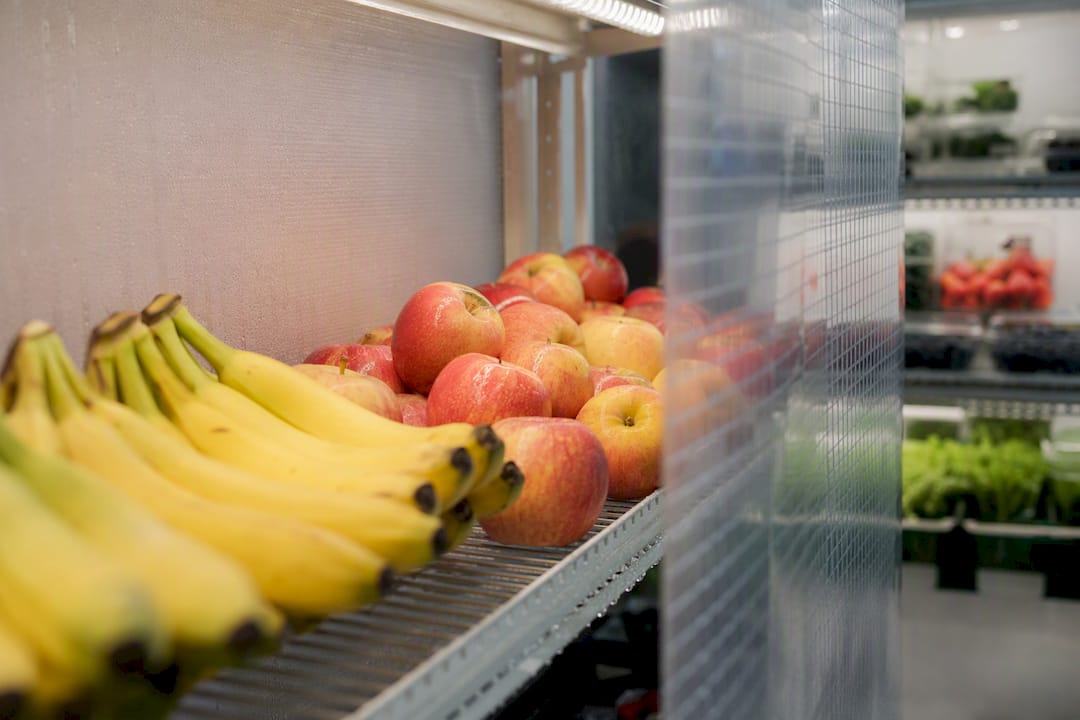
Pro Tip: If you’re storing a mixed fruit box at home, keep bananas and apples away from berries and leafy items. The ethylene they emit can shave days off everything else in the fridge.
How Premium Suppliers Actually Run a Cold Chain
The gap between a supplier that talks about freshness and one that delivers it usually comes down to what happens in the first few hours after harvest, long before a customer ever sees the fruit.
- Precooling starts immediately. Forced-air cooling and tunnel cooling systems pull field heat out of fruit within hours rather than letting it sit at ambient temperature, and blast cooler equipment used for forced-air precooling along with packaging designed for better airflow shortens that window even further.
- Cold rooms are built for stability, not just chill. Sealed rooms with active humidity control prevent the moisture loss that causes wilting, and some operations use controlled-atmosphere storage to extend shelf life on longer holds.
- Monitoring happens continuously, not spot-checked. A wall-mounted thermostat reading the room’s ambient air can look perfectly fine while pallets stacked in the middle sit several degrees warmer, since packaging creates dead zones that block airflow.
That last point is where a lot of buyers get misled. A single reading near the door tells you almost nothing about the fruit buried three pallets deep.
Sensor placement inside pallets, at multiple heights, with regular calibration checks, is what separates an auditable cold chain from a guess dressed up as one.
An integrated cold chain depends on that kind of continuous, logged data to hold up from packing through final delivery. Buyers can and should ask suppliers for the records that prove it: timestamps for when fruit arrived, when cooling started, when it finished, and the temperature log for the storage period in between.
What To Check Before and After Your Fruit Arrives
You don’t need a food science degree to verify a supplier’s cold chain claims. You need a short list of questions and a few minutes at delivery.
Before you order, ask:
- How quickly is fruit precooled after harvest or arrival at the facility?
- What temperature and humidity setpoints does the storage room hold for this specific fruit type?
- Are ethylene-producing and ethylene-sensitive items stored separately?
- Can you provide temperature logs or monitoring records for a recent shipment?
When your delivery arrives, check:
- Does the fruit feel cool to the touch, not room temperature, especially for berries and stone fruit?
- Is the packaging intact, with no condensation buildup suggesting a temperature swing during transit?
- Is there a timestamped delivery record or temperature tag included with the shipment?
If something looks off, softness where there shouldn’t be any, discoloration, or a smell that doesn’t match a fresh product, photograph it immediately and note the delivery time before reporting it.
Pro Tip: Photograph the packaging and the fruit together, not separately. A supplier reviewing a claim needs to see both the condition of the product and the state of the box it traveled in.
Why Cold Chain Discipline Is the Real Differentiator
I’ve spent enough time looking at how fruit actually moves from farm to fridge to know that most quality complaints trace back to one thing: a break somewhere in the temperature chain that nobody caught in time. It’s rarely the fruit itself. It’s usually an hour of delay at a loading dock, a pallet stacked against a wall where airflow can’t reach it, or a delivery van that sat too long in traffic without proper insulation.
Tai Kang Healthy Fruits builds its process around catching those failure points before they reach a customer. Every batch gets inspected and stored under the setpoints outlined above, and the 4.85-star rating from 46 reviews reflects that consistency, not luck. For a deeper look at how storage decisions affect specific fruits at home, the guide to storing fruit for maximum freshness covers the practical side of what’s outlined here.
The fruit that arrives at your door tells you everything about the cold chain it traveled through. You just have to know what to look for.
The Overlooked Truth About Cold Chain Marketing
Most fruit suppliers advertise “cold storage” as if it’s a single feature, a box you check once and forget. That framing undersells how much precision the science actually demands. A blanket 4°C setting doesn’t protect a mango any more than leaving it on a counter would; it just injures it more slowly.
The conventional advice tells shoppers to look for phrases like “refrigerated” or “chilled” on a product page. That’s not enough. The real signal is whether a supplier can speak to commodity-specific setpoints, precooling speed, and monitoring records without hesitating. Suppliers who can’t answer those questions specifically are usually treating cold storage as a marketing checkbox rather than an operational discipline.
If you’re evaluating where to buy fresh fruit regularly, prioritize suppliers who talk about ethylene segregation and sensor placement unprompted. That level of specificity is hard to fake, and it’s the clearest evidence that freshness isn’t an afterthought in how they operate.
Order Fresh Fruit Backed by a Verified Cold Chain
Everything in this guide, precooling speed, commodity-specific setpoints, continuous monitoring, is how Tai Kang Healthy Fruits handles every order before it reaches your door. Fruit gets inspected on arrival, stored at the temperature and humidity levels specific to each variety, and tracked through delivery so freshness isn’t left to chance.
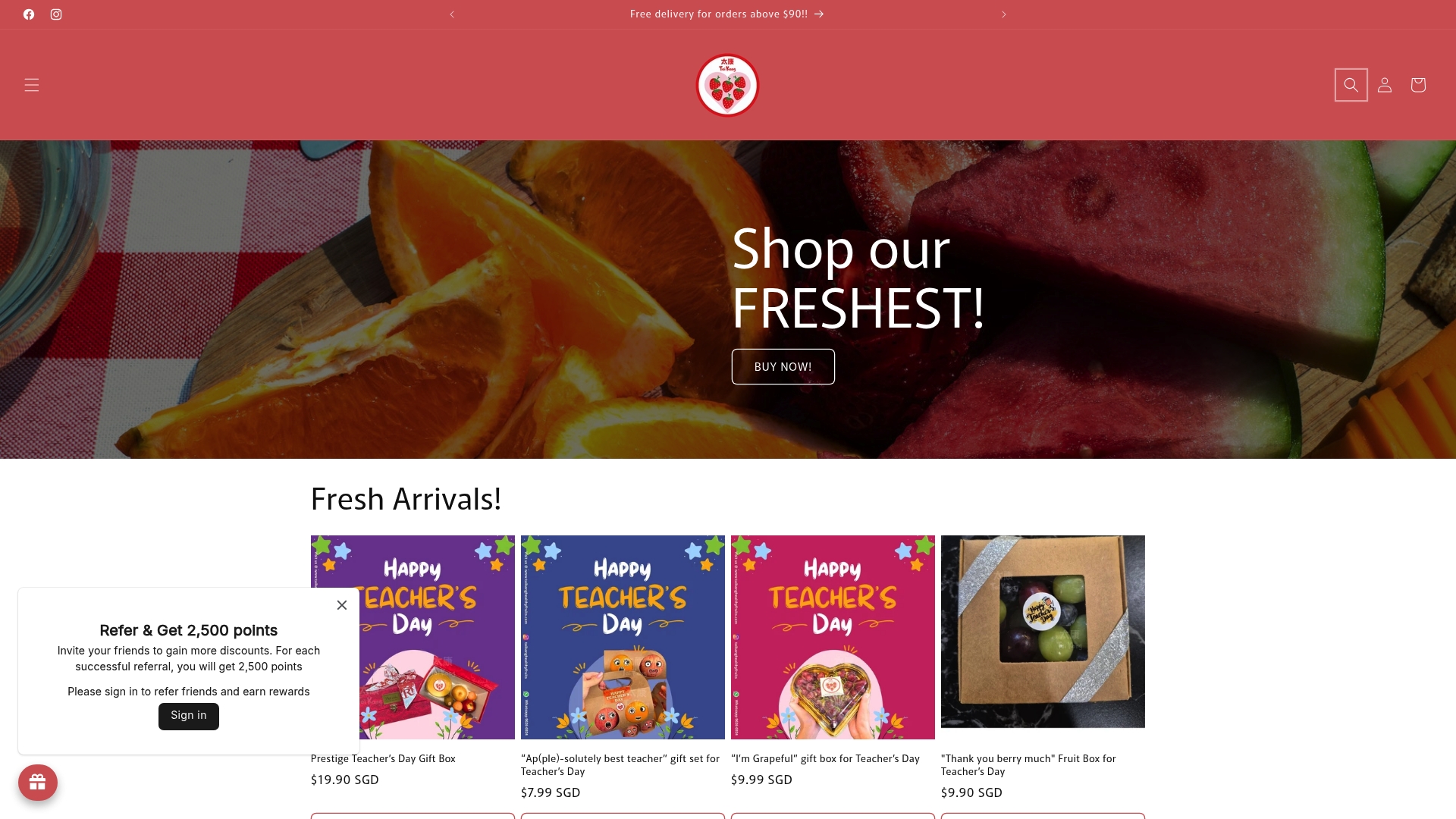
If you want that consistency without reordering every week, the bi-weekly fruit subscription plan delivers on a set schedule and includes rewards toward future orders. For a one-time order, whether for your household or a corporate gifting need, browse the full selection on the main Tai Kang Healthy Fruits site and place your order today.
Frequently Asked Questions
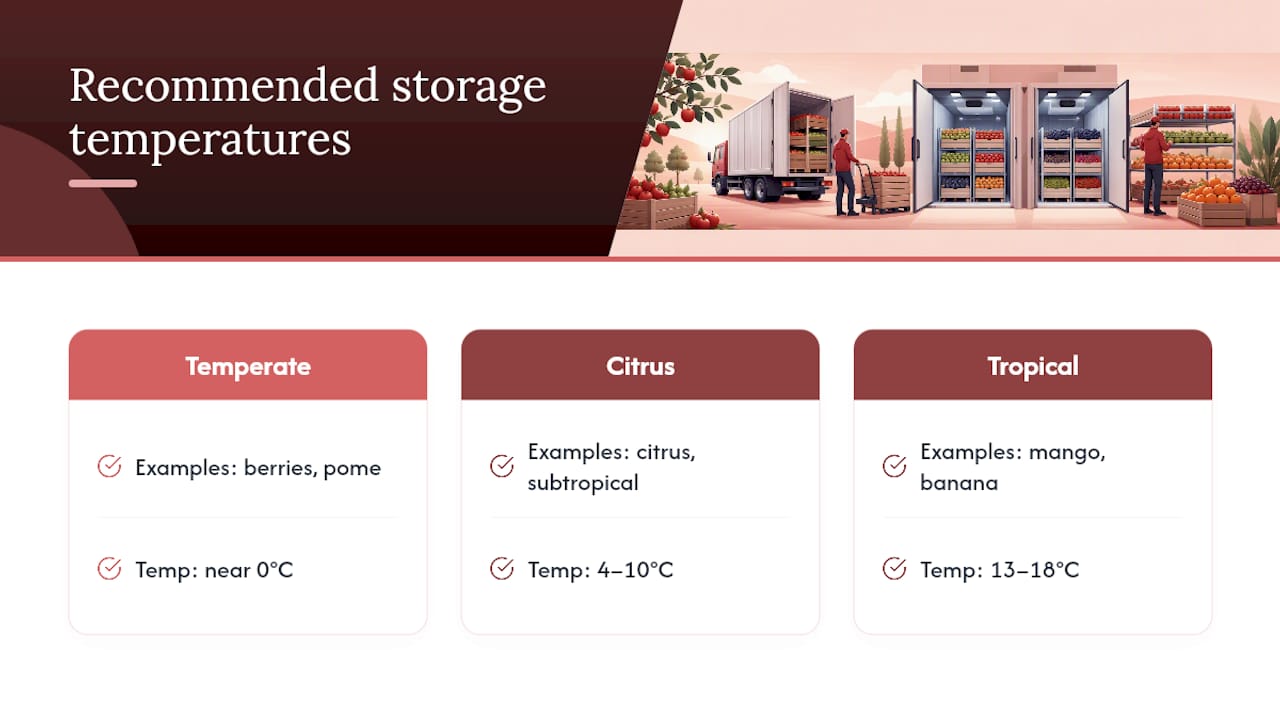
What temperature should fresh fruit be stored at? It depends on the fruit. Temperate berries and pome fruit hold best near 0°C, citrus and subtropical fruit need 4 to 10°C, and tropical fruit like mango or banana should stay at 13 to 18°C to avoid chilling injury, according to FAO storage guidance.
Can fruit recover after a temperature break in the cold chain? No. Once fruit experiences chilling injury or accelerated ripening from a temperature excursion, that damage doesn’t reverse. The best mitigation is preventing the break through continuous monitoring rather than trying to fix it afterward.
How can I tell if a fruit delivery followed proper cold chain storage? Check whether the fruit feels cool on arrival, whether packaging shows no condensation from temperature swings, and whether the supplier can provide timestamped cooling and storage records for that shipment.
Why do suppliers separate certain fruits during storage? Some fruits release ethylene gas as they ripen, which speeds up spoilage in nearby ethylene-sensitive produce. Segregating high-ethylene producers like bananas from sensitive items like berries protects shelf life across the board.
Sources
- Thermo‑Mechanical Analysis in the Fresh Fruit Cold Chain: A Review on Recent Advances
- The Commercial Storage of Fruits, Vegetables, and Florist and Nursery Stocks (AH‑66)
- Use of cold chains for reducing food losses in developing countries (PEF white paper)
- FAO technical guidance on storage conditions for horticultural crops
Recommended
- The Ultimate Guide to Storing Your Fruits for Maximum Freshness – Tai Kang Healthy Fruits
- The Best Way to Store Fresh Grapes: Keep Your Fruit Crisp for Weeks – Tai Kang Healthy Fruits
- How to Store Fresh Fruits and Keep Them at Their Best – Tai Kang Healthy Fruits
- How to Store Grapes: The Ultimate Guide to Keeping Them Crisp for Week – Tai Kang Healthy Fruits