
10 Fruit Platter Ideas with Shopping Lists and Make Ahead Storage Tips
A great fruit platter needs one anchor fruit, three color groups, and a five-minute prep window before guests arrive. Below are ten ready-to-copy platter concepts, from a rainbow board to a tropical spread, plus the exact prep, arranging, and storage steps that keep them looking sharp for hours. Pick one, shop the list, and you’re set.
TL;DR:
- Properly ripened, high-quality fruit needs minimal styling, and storage in temperature-controlled conditions preserves freshness for longer display life.
- A focal height piece like a pineapple crown or grape cluster helps establish visual hierarchy and balance the spread.
- Using a streamlined tool like a combined wash, drain, and serve bowl reduces prep time, especially for gifting options like the pre-arranged fruit basket.
- Hardy fruits such as melons, grapes, and citrus can be prepared up to a day ahead, but delicate fruits like berries and kiwi require closer to serving time.
- Variations in fruit cutting techniques and arrangements, like contrasting slice thickness or creating color blocks, significantly improve the platter’s visual appeal.
Table of Contents
- Fruit Platter Ideas: Shopping and Prep Essentials
- 10 Fruit Platter Ideas for Parties, Brunches, and Gifting
- How to Arrange a Fruit Platter Like a Pro
- Make-Ahead, Storage, and Freshness Tips
- What to Serve With a Fruit Platter
- Why Sourcing and Storage Change Everything About a Platter
- Build Your Platter Faster With the Right Tools
- Sources
- FAQ
Fruit Platter Ideas: Shopping and Prep Essentials
Before you touch a knife, get the shopping list right. A balanced platter pulls from five categories: berries (strawberries, blueberries, raspberries) for color pop, stone fruit (peaches, plums) for texture, melons for volume, citrus for acid and brightness, and one exotic accent like kiwi, dragon fruit, or star fruit to make people stop and look.
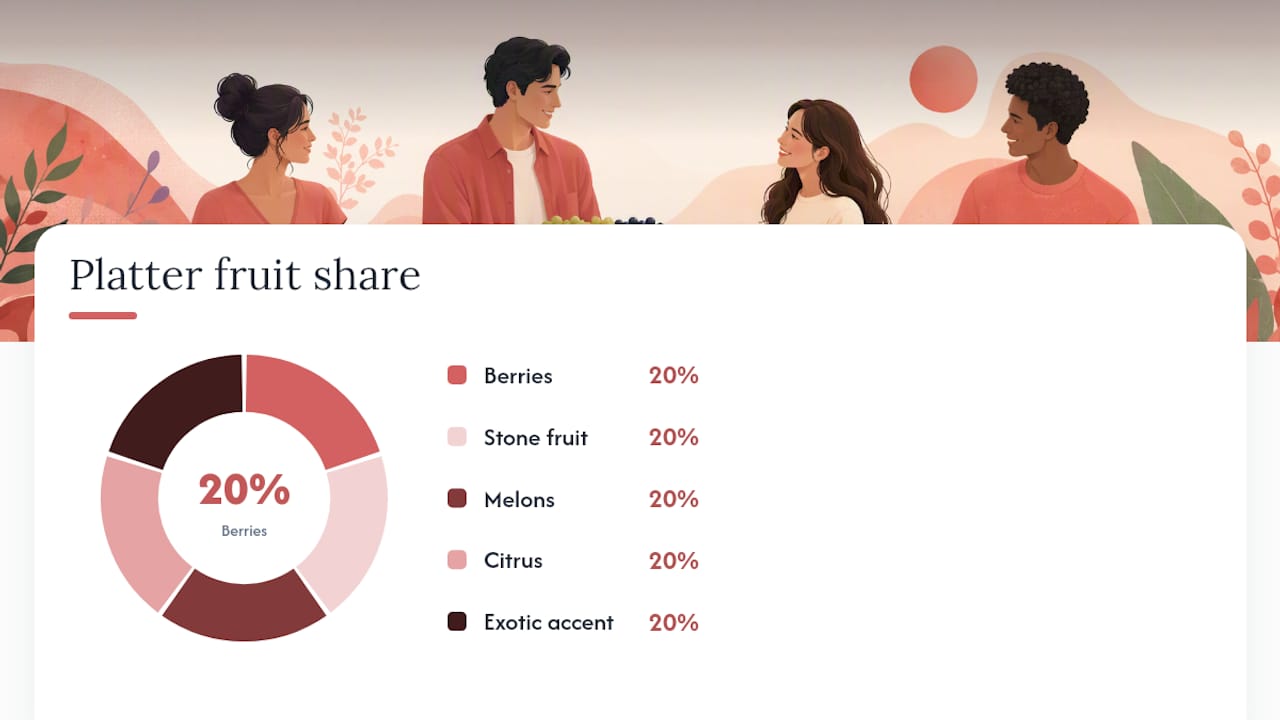
Plan on roughly one cup of mixed fruit per guest for a snack table, closer to one and a half cups if the platter is the main food offering. A simple formula: multiply your guest count by 1.25 cups, then split that volume across four or five fruit types so no single one dominates the board.
Prep rules that matter more than presentation tricks:
- Cut everything bite sized. Nobody wants to gnaw a whole plum at a cocktail party.
- Leave skins on where they add color or structural integrity, like on apple wedges or grape clusters.
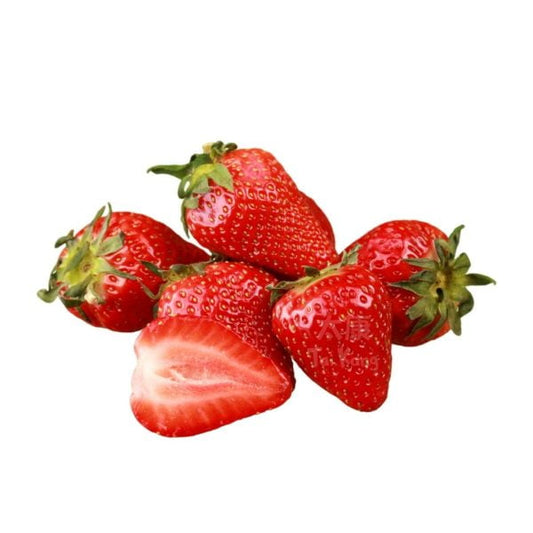
- Skip pre-cutting berries. They weep and turn mushy fast once sliced.
- Toss apple and pear slices in a quick lemon juice bath to slow browning, a trick backed by food safety guidance on preventing cut fruit from browning.
- Assemble the day of the event whenever possible, and keep everything refrigerated until right before serving.
10 Fruit Platter Ideas for Parties, Brunches, and Gifting
1. Classic Rainbow Fruit Platter
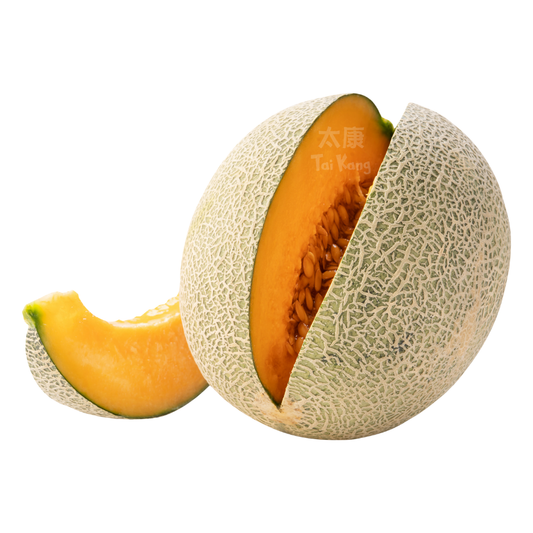
Arrange fruit in color bands: strawberries, cantaloupe, pineapple, kiwi or green grapes, blueberries, and purple grapes, moving around the board like a color wheel. This layout is one of the most reliable go-to formats because it reads as intentional even with minimal styling, and a rainbow-gradient arrangement works for almost any age group.
2. Tropical Island Platter
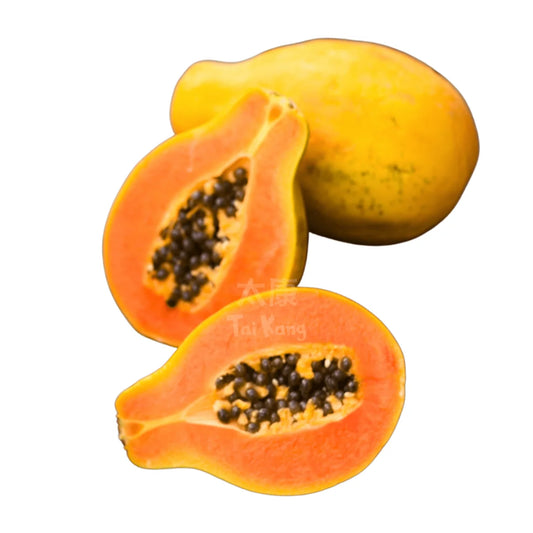
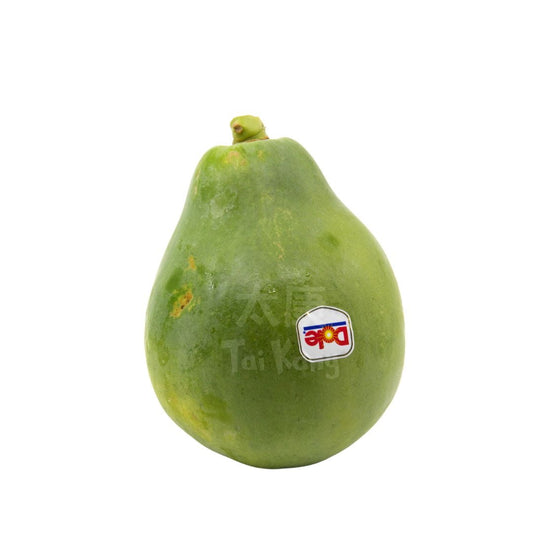
Build a base of sliced pineapple and mango, add papaya wedges, and scatter coconut flakes over the top. Fan the mango slices instead of cubing them for a display-ready look, and set a pineapple crown upright as the height piece, a technique borrowed from Ina Garten’s fresh fruit platter method.
3. Elegant Cheese-and-Fruit Board
Pair soft cheeses like brie or goat cheese with sweeter fruit (figs, grapes), and hard cheeses like aged cheddar with acidic fruit (apple, citrus). Plan two to three ounces of cheese per guest alongside the fruit portions.
4. Brunch Citrus and Berry Platter
Segment oranges and grapefruit into supremes (no membrane, no pith) so guests can eat them with a fork, then fill gaps with raspberries and blackberries. This one plates beautifully next to pastries or a mimosa bar.
5. Kids’ Animal-Shape Platter
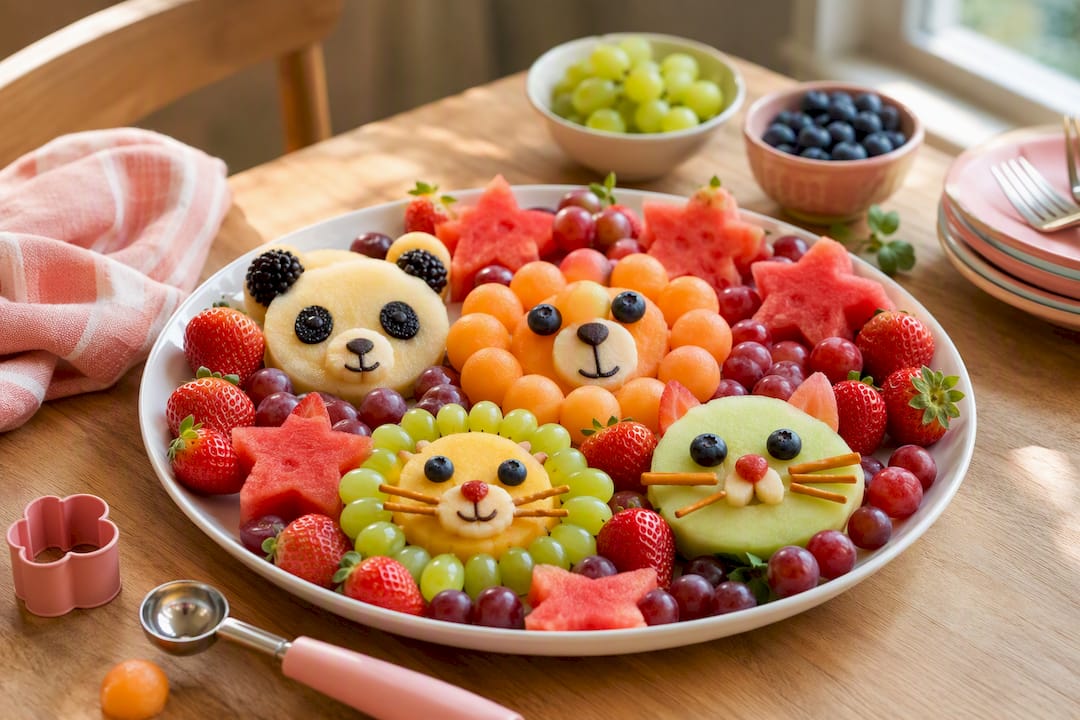
Use a melon baller for quick “faces,” cookie cutters on watermelon for stars or hearts, and pretzel sticks or toothpicks for whimsical details. Speed matters more than precision here.
6. Holiday and Seasonal Platter
Lean into pomegranate arils, sliced red apples, and clementines for winter gatherings, or peaches and cherries for summer cookouts. A few sprigs of mint or rosemary add festive color without extra cost.
7. Valentine’s Heart-Shaped Platter
Cut watermelon and cantaloupe into heart shapes using a cookie cutter, then ring the board with strawberries (leave the stems on for grip). Pair with a small bowl of chocolate dip.
8. DIY Build-Your-Own Fruit Station
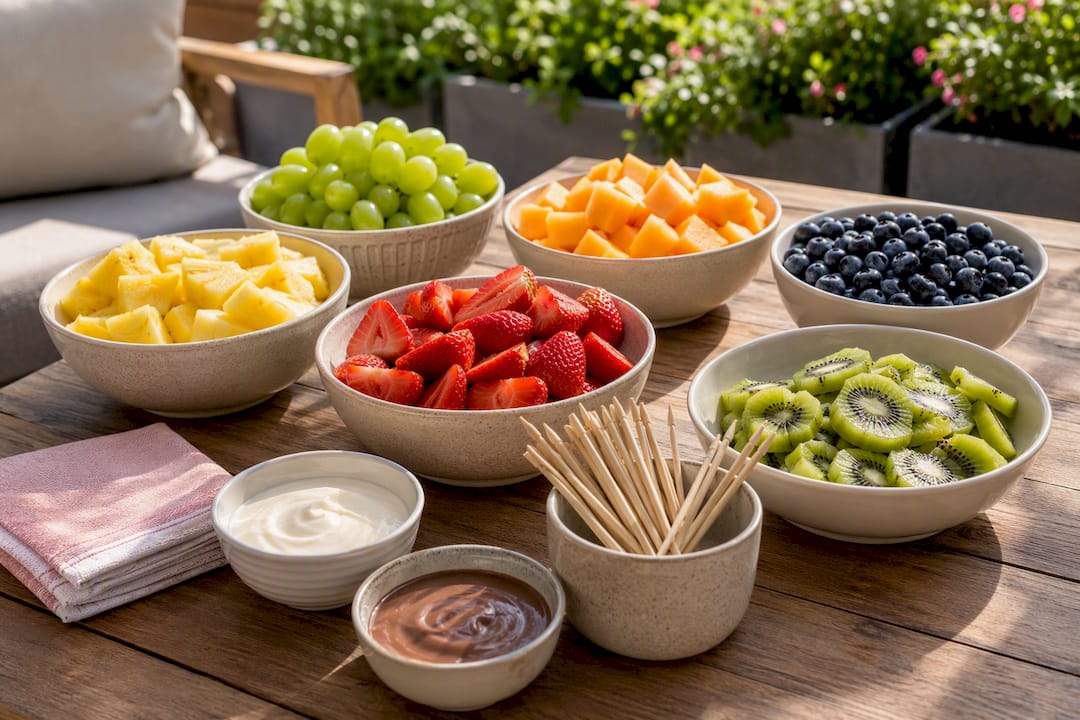
Set out separate bowls of pre-cut fruit, skewers, and two dips, letting guests assemble their own combinations. This format cuts your plating time in half and works especially well at kid-friendly gatherings where interactivity keeps people engaged longer.
9. Small-Group Grazing Platter
Scale everything down onto a single wooden board or large plate, concentrating on three or four premium fruits rather than spreading thin across many. Fewer choices, better quality, less waste.
10. Minimalist Monochrome Platter
Pick one color, red strawberries and watermelon, or green grapes and honeydew, and build the whole board around it. Restraint is the trick: resist adding a fifth fruit just because it’s in the fridge.
How to Arrange a Fruit Platter Like a Pro
Start with a focal anchor, something with height like a pineapple crown or a mounded bunch of grapes, then build color blocks radiating outward. Chef-sourced arranging rules stress varying shapes and sizes across the board so nothing looks repetitive, and filling any visible gaps with small fruit clusters instead of leaving bare plate showing.
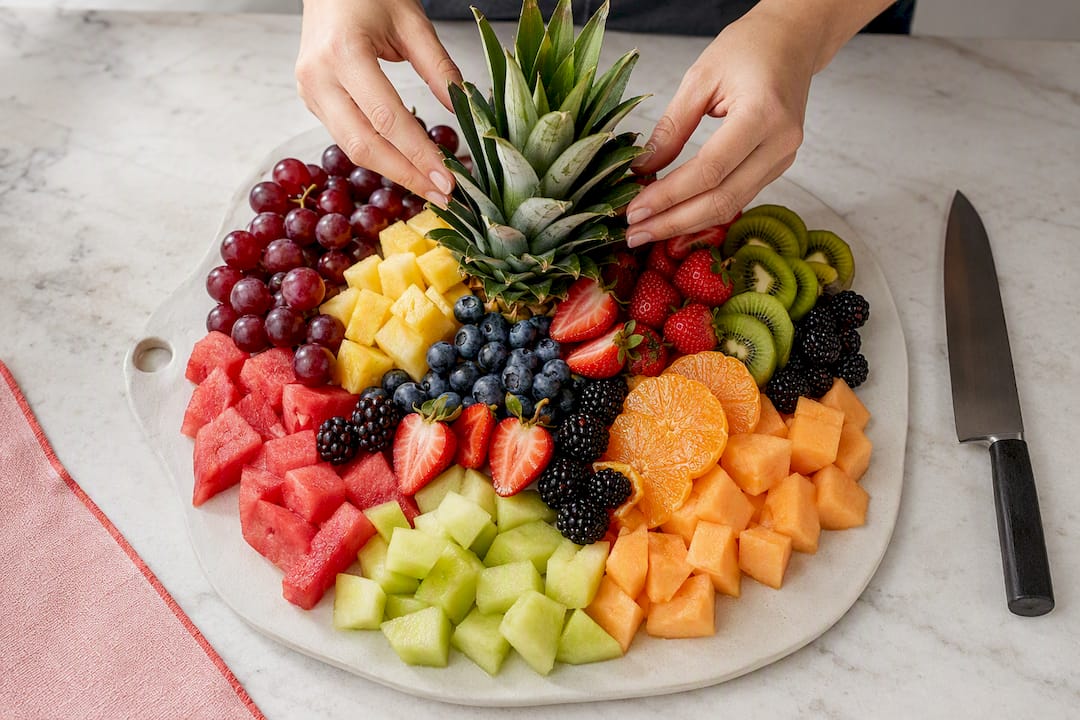
Cutting technique changes everything. Fan mango slices in an overlapping row rather than cubing them. Cut citrus into wedges, not rounds, so people can grab a piece without juice running everywhere. Leave melon skin on for wedges; the color contrast between rind and flesh does more visual work than you’d expect.
A few small habits separate an average platter from one people photograph:
- Cut grapes into short clusters of five to ten with kitchen shears, so guests pick one cluster instead of pulling grapes loose one by one.
- Chill your serving plate or board in the freezer for 15 minutes before plating; it keeps fruit crisp longer under warm lights.
- Vary slice thickness across the board on purpose. Uniform thickness everywhere reads as flat.
- Skip garnishes that don’t add flavor. A sprig of mint earns its spot; a random parsley sprig does not.
Pro Tip: Save your softest, ripest fruit (peaches, kiwi, berries) for right before serving. They bruise fastest and look worst if they sit out for an hour.
Make-Ahead, Storage, and Freshness Tips
Fruit platters hold up best when assembled the day of the event, or late the evening before at the earliest, then refrigerated until right before guests arrive. Hardy fruits like melon, grapes, and citrus can be cut up to a day ahead. Delicate fruits like berries, kiwi, and bananas should go on within a few hours of serving.
For transport, use a container with a tight lid and, if possible, a cold pack underneath to keep the temperature stable during the ride. A few habits prevent the two most common platter failures, sogginess and browning:
- Dip cut apples, pears, and bananas in lemon juice or a diluted ascorbic acid solution to slow browning, per University of Nebraska–Lincoln food safety research.
- Pat wet fruit (melon, pineapple) dry with paper towels before plating so juices don’t pool.
- Keep juicier fruits in a separate section or bowl rather than mixed directly against drier fruit.
- For outdoor events, nest the platter in a bed of ice or keep it in shade, and treat two hours at room temperature as your safety cutoff.
What to Serve With a Fruit Platter
A simple dip turns a fruit platter into a real appetizer. Whisk yogurt with honey and a splash of vanilla for a tangy option, blend mascarpone with honey for something richer, or melt dark chocolate with a touch of cream for a ganache dip. Each takes under five minutes.
Cheese pairing follows a basic pattern: soft cheeses go with sweet fruit, hard and aged cheeses go with tart or acidic fruit. Add a small bowl of toasted almonds or marcona almonds and a handful of olives for savory contrast, since modern fruit boards increasingly lean on savory complements to balance sweetness. For pairing fruit with cheese and dips in more detail, a dedicated guide walks through combinations by fruit type.
Set out small tongs or forks near delicate fruit, toothpicks for cubed pieces, and individual small bowls for dips rather than one shared bowl everyone double-dips into.
Why Sourcing and Storage Change Everything About a Platter
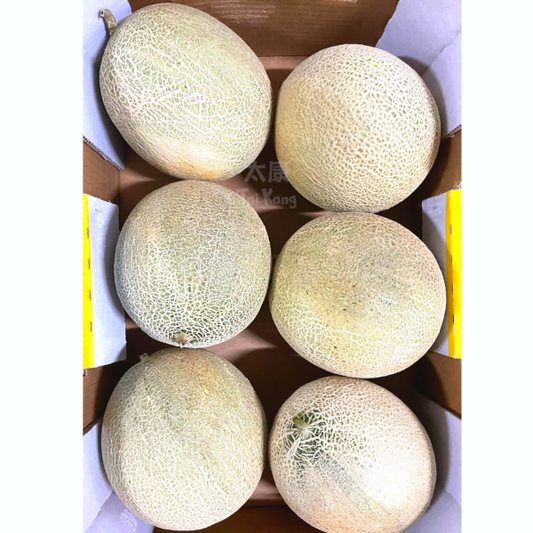
No arranging technique fixes fruit that was mediocre to begin with. Taikanghealthyfruits inspects every fruit for ripeness and quality before it ships, then holds it in temperature-controlled storage, because a platter built on properly ripened mango or perfectly firm strawberries needs almost no styling help to look good.
The right tools speed up execution too. A two-in-one display bowl that washes, drains, and serves in one piece cuts out a full step of your prep. For gifting occasions, a pre-arranged basket already solves the composition problem for you, no cutting board required.
Good platters start with good produce. Everything else on this page is technique layered on top of that foundation.
— Tai Kang
Build Your Platter Faster With the Right Tools
Skipping the extra colander step saves real time on party day. The 2-in-1 Fruit Display Bowl lets you wash, drain, and serve straight from one dish, cutting out the transfer step between sink and table that slows most home hosts down.
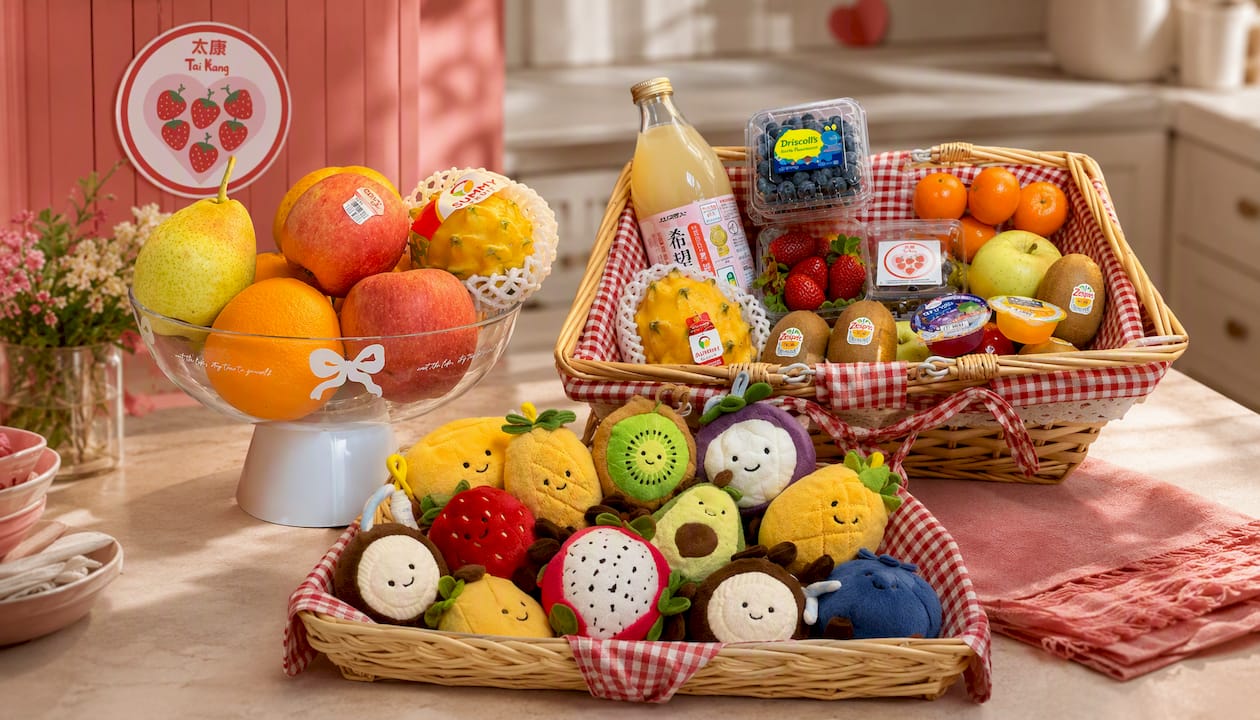
If you’re assembling a gift instead of a party spread, the Fruitastic Basket arrives already arranged, our best-selling option for corporate gifting and celebrations where you don’t have time to build a platter from scratch. Add a Fruit Plushie for a kids’ table or a lighthearted gift topper. Taikanghealthyfruits maintains a 4.85-star rating across 46 reviews, built on inspected, temperature-controlled fruit delivered fresh. Order online now and have platter-ready fruit at your door in time for your next gathering.
Sources
- Fruit platters are perfect for parties — Food & Wine
- Fresh fruit platter — Food Network (Ina Garten)
- Fruit platter ideas — Utah State University Extension (Create Better Health)
- How to prevent cut fruit turning brown — University of Nebraska–Lincoln
FAQ
What should I put on a fruit platter?
Include at least one item from each category: berries, melon, citrus, stone fruit, and one exotic accent like kiwi or dragon fruit, aiming for roughly one cup of fruit per guest.
How do you make a fruit platter look amazing?
Build a height anchor (a pineapple crown or grape cluster), arrange the rest in color blocks radiating outward, and fill any gaps with small fruit clusters instead of leaving empty space.
What are some good fruit platter ideas for a party?
A rainbow platter, a tropical spread with mango and coconut, and a DIY build-your-own fruit station all work well because they’re visually striking and scale easily for larger groups.
Is it cheaper to buy a fruit platter or make one?
Making your own is usually cheaper per serving if you already have prep time and tools, but a pre-arranged option like the Fruitastic Basket often costs less than your time is worth for gifting or last-minute events.