
Pantry Snack Ideas: Fast Fresh-Fruit Fixes and Ready Fruit Boxes
The fastest pantry snack solutions are fresh-fruit formats that need zero cooking: whole fruit, pre-sliced cups, frozen grapes, fruit-and-nut packs, or a ready-made fruit box you order online. The World Health Organization recommends at least 400 g of fruit and vegetables daily, roughly five 80 g portions, and hitting that number is a lot easier when snacks are already washed, cut, or delivered to your door.
- Whole fruit (apple, banana, pear) for zero-prep snacking
- Pre-cut fruit cups or grab-and-go containers
- Frozen grapes for a cold, low-effort treat
- Fruit paired with nuts or seeds for staying power
- A curated fruit box or subscription when you want the sourcing done for you
Tai Kang Healthy Fruits fits into that last category as a source for pre-checked, temperature-stored fruit that arrives ready to eat, which comes up again once you get to the ordering options further down.
Key Takeaways
Fresh fruit snacks that require no prep, paired with a curated fruit box or subscription, are the most reliable way to hit the WHO’s 400 g daily target without extra effort.
| Point | Details |
|---|---|
| Zero-prep formats win | Whole fruit, frozen grapes, and pre-cut cups need no cooking and fit any schedule. |
| Separate ethylene producers | Keep apples and bananas away from berries to slow spoilage and extend shelf life. |
| Wash right before eating | Rinse berries and grapes only when you’re about to eat them, not on arrival. |
| Match stock to consumption | Size weekly or bi-weekly reorders to how fast your household or office actually eats fruit. |
| Let a curated box handle sourcing | Taikanghealthyfruits’ Fruitastic Basket and bi-weekly subscription deliver pre-checked, temperature-stored fruit on a predictable schedule. |
Table of Contents
- Fresh Pantry Snack Ideas You Can Eat in Under a Minute
- How to Keep Fruit Fresh Longer Without Overthinking It
- Stocking and Rotating Fruit for Your Household, Desk, or Office
- Healthy Snacking Options When You Want Something Beyond Fruit Alone
- Five-Minute Snack Assembly for When You’re Genuinely Rushed
- What Different Fruits Actually Give You Nutritionally
- Snacking Well Without Overspending
- Vegan and Allergy-Friendly Fruit Snacking
- Why a Fruit Box or Subscription Solves the Logistics for You
- Why I’d Rather You Overstock Fruit Than Underestimate It
- Sources
Fresh Pantry Snack Ideas You Can Eat in Under a Minute
These twelve ideas cover almost every craving, from a quick grab on your way out the door to something that looks good enough to serve to guests. Each one leans on fruit you already have or can order pre-portioned, so there’s no shelf-stable substitute needed.
-
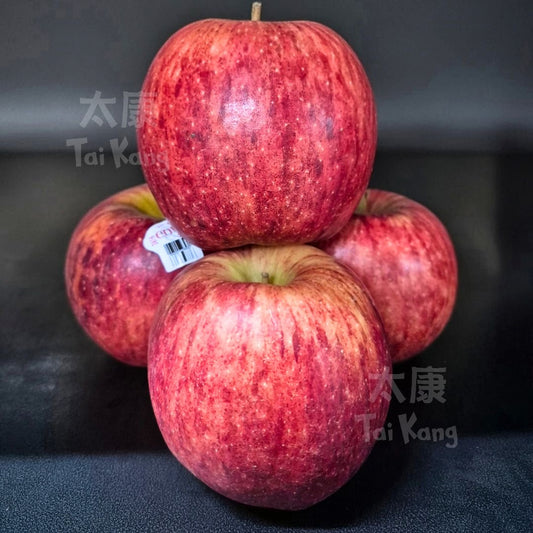
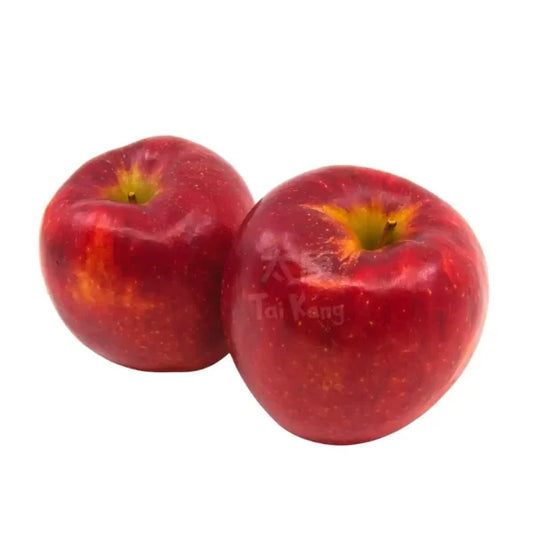
Whole apple, banana, or pear. No prep required. One medium piece roughly covers one 80 g portion. Keep bananas on the counter and apples in the crisper drawer so they don’t rush each other into ripening.
-
Pre-sliced citrus or apple cups with a squeeze of lemon. Slice a day’s worth in the morning, toss with lemon juice to slow browning, and refrigerate in a sealed container. Grab a 150 g portion straight from the fridge.
-
Frozen grapes. Rinse, dry, and freeze a bag of grapes on a tray. They turn into a sorbet-like snack in about two hours and keep for weeks, which makes them one of the easiest desk-drawer or freezer staples around.
-
Single-serving fruit boxes. A pre-packed 80 to 100 g box of mixed fruit solves the “what do I grab” problem entirely, especially useful for commuters or kids’ lunchboxes.
-
Fruit with Greek yogurt and chia seeds. Layer a half cup of yogurt with berries and a teaspoon of chia. The protein and fiber combination keeps you full longer than fruit alone.
-
Fruit skewers. Thread melon, pineapple, and grapes onto skewers for parties or lunchboxes. They hold their shape better than a fruit salad and look sharper on a table.
-
Apple slices with nut butter. Two tablespoons of almond or peanut butter turns a plain apple into a snack with real staying power, since pairing fruit with nuts or seeds balances a quick sugar hit with slower-burning fat and protein, according to nutrition research on fruit snacks for busy professionals.
-
Berry parfait. Alternate berries, granola, and yogurt in a jar for a snack that travels well and doesn’t get soggy if you eat it within a few hours.
-
Mango cubes. Pre-cut and chilled, mango cubes are close to candy in sweetness with none of the added sugar. A 100 g portion is plenty.
-
Sliced stone fruit with cottage cheese. Peaches or plums next to a scoop of cottage cheese make a snack that reads more like a light meal, useful when lunch is hours away.
-
Fruit salad jars. Pack diced fruit into mason jars for the week. Grab one on your way out and you’ve got a ready portion with no cutting board in sight.
-
Grapes and cheese skewers. Alternate grapes with small cheese cubes for a snack that works just as well at your desk as it does on a party platter.
Pro Tip: Batch-prep on Sunday. Wash and portion everything except berries into containers, and you’ll have five days of grab-and-go snacks ready before Monday morning hits.
How to Keep Fruit Fresh Longer Without Overthinking It
Spoilage usually comes down to one gas and one habit. Ethylene is a natural ripening gas that apples, bananas, and avocados release in large amounts. Store them away from berries, leafy greens, and other ethylene-sensitive produce, or you’ll find your strawberries mushy days before you expected.
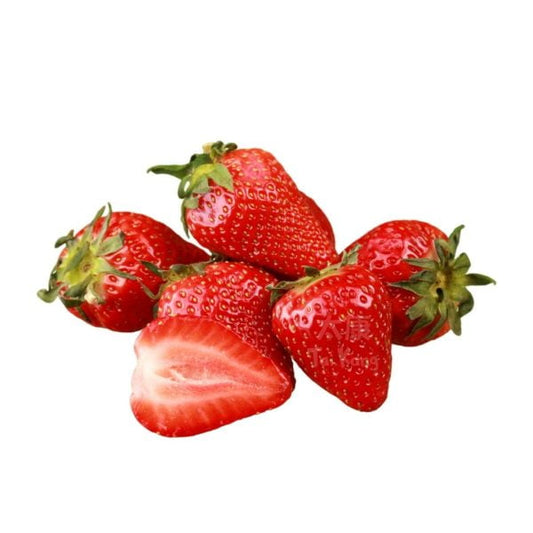
The second habit: don’t wash berries or grapes until you’re about to eat them. Moisture left sitting on the skin speeds up mold growth, which is why a rinsed carton of strawberries often turns overnight while an unwashed one lasts closer to a week.
- Refrigerate berries, grapes, and cut fruit in a sealed container
- Keep apples, bananas, and citrus on the counter unless you’re storing long-term
- Refrigerate apples if you want them to last several weeks, per NDSU Extension’s fruit storage guidance
- Check every delivered box on arrival for soft spots, bruising, or condensation buildup
Pro Tip: If a fruit box arrives with any fruit already soft, snack on it first. Ripe fruit spoils fastest, and eating it right away beats losing it to the bin.
Tai Kang Healthy Fruits runs freshness checks before dispatch and keeps inventory in temperature-controlled storage, which is part of why fruit tends to arrive in better shape than a rushed grocery run.
Stocking and Rotating Fruit for Your Household, Desk, or Office
Different households need different rhythms. Families do best mixing long-life fruit (apples, oranges, bananas) with shorter-life berries, prepping kid-sized tubs on weekends so snacking doesn’t require an adult standing over a cutting board every afternoon.
Busy professionals should lean on single-serve cups, frozen grapes, and a small desk box that gets topped up midweek. If you travel for work, pack fruit that survives a bag: apples, oranges, and grapes hold up far better than anything that bruises.
Corporate buyers get the most mileage from a weekly or bi-weekly box sized to headcount, roughly one to two pieces of fruit per person per day if it’s sitting in a shared bowl. Keep communal bowls in a cool spot away from direct sun, and swap the fruit before it looks tired, not after. Fresh fruit baskets also double as an inclusive gift that works across most dietary preferences, which is why they show up so often in office wellness budgets.
- Watch for wrinkled skin, soft spots, or a strong ripe smell as your reorder signal
- Berries and stone fruit: use within 3 to 5 days
- Apples, citrus, and pears: 1 to 3 weeks depending on storage
- Set a recurring office fruit delivery so restocking isn’t a manual task someone has to remember
Healthy Snacking Options When You Want Something Beyond Fruit Alone
Fresh fruit covers most of your snacking needs, but pairing it with a few reliable staples rounds things out without turning your kitchen into a project. A jar of unsalted almonds, a tub of plain Greek yogurt, and a block of hard cheese are the three items worth always having on hand, because each one turns plain fruit into something more substantial.
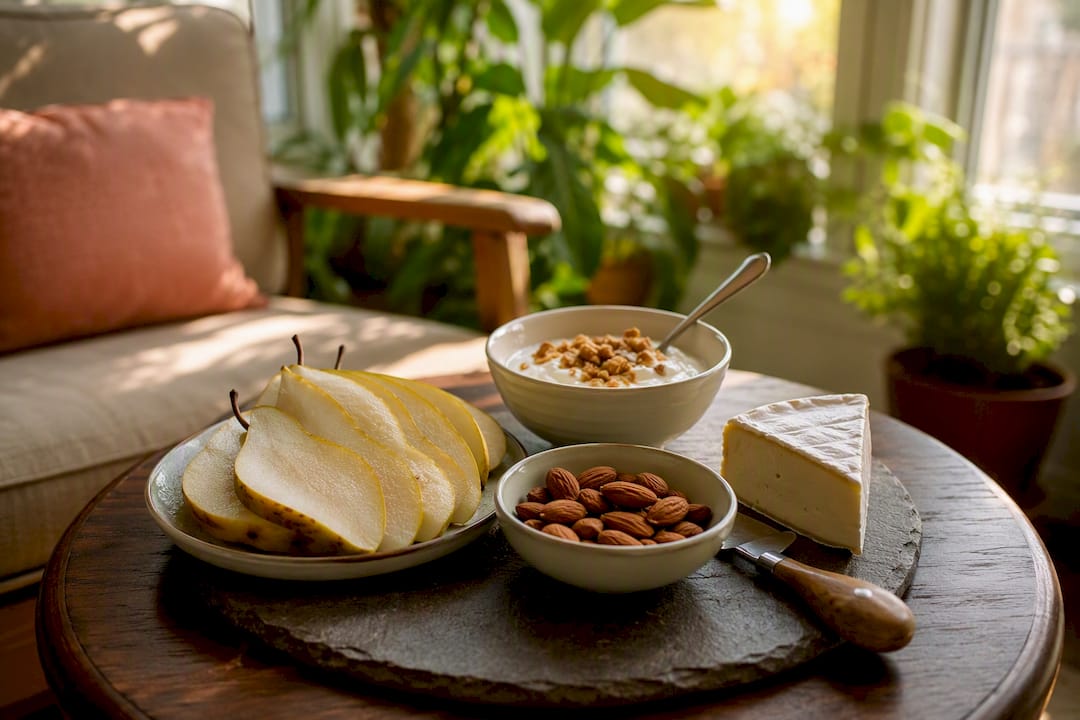
Almonds or walnuts scattered over sliced apple add crunch and protein. Plain yogurt swirled with berries needs no added sugar if the fruit is ripe enough. A few cubes of cheddar next to grapes gives you a snack that satisfies the way a bag of chips tries to but doesn’t.
The trick is keeping the fruit as the main event and the staple as the supporting act. If you’re stocking a shared office pantry, a rotating mix of fresh fruit alongside a jar of nuts covers most preferences without anyone needing to hunt for something separately. For a deeper breakdown of what pairs well together, Taikanghealthyfruits’ buying guide to healthy snacks walks through combinations by fruit type.
Five-Minute Snack Assembly for When You’re Genuinely Rushed
Some days you don’t have five minutes, let alone fifteen. The move here is pre-assembly, not on-the-spot cooking. Wash a bowl of grapes Sunday night, portion them into small containers, and you’ve built a week of instant snacks with zero weekday effort.
Same logic applies to a fruit-and-yogurt cup: layer it the night before, keep it sealed in the fridge, and grab it on your way out. A banana needs no assembly at all, which is exactly why it remains the single fastest snack on this list.
If mornings are the real bottleneck, lean on partner advice for travel-friendly eating, like the packing strategies in Wild Foodz’s guide to eating healthy on holiday, which applies just as well to a hectic commute as it does to a vacation. The core idea holds either way: prep once, snack repeatedly, skip the decision fatigue.
What Different Fruits Actually Give You Nutritionally
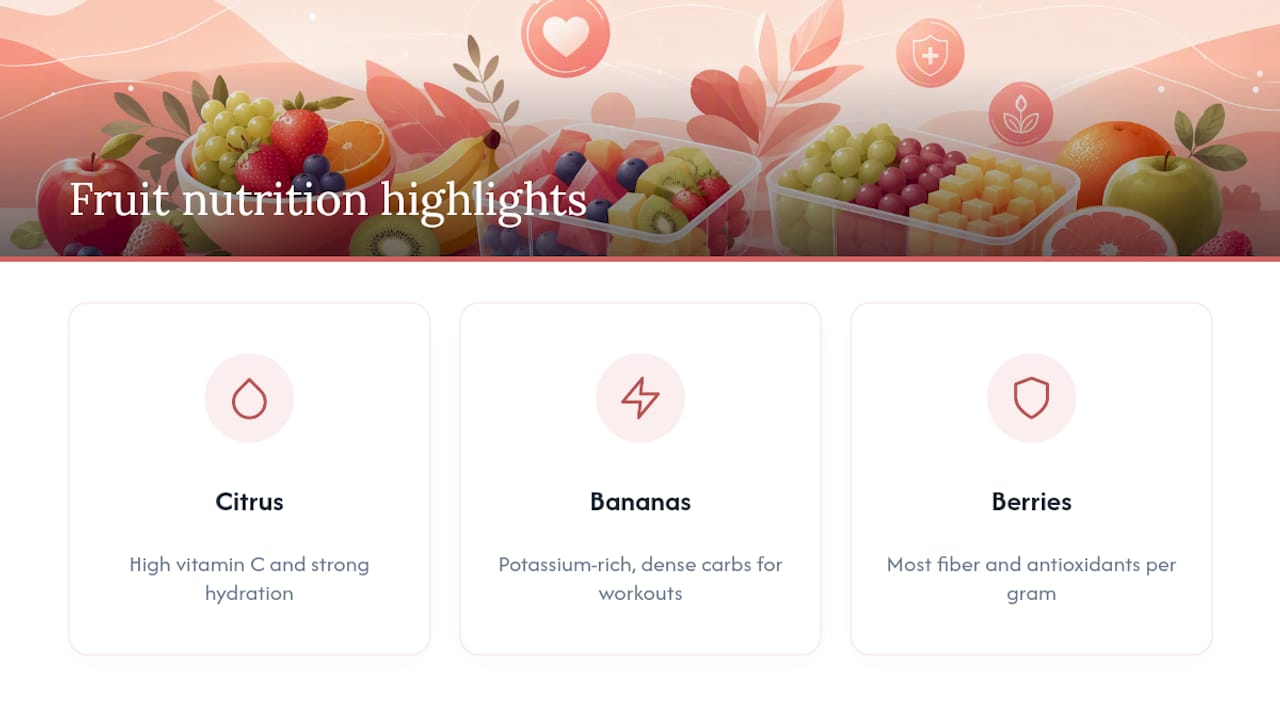
Not all fruit does the same job. Citrus leans heavy on vitamin C and hydration. Bananas carry potassium and a dense carbohydrate hit that works well before a workout. Berries pack the most fiber and antioxidants per gram of any common fruit, which is part of why nutritionists keep pointing back to them.
Eating the whole fruit, skin included where it’s edible, matters more than most people realize. Whole fruit provides more fiber and greater satiety than juice, since juicing strips out the fiber that slows sugar absorption and keeps you full. That’s a meaningful difference if you’re trying to avoid the energy crash that follows a glass of juice an hour after breakfast.
Variety matters too. The NHS’s guidance on five-a-day eating points out that no single fruit covers every nutrient, so rotating between citrus, berries, stone fruit, and tropical varieties gets you a broader spread of vitamins and minerals than sticking to one favorite. For a closer look at what specific fruits contribute, Taikanghealthyfruits’ guide to fruit and wellness breaks it down fruit by fruit.
Snacking Well Without Overspending
Fresh fruit doesn’t have to be expensive to be effective. Buying what’s in season is the single biggest lever here, since a fruit at peak season is usually cheaper and tastes better than the same item shipped in off season. Bananas, apples, and citrus tend to stay affordable year round, which makes them a solid base for daily snacking budgets.
Buying a curated box or subscription can actually save money compared to piecemeal grocery runs, since it prevents the classic problem of overbuying fruit that goes soft before anyone eats it. A subscription synced to how much your household or office actually consumes cuts down on waste, which is money you’re not throwing in the compost bin.
Frozen grapes and mixed fruit salad jars also stretch a smaller haul further, since freezing and batch prep let you buy in bulk when prices are lower and portion it out over the following week or two.
Vegan and Allergy-Friendly Fruit Snacking
Fresh fruit is about as allergy-friendly as snacking gets. It’s naturally vegan, dairy-free, and gluten-free, which makes it one of the easiest categories to serve in a mixed group without checking every label. The exceptions are rare: some people have oral allergy syndrome triggered by specific fruits, usually linked to pollen allergies, so it’s worth checking individual sensitivities before serving fruit at a large gathering.
Pairing fruit with plant-based staples keeps snacks vegan without sacrificing protein. Almond butter, tahini, or a handful of pumpkin seeds all pair well with sliced fruit and skip dairy entirely. If you’re setting up a shared office snack station, offering fruit alongside a plant-based pairing covers more dietary needs at once than a dairy-heavy spread would. PopCornaa’s take on vegan snacking for work has more on plant-based pairings that hold up well next to fresh fruit.
Why a Fruit Box or Subscription Solves the Logistics for You
Sourcing, sorting, and portioning fruit takes real time every week, and that’s the part a curated box or subscription actually removes. You’re not standing in a produce aisle guessing what’s ripe. You’re not throwing out half a punnet of berries because you bought more than you’d eat. Someone else has already checked the fruit, stored it at the right temperature, and portioned it for you.
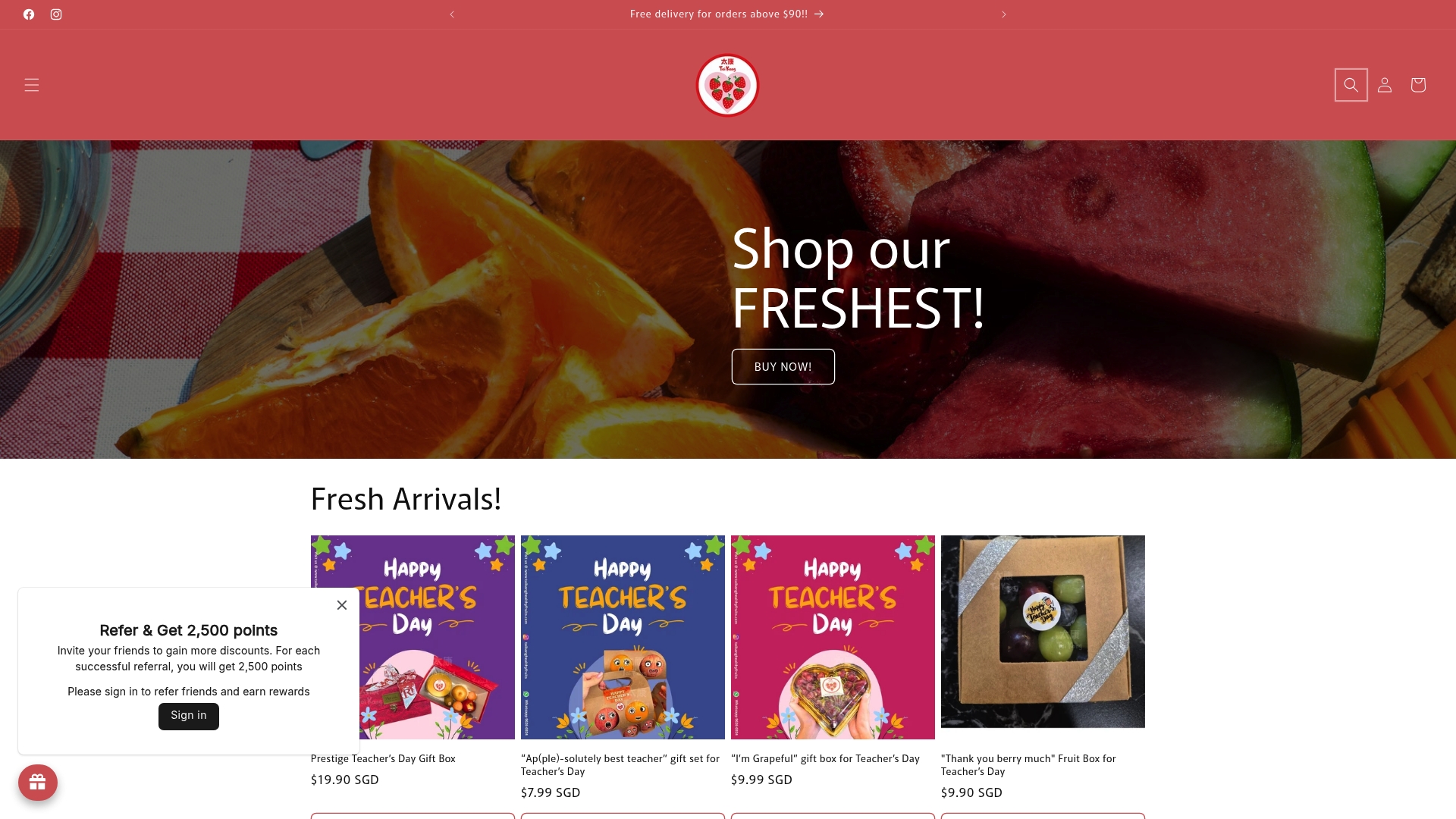
Taikanghealthyfruits’ bestselling Fruitastic Basket is built for exactly this: a curated seasonal mix that lands on your counter ready to snack on, no sorting required. Families and offices that want a rotating box without committing to every order individually can set up the bi-weekly subscription plan, which keeps fruit arriving on a predictable schedule instead of relying on someone remembering to reorder. For gifting or a lighter personal treat, the “I cherry-ish you” fruit box works well for a birthday, a thank-you, or a corporate client gesture that actually gets used instead of left in a drawer.
Choosing between a one-off box and a subscription mostly comes down to how predictable your snacking needs are. A household with a steady rhythm benefits from the subscription’s automatic cadence, while a corporate buyer sending gifts might prefer picking individual boxes per occasion. Either way, Taikanghealthyfruits backs it with a 4.85-star customer rating and a rewards program that credits repeat orders. Head to the main shop to compare box sizes and pick a delivery frequency that matches how fast your household actually eats fruit.
Why I’d Rather You Overstock Fruit Than Underestimate It
Most advice about “healthy snacking” treats fruit as an afterthought behind protein bars and trail mix, and I think that’s backward. Fresh fruit is the snack that requires the least willpower to reach for, because it doesn’t need a recipe or a decision, and the WHO’s 400 g daily benchmark is closer within reach than most people assume once fruit is already washed and visible in the fridge, not buried behind last week’s leftovers.
The mistake I see most often is buying fruit reactively, one grocery trip at a time, then wondering why half of it spoils before it gets eaten. A steady, smaller supply beats one big haul that outpaces how fast your household actually snacks. That’s the entire logic behind sourcing fruit through inspection and temperature-controlled storage rather than gambling on whatever looks fine on a shelf. Fruit that’s checked and stored properly before it reaches you doesn’t need to be eaten in a panic before it turns.
— Tai
Sources
Recommended
- How to Store Fresh Fruits and Keep Them at Their Best – Tai Kang Healthy Fruits
- Office Fruit Pantry Delivery: The 2026 Guide to Corporate Wellness – Tai Kang Healthy Fruits
- Avoiding Bad Fruit from the Supermarket: A 2026 Guide to Freshness – Tai Kang Healthy Fruits
- Teacher’s Day Fruit Boxes & Fruit Gift Basket – Tai Kang Healthy Fruits