
4x Fewer Residues on Organic Fruit, Buying Steps for Singapore
For most people, eating more fruit matters more than where it comes from. A systematic review of 35 studies found no consistent proof that organic fruit produces better long-term health outcomes than conventional fruit, and the Mayo Clinic agrees the nutrient gaps are small. The real, measurable difference is pesticide residue frequency, not vitamin content, and Taikanghealthyfruits treats that distinction as the practical starting point for shoppers weighing cost against peace of mind.
TL;DR:
- Organic fruit shows about four times fewer detectable pesticide residues than conventional options, but residue levels are generally below health risk thresholds.
- The primary measurable benefits of organic farming are higher antioxidant concentrations and lower levels of heavy metals like cadmium, which accumulate over time.
- Differences in vitamins and minerals between organic and conventional fruit are minimal and often overshadowed by factors like ripeness and variety.
- Cost remains a major barrier, with organic fruit typically priced higher due to labor and yield differences, making targeted, selective purchases more budget-friendly.
- Washing, peeling, and prioritizing organic choices for thin-skinned, frequently sprayed fruits (berries, grapes, cherries, peaches) effectively reduce chemical exposure without full organic switching.
Table of Contents
- Organic vs. Conventional Fruit: The Measurable Differences
- What the Research on Organic and Conventional Fruit Really Shows
- How to Buy and Prepare Fruit to Cut Pesticide Exposure
- How Taikanghealthyfruits Helps You Apply This Guidance
- Does Organic Fruit Carry Other Health Trade-Offs?
- Comparing the Environmental Footprint of Organic and Conventional Farming
- How Organic Fruit Gets Certified
- Does Organic Fruit Actually Taste Different?
- What Organic Farming Means for Growers and the Market
- Balancing the Evidence, Your Values, and Your Budget
- Try a Small Organic or Premium Fruit Pack First
- Sources
- FAQ
Organic vs. Conventional Fruit: The Measurable Differences
Strip away the marketing, and the comparison between organic and conventional fruit comes down to four things you can actually measure: antioxidant compounds, pesticide residue frequency, trace heavy metals, and price. Everything else, taste, “freshness,” visual appeal, is more about variety, ripeness, and handling than farming method.
A meta-analysis published by Cambridge pooling hundreds of papers found organic crops carry higher concentrations of several polyphenol antioxidants than their conventional counterparts. The same analysis found conventional crops turn up detectable pesticide residues roughly four times as often as organic ones. That is the strongest, most consistently reproduced number in the entire organic research literature, and it’s worth sitting with.
Pesticide residues showed up about four times more often in conventional crops than organic crops, according to the pooled data in the Cambridge meta-analysis, alongside modestly higher antioxidant concentrations in the organic samples.
Here’s what that statistic does not tell you: it doesn’t say conventional fruit is unsafe. Regulatory tolerance levels exist precisely because trace residues below a set threshold aren’t considered a health risk. Detectable is not the same as dangerous. What the number does tell you is that if minimizing chemical exposure is your personal priority, independent of proven health outcomes, organic buys you a real reduction in the odds of residue on your fruit.
The same research found organic produce also tends to carry lower cadmium levels, a heavy metal that accumulates in soil treated with certain phosphate fertilizers common in conventional systems. Cadmium exposure at high, sustained levels is linked to kidney and bone problems, though the levels found in produce are far below occupational exposure thresholds.
Where the differences shrink to near nothing is basic nutrition. Vitamin C, fiber, potassium, and most minerals land in a similar range across both farming methods. Any small differences reported in individual studies are usually swamped by more powerful variables: fruit variety, ripeness at harvest, soil quality, and how long the fruit sat before you ate it.
What the evidence supports:
- Lower pesticide residue frequency in organic fruit (roughly 4x fewer detectable residues)
- Higher concentrations of certain antioxidants (polyphenolics) in organic crops
- Lower cadmium levels in organic produce compared to conventional
- Minimal, often negligible differences in core vitamins and minerals
- Higher retail price for organic, typically driven by labor-intensive growing methods rather than superior nutrition
On cost, organic fruit usually runs more expensive because organic farming is more labor intensive: manual weeding instead of herbicides, natural pest management instead of synthetic sprays, and lower yields per acre. That premium is a real budget consideration, and it’s why Mayo Clinic’s guidance leans toward prioritizing total fruit and vegetable intake over production method for shoppers on a budget. If you’re deciding whether premium fruit is worth the price, the residue and antioxidant differences are the actual data points to consider when weighing the extra cost, not vague assumptions about “cleaner” food.
What the Research on Organic and Conventional Fruit Really Shows
The most cited piece of research in this space is a 2019 systematic review that pulled together 35 papers on organic versus conventional food consumption. Its conclusion is more cautious than most organic marketing suggests: few clinical trials measured direct health outcomes at all. Most studies tracked pesticide exposure biomarkers or nutrient composition instead of things like cancer rates or cardiovascular events.
That distinction matters for how you read any organic health claim. A study showing lower pesticide metabolites in urine after someone switches to organic food tells you exposure changed. It does not tell you whether that person’s disease risk changed, because that requires decades of follow-up and enormous sample sizes most researchers can’t afford to run.
The observational data inside that review is genuinely interesting, even if it can’t prove causation. Some cohort studies associated higher organic food consumption with reduced rates of pre-eclampsia, certain cancers, and metabolic syndrome. But observational studies have a well-known blind spot: people who buy organic also tend to exercise more, smoke less, and eat more vegetables overall. Separating the effect of the food itself from the effect of a generally healthier lifestyle is close to impossible without a controlled trial.
Short-term intervention trials add another layer of nuance. Crossover trials that had participants swap conventional apples for organic apples, or replace parts of their whole diet, generally found no significant shifts in blood antioxidant markers or vitamin levels over a few weeks. That’s a meaningful limitation: a two-week apple swap isn’t long enough to reveal whether decades of organic eating changes anything measurable in the body.
Where the current evidence base falls short:
- Very few randomized controlled trials measure actual clinical outcomes rather than nutrient or residue proxies
- Observational studies can’t fully separate organic eating from broader healthy-lifestyle habits
- Short-duration trials (days to weeks) can’t detect the kind of slow, cumulative health effects a lifetime diet might produce
- Study designs vary widely in crop type, region, and residue testing method, making direct comparison across papers difficult
None of this means the research is worthless. It means the honest takeaway is “residue exposure is lower, nutrient differences are small, and long-term health outcomes remain unproven either way,” not “organic cures X” or “organic is a waste of money.” If you’re the type of shopper who wants a decision framework rather than a slogan, that’s the one to use.
How to Buy and Prepare Fruit to Cut Pesticide Exposure
You don’t need to go fully organic to meaningfully lower your pesticide exposure. A smarter approach is to spend your organic budget where residue detection rates are historically highest, then rely on washing and prep technique for everything else.
- Prioritize organic for thin-skinned, frequently sprayed fruits. Berries, grapes, cherries, and peaches tend to show up more often on residue-testing lists because their soft skin offers little protection and they’re grown with more frequent pest management. If your organic budget is limited, spend it here first.
- Wash under running water while rubbing the surface. NPIC guidance is clear that running water with manual rubbing removes meaningfully more residue than a quick dunk or rinse. Skip the soap; regulators don’t recommend it, since it can leave its own residue behind.
- Peel firm-skinned fruit when it’s practical. Residues concentrate in the skin, so peeling apples, pears, or stone fruit strips away a large share of what washing leaves behind. This isn’t an option for berries, obviously, which is exactly why they belong higher on your organic-priority list.
- Diversify your fruit bowl instead of maximizing any single item. Rotating between different fruits, rather than eating the same one daily, naturally spreads out exposure to any one pesticide profile and gives you a broader nutrient mix at the same time.
- Treat imported and local fruit as a separate decision from organic status. Organic certification governs growing method, not origin or freshness. A conventionally grown, recently harvested peach can be fresher than an organic one that spent three weeks in transit.
Pro Tip: Delicate fruits like berries and cherries can’t be scrubbed hard without bruising them, so give them a longer soak under running water with gentle agitation instead of vigorous rubbing. Firmer fruits like apples, pears, and stone fruit can handle a real scrub, and that mechanical action removes more residue than water alone.
Budget-wise, the smartest strategy usually isn’t “organic everything” or “organic nothing.” It’s selective: organic for the few fruits with historically higher residue detection, conventional for the rest, and a genuine focus on eating a wide variety daily. Good storage practice also stretches your fruit budget further by cutting down on spoilage waste, regardless of which type you buy.
How Taikanghealthyfruits Helps You Apply This Guidance
Taikanghealthyfruits sources fruit from trusted growers and puts every shipment through quality inspection before it reaches temperature-controlled storage, the kind of handling that protects the nutrient and antioxidant content discussed above from degrading in transit. That matters because freshness and storage conditions can affect fruit quality as much as farming method does.
For readers applying the selective-organic strategy from the previous section, Taikanghealthyfruits makes it simple to act on:
- Order single premium SKUs like USA Sweet Globe Seedless Green Grapes or USA Red Cherries for the thin-skinned fruits worth prioritizing
- Use a subscription to build variety into your weekly fruit intake automatically, rather than defaulting to the same two or three fruits
- Send a gift box to introduce someone to premium fruit like Japan Peach without committing to a full subscription first
Customer feedback backs the consistency: the company holds a high customer satisfaction rating, and the rewards program encourages repeat buyers to keep variety in rotation rather than settling into the same routine.
Does Organic Fruit Carry Other Health Trade-Offs?
Beyond nutrients and pesticide residue, a few longer-horizon health questions come up in organic-versus-conventional debates, and they deserve a straight answer rather than speculation.
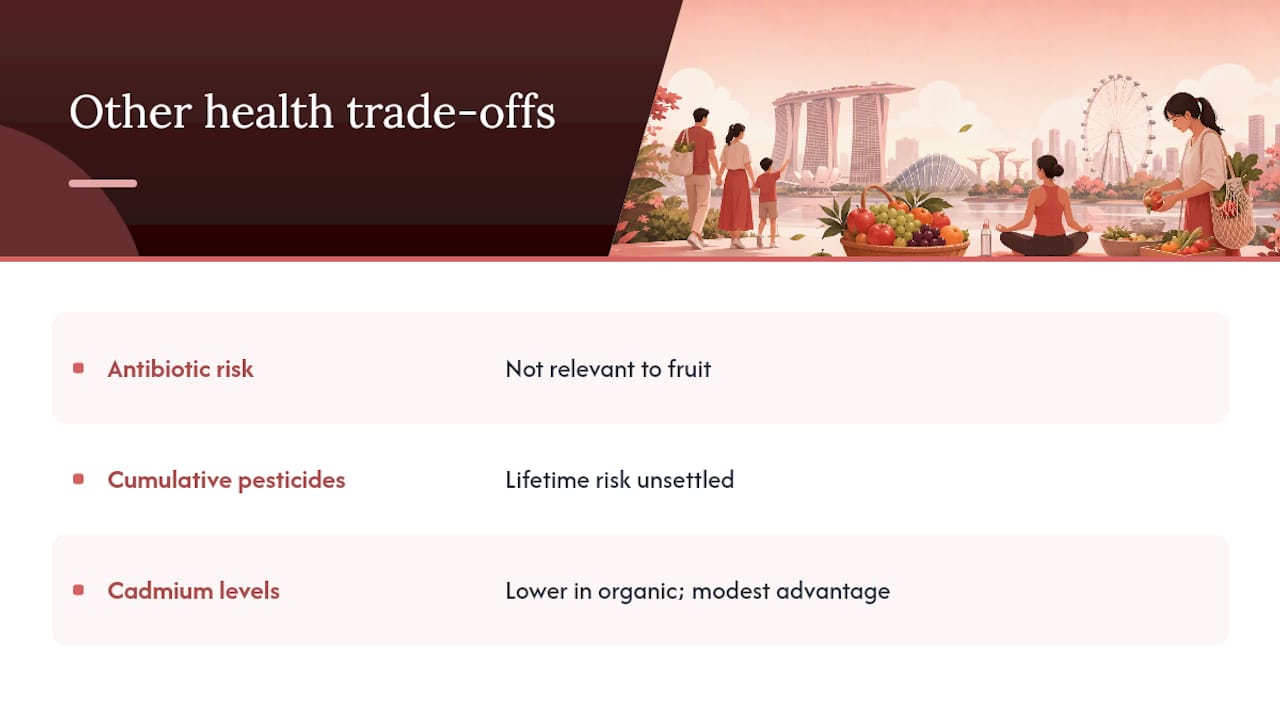
Antibiotic resistance is one. It’s a legitimate public health concern in livestock and dairy production, where antibiotics are used preventively, but it has far less relevance to fruit specifically, since fruit crops aren’t treated with antibiotics the way animals are. Don’t let concerns that genuinely belong to the meat and dairy aisle bleed into your thinking about fruit.
Long-term cumulative pesticide exposure is a more relevant question, and it’s exactly where the evidence gap discussed earlier bites hardest. Regulatory tolerance levels are set with safety margins, and detectable residue below those limits isn’t classified as a health hazard. But “not currently classified as harmful at these levels” and “proven completely safe across a lifetime of exposure from multiple food sources” are different claims, and the research to fully settle the second one, decades-long, whole-diet, large-population trials, simply doesn’t exist yet for either farming method.
The cadmium finding from the Cambridge meta-analysis is worth another mention here specifically because heavy metal accumulation is a slow, cumulative process rather than an acute one. Lower cadmium in organic produce is a real, if modest, long-term advantage for anyone eating large volumes of produce over a lifetime. It’s a legitimate reason to lean organic on high-consumption staples if that’s a personal priority, separate from any short-term nutrient argument.
Comparing the Environmental Footprint of Organic and Conventional Farming
Organic farming generally scores better on soil health and biodiversity, largely because it avoids synthetic pesticides and relies on crop rotation, composting, and natural pest predators to manage the land. Healthier soil microbiomes and reduced runoff of synthetic chemicals into waterways are consistent, well-documented benefits of organic systems.
The trade-off is yield. Organic farms typically produce less fruit per acre than conventional operations, which means more land is needed to grow the same volume of food. That’s a real cost on the other side of the ledger: lower chemical runoff versus a larger land footprint per pound of fruit.
Conventional farming’s environmental case rests on efficiency. Higher yields per acre reduce the total land converted to agriculture, and modern precision-application techniques have reduced blanket pesticide and fertilizer use compared to decades past. Neither system is a clean environmental winner across every metric. It depends whether you weight soil and water quality more heavily than land-use efficiency, and reasonable people land in different places on that trade-off.
Transportation adds a separate layer entirely. A conventionally grown fruit shipped a short distance can carry a smaller carbon footprint than an organic fruit flown in from across the globe, which is why imported fruit versus local fruit is genuinely a separate environmental question from organic versus conventional. Certification tells you nothing about food miles.
How Organic Fruit Gets Certified
Organic certification is a legal production standard, not a taste or freshness guarantee. It governs specific practices: no synthetic pesticides or fertilizers, no genetically modified seed, mandated crop rotation, and restrictions on soil amendments, all verified by third-party inspectors before a farm can use the label.
Certifying bodies vary by country, and the specific rules, allowed substances, and inspection frequency differ across jurisdictions. What stays consistent globally is the core principle: certification is about how the fruit was grown, not where it was grown or how long ago it was picked. A grower can meet every organic standard on paper and still ship fruit that spent weeks in transit before reaching a shelf.
That’s an important distinction for anyone treating “organic” as shorthand for “better quality” across the board. Certification and quality inspection are two separate systems entirely, and Taikanghealthyfruits applies its own inspection process on top of sourcing standards specifically because certification alone doesn’t guarantee the fruit that lands on your counter is at peak condition.
Does Organic Fruit Actually Taste Different?
Taste differences between organic and conventional fruit are inconsistent and heavily dependent on variables that have nothing to do with certification. Variety matters more than growing method. A Sweet Globe grape and a Concord grape will taste completely different regardless of how either was farmed.
Some agricultural research suggests organic growing conditions can increase antioxidant and flavor-compound production because plants under natural pest pressure produce more of certain protective compounds as a defense response, the same compounds partly responsible for perceived sweetness and aromatic intensity. But reviews of fruit quality research note that soil composition, ripeness at harvest, and post-harvest handling routinely override any farming-method effect on flavor.
Ripeness at harvest is likely the single biggest lever on taste, bigger than organic status by a wide margin. Fruit picked ripe and eaten soon after almost always tastes better than fruit picked early to survive a long shipping window, whether it’s organic or conventional. That’s the practical argument for buying from a supplier that inspects for freshness rather than relying on the organic label alone as a flavor signal.
What Organic Farming Means for Growers and the Market
Organic farming carries real economic trade-offs for the people growing the fruit, not just the people buying it. Yields are typically lower per acre, and labor costs run higher because organic pest and weed management is manual rather than chemical. Farmers who convert from conventional to organic also face a multi-year transition period where they must follow organic practices without yet being able to charge organic prices, since certification requires a track record before the premium label applies.
The upside for growers who make the transition is pricing power. Organic fruit commands a retail premium precisely because production costs are higher, and that premium has drawn steady growth in the number of farms pursuing certification globally over the past decade, even as it remains a minority share of total fruit production.
Market demand keeps expanding among health-conscious and environmentally motivated shoppers, but conventional fruit remains the dominant choice by volume worldwide, largely on price. That split is unlikely to reverse anytime soon. Land constraints, labor costs, and yield gaps make it structurally difficult for organic supply to scale to conventional price points, which keeps the two systems serving genuinely different segments of the same market rather than competing head-to-head for the same buyer.
Balancing the Evidence, Your Values, and Your Budget
If you want a decision framework rather than a rulebook: prioritize quantity and variety of fruit first, since that’s the factor with the strongest evidence behind it. Layer selective organic buying on top for the fruits where residue detection is historically highest, cherries, berries, peaches, grapes, rather than trying to go all organic or all conventional.
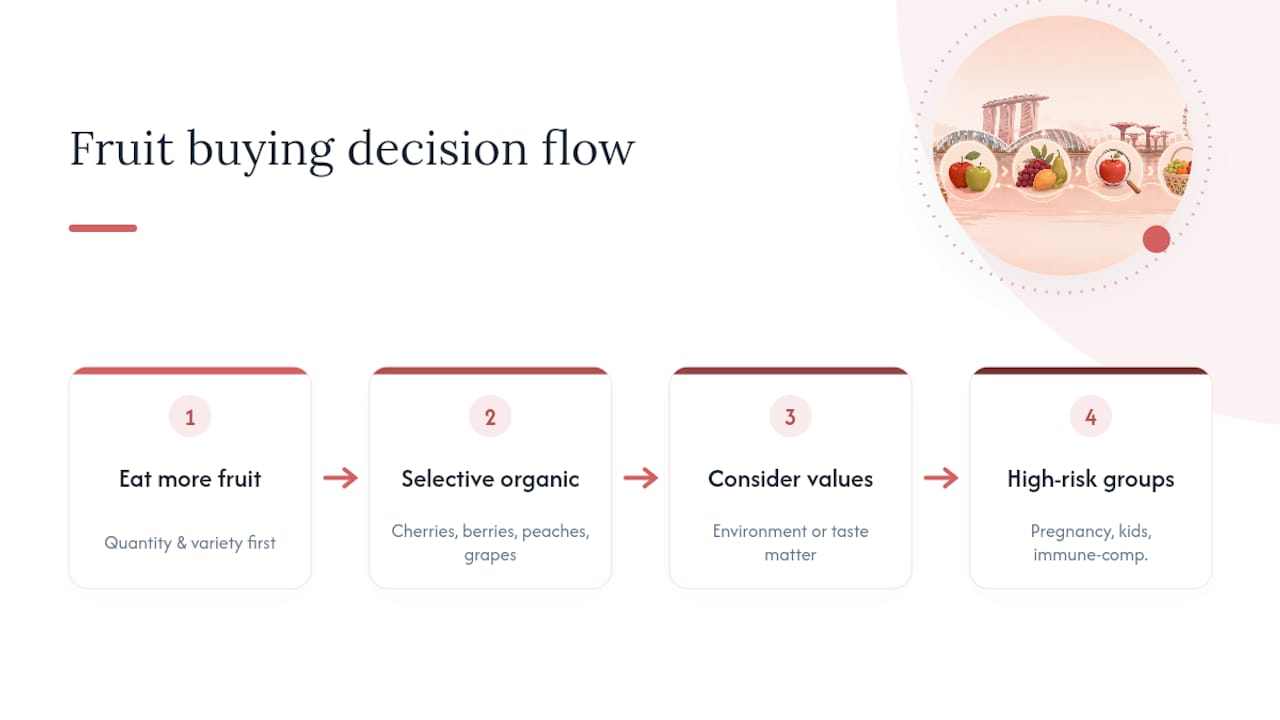
Personal values matter here too, and I don’t think that’s a weakness in the reasoning. If environmental soil impact or supporting lower chemical runoff matters to you independent of proven personal health outcomes, that’s a legitimate reason to lean organic even where the health evidence is thin. Taste preference is valid too, even without a bulletproof scientific mechanism behind it.
One place I’d push harder toward organic: pregnancy, young children, or anyone immunocompromised. The evidence gap on long-term exposure cuts both ways, but when the stakes are higher, erring toward lower residue exposure is a reasonable, low-cost precaution rather than an overreaction.
— Tai Kang
Try a Small Organic or Premium Fruit Pack First
You don’t have to overhaul your entire fruit bowl to put this guidance into practice. Taikanghealthyfruits gives you a direct way to test the selective-organic approach without committing to a full subscription or guessing at sourcing quality on your own.
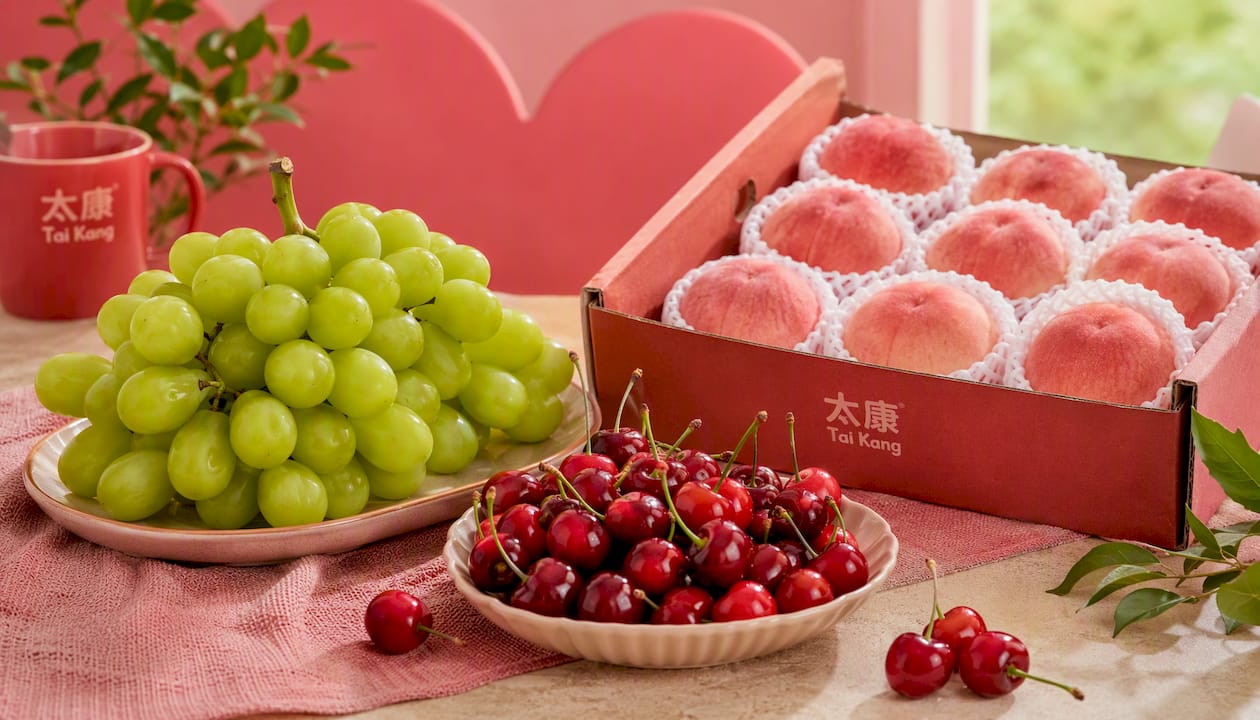
Start with the fruits worth prioritizing based on residue evidence. The USA Red Cherries and USA Sweet Globe Seedless Green Grapes are both thin-skinned varieties that fall into that higher-priority category, and both ship after passing quality inspection and temperature-controlled storage, so what arrives reflects the freshness argument made earlier rather than fruit that sat in transit for weeks. If you’re curious about premium stone fruit, the Japan Peach is a good single-item way to compare a premium import against your usual grocery pick.
The easiest first move is a small mixed order rather than a full subscription commitment. Order once, judge the freshness and flavor for yourself, and decide from there whether a recurring subscription earns a spot in your monthly grocery routine. The rewards program adds a practical reason to keep coming back if it does.
Sources
- A Systematic Review of Organic Versus Conventional Food Consumption: Is There a Measurable Benefit on Human Health? — PMC
- Higher antioxidant and lower cadmium concentrations and lower incidence of pesticide residues in organically grown crops: a systematic literature — Cambridge
- How can I wash pesticides from fruit and veggies? — NPIC
FAQ
Is organic fruit better for you than conventional fruit?
Not in a way current evidence can prove conclusively. Organic fruit has lower pesticide residue frequency and modestly higher antioxidant levels, but systematic reviews haven’t established a clear, direct long-term health advantage over conventional fruit.
Why do people choose not to buy organic fruit?
Cost is the leading reason. Organic farming is more labor intensive and yields less per acre, which pushes retail prices higher, and health guidance suggests eating more fruit overall matters more than switching production methods.
Is organic fruit still sprayed with pesticides?
Yes. Organic farming permits certain natural or approved pesticides, it just prohibits most synthetic ones. That’s why organic crops still show detectable residues sometimes, just about four times less often than conventional crops.
Which fruits don’t need to be bought organic?
Fruits with thick, inedible peels, like bananas, avocados, and citrus, carry lower residue exposure risk since you don’t eat the skin. Prioritize your organic budget instead for thin-skinned fruits like berries, grapes, cherries, and peaches.
How much more does organic fruit typically cost?
Organic fruit generally carries a noticeable retail premium over conventional fruit, driven by higher labor costs and lower yields rather than superior nutrition. The exact markup varies by fruit type, season, and supplier.