
1–2 Ounces Make the Difference: Dried vs Fresh Fruit Choices
Choose fresh fruit most days for hydration, fullness, and lower calorie density. Reach for dried fruit when you need portable energy or a fiber boost, but cap it at 1 to 2 ounces a serving, since drying concentrates both sugar and calories. Both count toward your daily fruit intake as long as portions stay in check and there’s no added sugar.
TL;DR:
- Dried fruit contains significantly more sugar and calories per weight than fresh fruit due to water loss but may retain or concentrate nutrients like fiber and minerals.
- Portion control is crucial because small dried fruit servings can equal multiple fresh fruit servings in sugar and calories, increasing overconsumption risks.
- Fresh fruit is better for hydration and appetite regulation, while dried fruit is portable and nutrient-dense but requires cautious intake, particularly for blood sugar management.
- Check labels on dried fruit to avoid added sugars and sulfites, especially when selecting for health goals or sensitivities.
- For consistent fruit intake, consider subscription services that deliver fresh fruit regularly to prevent reliance on shelf-stable snacks.
Table of Contents
- Dried vs Fresh Fruit Nutrition: What Changes When Water Leaves
- Benefits and Drawbacks of Each Fruit Format
- How Much Dried Fruit Equals a Serving of Fresh?
- Choosing Fresh or Dried Fruit for Your Health Goal
- Why Sourcing and Storage Matter as Much as the Fruit Itself
- What I’d Tell a Friend Who Asked Me This
- Keep Fresh Fruit On Hand Without the Grocery Runs
- Sources
- FAQ
Dried vs Fresh Fruit Nutrition: What Changes When Water Leaves
The biggest difference between dried and fresh fruit comes down to one thing: water. Fresh fruit typically holds 80 to 95% water, while dried fruit drops to 10 to 20%, and that gap changes everything about how the fruit behaves in your body and on the scale.
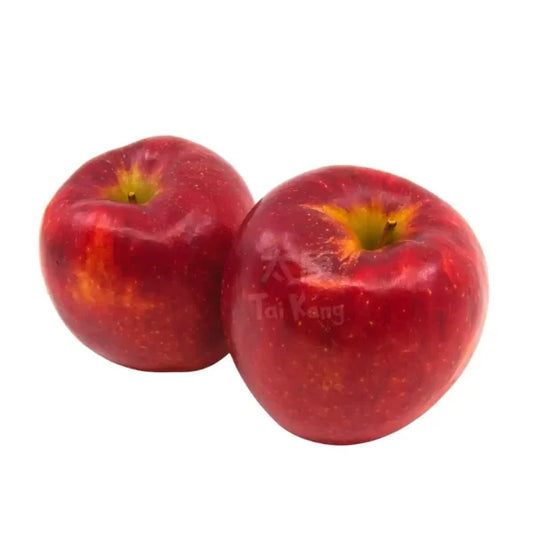
Take apples as an example. A 100 gram serving of fresh apple has around 10 grams of sugar. Dry that same apple down and the sugar concentration jumps to roughly 57 grams per 100 grams, simply because you’ve removed most of the water weight while the sugar stays put, according to nutrition guidance from the National University of Singapore’s University Health Centre. A typical fresh fruit serving runs 30 to 90 calories, while an equivalent dried portion can hit 250 to 300 calories for the same weight.
Drying doesn’t just concentrate sugar. It also affects vitamins and minerals unevenly:
- Vitamin C and some B vitamins drop off during the drying process, since these are heat-sensitive and water-soluble, according to Harvard Health Publishing.
- Fiber, potassium, and polyphenols concentrate as water leaves, meaning ounce-for-ounce, dried fruit often delivers more of these nutrients than fresh.
- Minerals like iron and magnesium become more calorie-dense sources per bite.
A 100-gram apple loses most of its water weight when dried, which is why the sugar and calorie numbers look so different between the two forms. That single fact explains most of the confusion people have about whether dried fruit is “just as healthy” as fresh. It isn’t a straight swap.
One more thing worth checking before you buy: some commercial dried fruits get treated with sulfites to preserve color, or coated in added sugar to improve taste and shelf appeal. Read the ingredient label. If sugar or sulfur dioxide shows up on the list, you’re not just eating dried fruit anymore.
Benefits and Drawbacks of Each Fruit Format
Fresh fruit’s water content does more than hydrate you, which is why understanding the benefits of seasonal produce can further enhance your nutrition choices. It fills your stomach, slows down how fast you eat, and helps you feel satisfied on fewer calories. That’s part of why dried fruit is easier to overconsume; a handful of raisins takes seconds to eat and doesn’t trigger the same fullness signal as a bowl of grapes, even though the calorie difference between the two is substantial.
Dried fruit earns its keep in other ways. It’s shelf-stable, doesn’t need refrigeration, and travels well. Nutritionally, some research on regular dried-fruit eaters has linked the habit to better overall diet quality and lower BMI and blood pressure, though the researchers at Tufts Nutrition Letter are clear that portion control is what makes or breaks that benefit.
Here’s how the trade-offs stack up:
- Fresh wins on hydration and volume — more food weight for fewer calories, better for appetite control.
- Dried wins on convenience and nutrient density per ounce — more fiber and minerals packed into a smaller, portable package.
- Dried carries more risk of overconsumption — the small serving size hides how many calories and how much sugar you’re actually eating.
- Both carry caveats for specific health situations — people managing diabetes need to watch dried fruit’s concentrated sugar load, and anyone with sulfite sensitivity should check labels on dried apricots, mango, or golden raisins.
Pro Tip: If you have diabetes or you’re watching blood sugar closely, pair dried fruit with a small handful of nuts. The fat and protein slow down how fast the sugar hits your bloodstream, according to Consumer Reports.
How Much Dried Fruit Equals a Serving of Fresh?
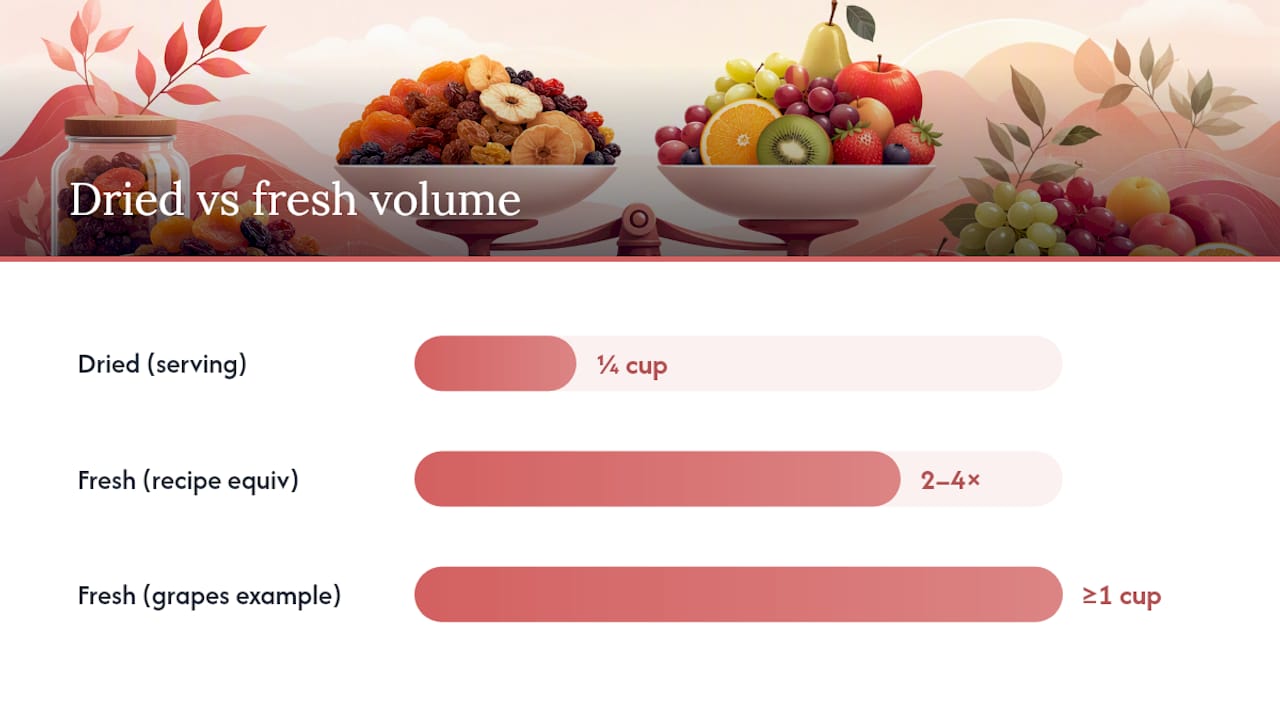
Most people have no idea how small a proper dried fruit serving actually looks. A quarter cup of raisins, for instance, is closer in sugar content to a full cup or more of fresh grapes, since the drying process shrinks the volume dramatically while keeping the sugar intact.
Use these rules of thumb to keep portions honest:
- The quarter-cup rule: a quarter cup of most dried fruits (raisins, cranberries, chopped apricots) equals roughly one serving, similar in calories to a medium piece of fresh fruit.
- The pairing rule: add 10 to 15 grams of nuts or a spoonful of plain yogurt to any dried fruit serving to blunt the blood sugar spike, a strategy Consumer Reports backs for better satiety.
- The half-volume test: if a recipe or snack mix calls for dried fruit, imagine the fresh version taking up two to four times the space. That mental picture alone stops most overeating.
- Default to fresh for hydration: when you’re thirsty, tired, or it’s hot out, fresh fruit does double duty as food and fluid. Dried fruit doesn’t.
Choosing Fresh or Dried Fruit for Your Health Goal
The right choice depends less on which fruit format is “healthier” overall and more on what you’re trying to do that day. Use this as a quick decision guide:
- Managing weight or blood sugar? Default to fresh fruit. If you do reach for dried, stick to a measured 1 to 2 ounce portion and skip anything with added sugar.
- Exercising or traveling? Dried fruit is a practical, shelf-stable energy source. For activities longer than an hour, pair it with a small source of sodium or electrolytes, since dried fruit alone won’t replace what you sweat out.
- Baking or cooking? Dried fruit shines here. It rehydrates in batters and sauces and can replace added table sugar in oatmeal or vinaigrettes, a substitution Harvard Health Publishing points to as a smart way to sweeten food naturally.
- Shopping for either? Read labels every time. Choose unsweetened, sulfite-free dried fruit over candied or oil-coated versions, and reach for whole fresh fruit like Zespri Golden Kiwi over juices or fruit “snacks” that strip out the fiber.
Why Sourcing and Storage Matter as Much as the Fruit Itself
Nutrition numbers only mean something if the fruit reaches you fresh in the first place. Careful inspection and temperature-controlled storage from arrival to delivery matter because fresh fruit starts losing vitamin content the moment it’s picked.
A few practical habits worth adopting:
- Store fresh fruit properly to slow nutrient loss. Simple storage adjustments can add days to shelf life.
- Wash fruit right before eating, not right after buying, to avoid trapping moisture that speeds up spoilage.
- Pair fresh fruit with a small amount of dried fruit or nuts for snacks that combine hydration with concentrated fiber.
Customer feedback indicates high satisfaction ratings, suggesting that careful sourcing and handling show up in the fruit people actually receive.
What I’d Tell a Friend Who Asked Me This
Eat fresh most days. It’s simple, and the water content alone does more for your appetite than any dried fruit ever will. Keep a small stash of dried fruit around for the days you need portable fuel, and get in the habit of pairing 1 ounce of it with 1 ounce of nuts. If you want fewer decisions about freshness, Taikanghealthyfruits’ storage guide is worth a look before your next grocery trip.
— Tai Kang
Keep Fresh Fruit On Hand Without the Grocery Runs
Knowing fresh fruit should be your daily default doesn’t help much if your kitchen bowl is always empty by Wednesday. That’s the real reason people default to dried fruit and shelf-stable snacks: fresh fruit spoils, and restocking it means another trip to the store. A Bi-weekly fruits delivery subscription solves that specific problem by putting fresh, hand-inspected fruit at your door on a set schedule, so you’re never staring down a bare fruit bowl and reaching for the raisins out of convenience.

Right now, seasonal picks like USA Red Cherries and Zespri Golden Kiwi are available to order individually if you want to try premium fresh fruit before committing to a recurring plan. Taikanghealthyfruits also carries fresh vegetables and put-together gift boxes for anyone building out a household that leans fresh by default rather than by effort. Browse the current selection and place an order today to see what shows up at your door.
Sources
- UHC (NUS) — Harness the goodness of fruit and vegetables
- Harvard Health Publishing — Dried fruit: Healthy snack, sugary treat, or somewhere in between?
- Consumer Reports — Is dried fruit good for you?
FAQ
Does Dried Fruit Count as a Fruit Serving?
Yes, dried fruit counts toward your daily fruit intake as long as you adjust the portion size, with most guidance capping servings around 1 to 2 ounces.
Is It Okay to Eat Dried Fruit Every Day?
Small, measured portions of unsweetened dried fruit can fit into a daily diet without issue, but keep portions to a quarter cup or less and pair it with protein or fat to manage the sugar load.
Which Is the Healthiest Dried Fruit to Eat?
There’s no single “healthiest” option, but unsweetened, sulfite-free varieties like dried apricots or prunes offer strong fiber and mineral content per ounce; prunes in particular are well known for supporting digestive regularity.
What Are the Downsides of Dehydrated Fruit?
The main downsides are concentrated calories and sugar per serving, the ease of overeating a small-looking portion, and the risk of added sugar or sulfites in some commercial products, so reading the label matters every time.