
Low GI Fruits: A Practical List for Singapore Shoppers
Most whole fruits sit in the low-GI band, which Singapore’s Health Promotion Board (HPB) draws at 0 to 55 on the glycemic index scale. HPB’s common-food table puts whole apples, peaches, pears, oranges, kiwi, grapefruit, prunes, berries, mango and pineapple in that group. Portion size and ripeness matter as much as the GI number, so the useful question is not only which fruit, but how much, how ripe and in what form. Below you will find the list, the reasoning behind it, and how to turn it into a basket, a family fruit bowl or an office order.
TL;DR
- GI 0 to 55 counts as low, 56 to 69 as medium and 70 to 100 as high, according to HPB. Apples, pears, peaches, oranges, kiwi, grapefruit and berries are on its low-GI list.
- GI ranks how fast a food raises blood glucose. Glycemic load (GL) adds how much carbohydrate you actually eat, which is why watermelon can have a high GI and still a low load in a normal slice.
- One fruit serving is about 15 g of carbohydrate. Eat whole fruit, not juice, and watch the portion.
- Low GI is not the same as low calorie. Berries, peaches and apples are modest in calories per 100 g, but dried fruit is far denser.
- If you have diabetes, a dietitian should set your personal plan. Fruit is part of the usual healthy-eating advice, not something to avoid.
Table of Contents
- What “low GI” means, in plain words
- The low GI fruit list
- Watermelon: high GI, low load
- Portion size is the lever that matters most
- Low GI, low calorie, low sugar: three different questions
- Whole fruit, dried fruit and juice
- If you are managing diabetes
- Turning the list into a basket or delivery
- What to look for in fruit basket delivery in Singapore
- Promo: fresh fruit, inspected and delivered across Singapore
- Our view
- FAQ
- Sources
What “low GI” means, in plain words
The glycemic index ranks carbohydrate foods from 1 to 100 by how quickly and how far they raise blood glucose after eating. A low number means a slower, gentler rise. HPB groups foods as low (0 to 55), medium (56 to 69) and high (70 to 100).
Two cautions keep the number honest:
- GI is measured per food, not per portion. HPB says the total amount of carbohydrate is just as important as the GI value. Glycemic load combines both, and it is the better guide to what a real slice or handful does.
- Ripeness changes GI. HPB notes that over-ripe fruit has a higher GI than under-ripe fruit. A firm pear and a very soft one are not identical.
The Australian diabetes service NDSS makes a similar point in its fact sheet: most fruits have a low GI, and GI is only one tool, because total daily carbohydrate still counts.
The low GI fruit list
HPB’s table names these as low-GI fruits. It does not publish exact scores for each, so the table below pairs them with a practical note on serving size. The serving sizes come from HPB’s meal-planning guide, and the energy figures are FAO food-composition values per 100 g of raw fruit.
| Fruit | HPB GI band | One serving is about | Energy per 100 g (FAO) |
|---|---|---|---|
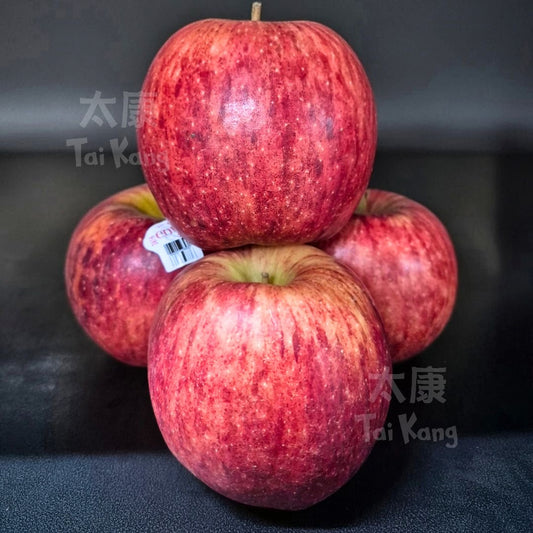
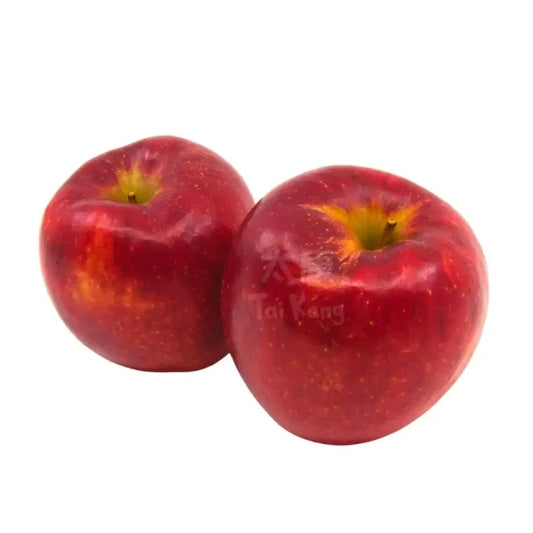
| Apple | Low | 1 small apple, 130 g | 58 kcal |
| Pear | Low | 1 small pear, 130 g | Not listed here |
| Peach | Low | 1 medium fruit | 47 kcal |
| Orange | Low | 1 small orange, 130 g | Not listed here |
| Strawberries | Low (berries) | A generous handful | 37 kcal |
| Raspberries | Low (berries) | A generous handful | 66 kcal |
| Plum and prunes | Low | 1 to 2 plums | 64 kcal (fresh plums) |
| Kiwi, grapefruit | Low | 1 medium fruit | Not listed here |
| Mango, pineapple | Low | 130 g wedge or small fruit | Not listed here |
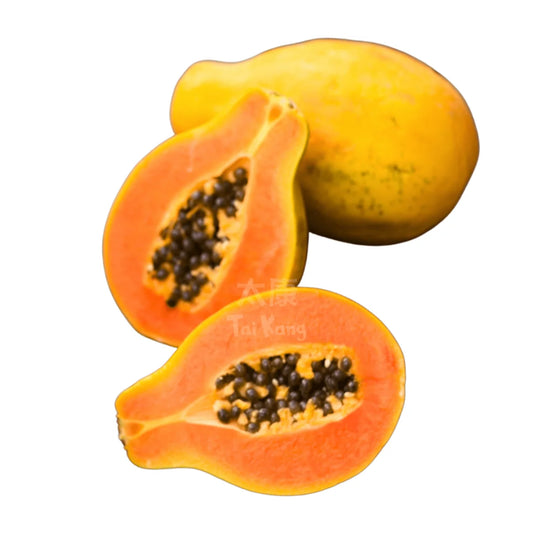
A few tropical choices matter in Singapore. A 2017 Singapore study of 19 healthy adults found guava and papaya in the low-GI range in every form tested: guava bites scored 29 and guava puree 47, papaya bites 38 and papaya puree 42. It was a small study, so treat it as encouraging rather than final, but it supports guava and papaya as everyday local picks.
Watermelon: high GI, low load
Watermelon is the fruit most people ask about. HPB’s own guidance explains the puzzle: a typical slice of watermelon has a low glycemic load even though its GI is high, because a slice contains little carbohydrate. FAO data show watermelon at about 6.1 g of carbohydrate per 100 g, against 15.0 g for apples. If you want to see the same idea applied to a meal, how glycemic load works in practice is walked through with bowls and a dessert.
The practical rule: a wedge of watermelon is fine in a normal serving, and a whole plate in one sitting is not a normal serving.
Portion size is the lever that matters most
A 2022 article in the Singapore Medical Journal, Dietary advice in diabetes mellitus, says there is no single best or worst fruit for people with diabetes and names portion size as the most important factor. It estimates one fruit serving at about 15 g of carbohydrate. Its examples:
- one medium apple, orange or pear
- one wedge of papaya, pineapple or watermelon
- 8 to 10 grapes or longans
HPB’s Diabetes Hub recommends at least two servings of fruit and two of vegetables every day, and describes half a plate as two servings, one fruit and one vegetable. So the goal is not to hunt for the single lowest number. It is to spread sensible servings across the day.
A worked example
Say you want a mid-afternoon snack for a busy workday. One small apple (130 g) is one serving. Using FAO’s 58 kcal per 100 g, that is roughly 75 kcal. Swap in 130 g of strawberries at 37 kcal per 100 g and you are near 48 kcal. Both are one fruit serving, and both are low GI. The difference is calories and fibre feel, not blood-sugar safety.

Low GI, low calorie, low sugar: three different questions
People search for low-GI, low-calorie and lowest-calorie fruit as if they were one list. They overlap, but they are not the same.
- Low GI tells you about the speed of the glucose rise.
- Low calorie tells you about energy per 100 g, which depends largely on water content. FAO lists peaches at 86.6% water and 47 kcal per 100 g, and strawberries at 89.9% water and 37 kcal.
- Low sugar or low fructose is a third lens, useful for some digestive needs. Our guides on low-fructose fruits and low-sugar fruit servings cover those.
If you are choosing by calories, the fruits at the light end per 100 g are strawberries, peaches and watermelon-type high-water fruits. Fruit with fewer than 50 kcal per 100 g exists, but check the serving, since 100 g is not what most people eat.
HPB describes fruits and vegetables as naturally low in energy and fat, with fibre, vitamins, minerals and phytochemicals, so an everyday fruit habit supports a calorie-conscious diet whichever fruit you pick.
Whole fruit, dried fruit and juice
Form changes the result more than variety does.
Whole fruit. The pulp and skin carry fibre that slows sugar absorption. HPB’s Diabetes Hub advises whole fruit rather than juice for this reason, and warns that juice can cause a blood-sugar spike.

Juice. The Singapore Medical Journal notes that a cup of juice typically takes three to four fruit servings to make, so carbohydrate and calories are far higher than one serving, and juicing removes fibre that helps you feel full. Our piece on fruit versus juice in Singapore covers the portion math.
Dried fruit. Prunes are classed as low GI, but drying concentrates carbohydrate and energy into a small piece. Treat a small handful as a serving rather than eating from the bag.
For fibre-focused choices, see our list of high-fibre fruits available in Singapore.
If you are managing diabetes
HPB says people with diabetes can follow the same general healthy-eating approach as everyone else, and that personalised advice should come from a healthcare professional such as a dietitian. That is the right person for your target carbohydrate per meal, especially if you take insulin or glucose-lowering medicine. Use the GI list as a shopping guide, and let your dietitian or doctor set the amounts.
For a shorter, shopping-led view, we have a guide to fruits for diabetics with portion-controlled picks.
Turning the list into a basket or delivery
Knowing the list is half the job. The other half is getting fruit that is actually ripe at the right stage, firm enough to keep a lower GI profile and fresh enough to enjoy. A few things decide that.
Check ripeness and cold chain
Singapore Standard SS 668 Part 3:2020 says managing the fruit cold chain helps preserve freshness, shelf life, nutritional and sensory quality and safety and reduces damage in storage and transport. In a hot, humid country that is not a detail. Fruit that sits warm ripens past its best, and over-ripe fruit has a higher GI.
Store it properly at home
The Singapore Food Agency advises keeping raw fruit below 5°C in the fridge, refrigerating cut fruit within two hours and discarding cut fruit left at room temperature for more than two hours. It also advises keeping fruit away from raw meat, fish and poultry, and in a separate compartment from vegetables, since ripening fruit can yellow green vegetables.
Build the basket around variety and portions
For a family or a gift, mix instead of loading one fruit. A balanced low-GI-leaning basket might hold apples or pears for crunch, oranges or kiwi for citrus, a punnet of berries, and papaya or guava for something local. That gives each person a serving to pick up without a decision.

Match fruit to health needs
Some recipients have specific needs. NUHS lists dragon fruit, grapes, kiwi, orange, papaya, pineapple and strawberry as low-FODMAP options for people with irritable bowel syndrome. Our guides to low-FODMAP fruits, fruits for gout, fruits for acid reflux and fruits for gut health help when a gift or family order has to fit a condition.
What to look for in fruit basket delivery in Singapore
Whether you are ordering for a family, a colleague or an event, a short checklist covers it:
- Inspection. Fruit should be checked before packing, not simply boxed.
- Temperature control. Storage and handling should keep fruit cool until dispatch.
- Variety you can describe. The listing should name what is inside, so you can see whether it suits a low-GI or low-sugar preference.
- Delivery that reaches the recipient. Home or office delivery across the island, with clear arrangements.
- Scale. Single baskets, recurring orders and corporate volumes should all be possible from one supplier.
Promo: fresh fruit, inspected and delivered across Singapore
At Tai Kang Healthy Fruits, we sell premium fresh fruit online with home delivery across Singapore. Every product goes through quality inspection and is kept in temperature-controlled storage. For gifting, browse the Fruitastic Basket, the Deluxe Harvest Premium Fruit Hamper or the Abundance Harvest Premium Gift Box. For a steady supply at home, there is a bi-weekly fruit delivery subscription over two months. Larger orders qualify for free delivery, and a rewards program recognises repeat customers.

Companies can order corporate fruit delivery and gift boxes for staff or clients, and our vegetables range rounds out a half-fruit, half-vegetable plate.
Our view
We think the best low-GI plan is a boring one: whole fruit, sensible portions, every day. Most people do not fail because they picked the wrong fruit. They fail because the fruit at home was bruised, over-ripe or gone before they could eat it.
That is why we inspect fruit before it ships and store it in temperature-controlled conditions. Fruit that arrives in good shape is easier to eat at the right stage, and eating it is the whole point.
For families we suggest a mixed box where every fruit is one easy serving. For companies, a regular delivery puts a healthy option in front of the team without anyone organising a shop run. Our subscription and corporate gifting exist for exactly that.
Tai Kang
FAQ
Is apple a low GI fruit?
Yes. HPB lists whole apples among low-GI fruits, in the 0 to 55 band. One small apple of about 130 g counts as one fruit serving, and eating it with the skin keeps the fibre.
Is watermelon a low GI fruit?
No, its GI is high, but a typical slice has a low glycemic load because it holds little carbohydrate. HPB makes this point directly. Keep to a normal wedge of about 130 g as one serving.
Which fruit is best for diabetes?
There is no single best fruit. The Singapore Medical Journal says portion size matters most, and about 15 g of carbohydrate makes one serving. Pick whole fruits such as apples, pears, oranges, berries or guava, and ask your dietitian how many servings suit you.
Are low GI fruits also low calorie?
Not always. GI measures blood-sugar response, while calories depend on water and carbohydrate content. Strawberries and peaches are light per 100 g, while dried fruit like prunes packs far more energy into a small amount.
Is fruit juice as good as whole fruit?
No. HPB advises whole fruit over juice because the pulp and skin slow sugar absorption, and juice can cause a blood-sugar spike.
Sources
- The GI Values of Common Foods, HealthHub
- What is the Glycaemic Index?, HealthHub
- Healthy eating, Diabetes Hub
- Build a Healthy Diet Meal Plan, HealthHub
- Harness the Goodness of Fruit and Vegetables, HealthHub
- The glycemic index, NDSS fact sheet
- Dietary advice in diabetes mellitus, Singapore Medical Journal
- Fruit form influences postprandial glycemic response, 2017 study
- Fruits, FAO food composition
- Guidelines on Handling Raw Vegetables and Fruits, SFA
- SS 668 Part 3:2020, Singapore Standards
- Irritable bowel syndrome and weight issues, NUHS
- Glycemic index of bowls